Get Full Government Meeting Transcripts, Videos, & Alerts Forever!
Get email alerts on the Pharmacy Regulation topic
No spam. Unsubscribe anytime.
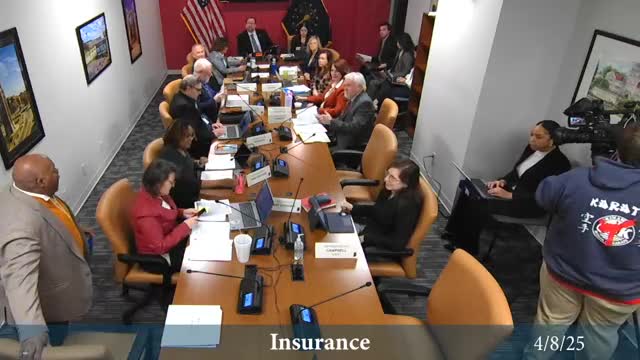
Committee passes Senate Bill 140 with pharmacy network, reimbursement and PBM provisions
Summary
The committee passed Senate Bill 140 as amended, adding pharmacy network adequacy requirements, reimbursement parity limits on PBMs, and a NADAC-based minimum reimbursement with a CMS dispensing fee for certain independent pharmacies. Amendments were accepted by consent and the bill passed unanimously on the roll call.
The committee passed Senate Bill 140 as amended, adopting two amendments taken by consent and approving the bill on a recorded roll call.
Representative Lehman introduced amendments to Senate Bill 140 that the sponsors said remove earlier vertical-integration divestiture language and instead address pharmacy network adequacy, reimbursement parity and PBM conduct. The amendment requires plans to "offer in person pharmacy options within 30 miles of a covered person's home, to the extent that they're available within 30 miles," and obliges plans to allow any pharmacy willing to accept contract terms to contract with the plan, the sponsor said.
The amendment also bans clawbacks and holdbacks of claims paid to a pharmacy except where the claim is fraudulent or there was an actual overpayment. It prohibits a PBM from reimbursing a non‑owned pharmacy on terms less favorable than those paid to a PBM‑owned pharmacy. Sponsor language sets a minimum reimbursement tied to NADAC (National Average Drug Acquisition Cost): pharmacies that have a license to sell beer, wine and liquor would be guaranteed NADAC as a minimum reimbursement, while pharmacies that do not sell alcohol would be guaranteed NADAC plus the CMS dispensing fee used in Medicaid, the sponsor said. "The intent of this, going this direction is to recognize that if they're not actively selling alcoholic beverages... they're then would be able to get the fill fee," Representative Shackleford said when discussing the compromise meant to assist small independent pharmacies.
Representative Mayfield, Representative Dan Chesney and others raised concerns that the liquor-license distinction could exclude some true "mom-and-pop" pharmacies that nonetheless hold a liquor license, and asked the sponsors to refine the language. Representative Lehman asked procedural questions about whether an alcohol license attaches to an entity or a location and said the committee should monitor any mid-tier reimbursement gaps the amendment may not address. "We can we can certainly double check. The intent... is to recognize that if they're not actively selling alcoholic beverages... that that's where a lot of the profit margin comes into," a sponsor said during discussion.
The amendment also contains language preventing a TPA from compelling a plan sponsor to use its vertically integrated PBM and says that declining to use the PBM should be a premium-neutral decision for the sponsor.
Amendment 24—an unrelated timing change to extend a rules deadline from June 2025 to June 2026—was explained by Representative Layman as a noncontroversial scheduling adjustment and taken by consent. Amendment 28, the substantive pharmacy amendment worked on by several members, was also accepted by consent. The committee voted to pass the bill as amended; the clerk announced the vote as 13 to 0.
During recorded explanation of votes, several members described the bill as a compromise aimed at protecting independent pharmacies and increasing competition in PBM contracting. Representative Campbell explained her yes vote by recounting prior experience in a community drug store and noting pharmacists’ role in rural health access. Representative Dan Chaucer and others also offered explanations of their affirmative votes.