Lifetime Citizen Portal Access — AI Briefings, Alerts & Unlimited Follows
Committee approves amendment to speed pole-attachment process for broadband projects
Loading...
Summary
The Utilities, Energy and Telecommunications Committee approved an amendment to Senate Bill 502 that sets timelines, pre‑filing meetings and alternative dispute paths for pole attachments to help broadband projects funded by BEED move forward.
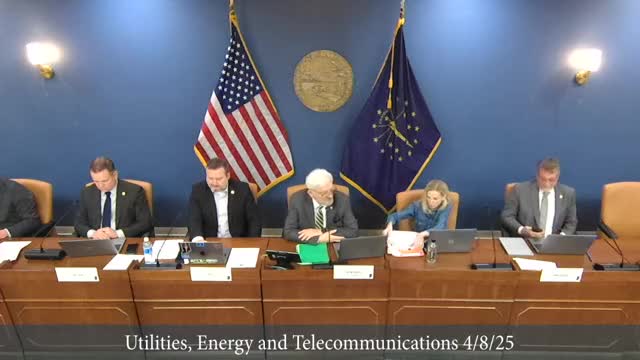
The Utilities, Energy and Telecommunications Committee on an informational session and vote advanced an amendment to Senate Bill 502 intended to speed pole‑attachment approvals for broadband projects, backing a mix of voluntary pre‑filing meetings, mandatory timelines and mediation options.
Supporters said the change is aimed at clearing bottlenecks that have delayed federally funded rural broadband construction. "We believe the amended bill strikes a balance in ensuring ongoing coordination and communication," Matt Long, with the Indiana Energy Association, told the committee.
Committee Chair Representative Soliday opened discussion by describing the amendment as a two‑part compromise: a transparency requirement for grants and a two‑track pole‑attachment process. Under the amendment, the state broadband or telecommunications office must publish grant contracts within five days of signing; prospective attachers and pole owners must hold a meeting within 60 days to discuss a project in general terms; and, for larger batches, the amendment sets explicit timelines and conflict‑resolution steps drawn from recent Federal Communications Commission guidance.
Steven Cox, Chief Broadband Officer for the state’s broadband office, told lawmakers the office views the measure as a tool to “expedite pole attachment requests being addressed in order to facilitate project completion,” and noted the state had dedicated significant federal BEED funding to connect unserved and underserved Hoosiers.
Industry witnesses described the changes as practical and urged adoption. Ryan Hadley of the Indiana Electric Cooperatives called the amendment “a fair compromise.” Comcast’s Joni Hart said her company is supporting pre‑filing meetings and detailed upfront invoices and described make‑ready costs and timing as a central practical issue; she told the committee Comcast had about "$100 million in rural broadband projects happening in 20 counties" and said make‑ready estimates and workforce constraints had caused delays in prior rounds.
The amendment incorporates numeric thresholds discussed at the FCC level: subprojects under a 300‑pole threshold are expected to be handled under normal business processes, a 3,000‑pole threshold imposes a 30‑day batching rule, and larger batches follow the longer mandatory timelines in the amendment. Hart and other witnesses welcomed shortening the make‑ready estimate timeline from 180 days to 120 days.
The committee moved and approved Amendment 5 by consent and recorded the measure as passed by the committee. The amendment and the bill are intended to operate in tandem with federal BEED funding and FCC timelines, according to testimony.
Proponents said the bill seeks to reduce unauthorized or ‘‘illegal’’ attachments that sometimes occur when providers attach equipment because delays make projects unworkable, though witness testimony drew a distinction between unauthorized attachments by parties with permissive agreements and truly illegal attachments where no agreement exists.
Opponents did not mount sustained formal opposition in the hearing; rather, stakeholders from utilities, electric cooperatives, cable and broadband trade associations testified in favor of the amendment after negotiations among parties produced the text now before the committee.
Votes at a glance: The committee approved Amendment 5 to SB502 and advanced the bill by a committee vote recorded in the transcript as passing the committee (final tally recorded in committee as "passes fifteen‑zero").
The committee record shows stakeholders including: Matt Long (Indiana Energy Association), Ryan Hadley (Indiana Electric Cooperatives), Steven Cox (Indiana Broadband Office), Daniel Miller (Indiana Broadband and Technology Association), Joseph Dant (Indiana Cable and Broadband Association), Joni Hart (Comcast), and Carolyn Wright (Indiana Municipal Power Agency) provided direct testimony and answered questions.
The committee indicated the change is intended to encourage early cooperation so projects funded with federal BEED money move from application into construction more quickly, and to provide mandatory escalation paths (mediation and a third‑party resolution option) when bilateral negotiation breaks down.
The bill now moves to subsequent legislative steps where members may offer floor amendments and additional review.