Lifetime Citizen Portal Access — AI Briefings, Alerts & Unlimited Follows
Committee advances House Bill 1007 after hours of debate over small modular reactor incentives and ratepayer protections
Loading...
Summary
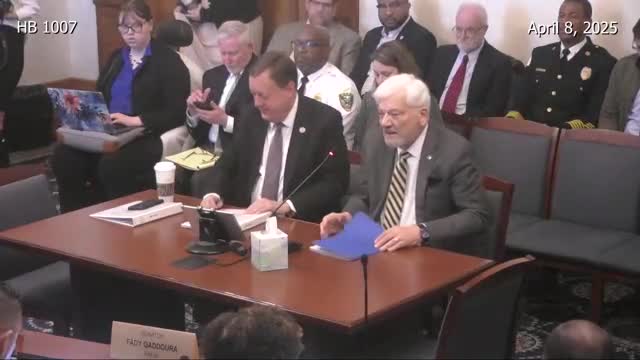
House Bill 1007, a broad package that would create a 20% state tax credit for expenditures to build manufacturing plants for small modular reactors (SMRs) and expand utility preconstruction cost recovery (QIP), advanced out of the Tax and Fiscal Committee on a 10-3 vote after extended questioning and public opposition.
House Bill 1007, a broad package that would create a 20% state tax credit for expenditures to build manufacturing plants for small modular reactors (SMRs) and expand utility preconstruction cost recovery (so-called QIP), advanced out of the Tax and Fiscal Committee on a 10-3 vote after more than two hours of questioning and three public witnesses opposing the measure.
Representative Saluday, who presented the measure, told the committee, “This is an important bill, it's a lot of pages, but there are about 5 things that need to be addressed,” and outlined provisions ranging from a 20% manufacturing tax credit to changes to the Indiana Utility Regulatory Commission (IURC) review process for plant closures and a new process for large-load customers seeking 150 megawatts or more.
Why it matters: The bill would use state tax incentives to encourage SMR manufacturing in Indiana, and it would let utilities recover certain engineering and predevelopment costs through a QIP mechanism the sponsors say lowers financing costs for construction. Opponents told the committee that the technology is unproven or commercially limited in the U.S., that project development costs can balloon, and that the QIP and other recovery mechanisms could shift substantial financial risk to ratepayers, including schools, cities and other public entities.
Key provisions and debate
- Manufacturing tax credit: The bill would allow a 20% state tax credit for costs “incurred in manufacture of a small modular reactor” — sponsors said that credit applies to the manufacturing plant and not to the utility that installs a reactor. Representative Saluday said the credit is intended to attract manufacturing facilities to Indiana; he said three entities had expressed interest in locating in the state.
- QIP and predevelopment cost recovery: The bill expands a Quality Infrastructure Project (QIP) mechanism that lets utilities recover up to 80% of preconstruction planning, engineering and other project development costs through rate adjustments that are reviewed and monitored by the IURC. Sponsors said QIP reduces interest expense compared with up-front bond financing; critics warned it effectively uses ratepayers as the lender for projects that may never be completed.
- Plant closure and large-load protections: The measure requires IURC review before closing a coal plant to ensure economic benefit to consumers and adequate replacement capacity; and it requires that very large customers (above a megawatt threshold specified in the bill) assume a substantial share of development risk before special expedited review and certificate-of-public-convenience-and-necessity (CPCN) treatment are granted.
Public testimony and concerns
Three witnesses opposed the bill. William Paraskevis, a long-time Indianapolis resident, said he opposed HB1007 and criticized both the manufacturing credit and the QIP changes, noting that recent SMR projects have been canceled for cost and subscriber concerns. "Section 4 provides a mechanism for utilities to increase rates for development costs for SMRs, which will be passed along to regular ratepayers," Paraskevis testified.
David Van Gilder of the Hoosier Environmental Council said the technology is expensive and that ratepayers would be asked to shoulder risk created by demand from data centers and other large-load customers. "We rise in opposition to HB1007," he said.
Kevin Olson, Executive Director of Citizens Action Coalition, told the committee the fiscal note and impact statements were incomplete and repeated concerns that the bill would require ratepayers — including public entities and schools — to subsidize project development costs years before a project delivers service.
Questions from committee members focused on several points: the difference between the manufacturing tax credit and project-installation costs, the size and timeline of SMR projects, how the 80% QIP recovery interacts with existing rate-case processes, protections for ratepayers if a project stops or a company goes bankrupt, and whether the IURC will have adequate time and resources under the bill’s expedited timelines. Senator Randolph said multiple times he had "a lot of questions" and was not ready to support the bill without clearer language on who bears what costs. Senator Fedorra said she opposed the bill, calling it “using Hoosiers as the banking institution” to finance projects without sufficiently understood fiscal impacts.
Outcome and next steps
The committee moved the bill to the floor by a committee vote reported as 10–3. Sponsors said they would continue technical work as the bill proceeds; opponents said they will continue to press for stronger ratepayer protections and fuller fiscal documentation.
"If they don't come here, you get nothing," Representative Saluday said in defense of offering incentives to attract manufacturers; opponents replied that the potential costs and recovery mechanisms were insufficiently defined.
Votes at a glance
- Committee motion: Move House Bill 1007 to the floor as introduced (motion made and seconded). Outcome: approved; tally reported 10 yes, 3 no.