Get Full Government Meeting Transcripts, Videos, & Alerts Forever!
Get email alerts on the Ethics Dual Employment topic
No spam. Unsubscribe anytime.
Committee reviews bill to tighten disclosure, recordkeeping for dual state employment
Summary
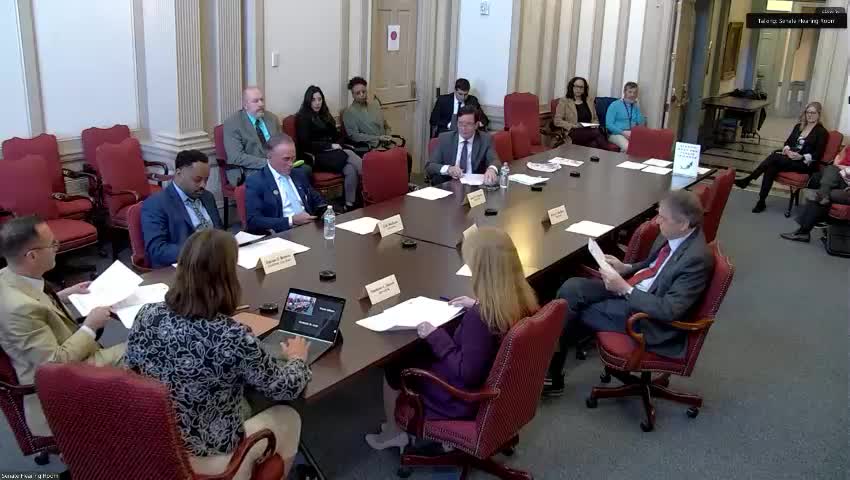
The Senate Elections and Government Affairs Committee heard House Bill 9, which would require elected or appointed officials employed by state agencies or political subdivisions to disclose dual employment to the Public Integrity Commission and for the employer to keep records verifying hours worked.
The Senate Elections and Government Affairs Committee on Monday heard House Bill 9 with House Amendment 1, a measure that would require elected or appointed officials who also work for state agencies or political subdivisions to disclose dual employment to the Public Integrity Commission and require the employing agency to maintain time records, sponsor Senator Pardee said.
Supporters said the measure responds to a September audit that found spotty recordkeeping around dual employment. "This is really a public trust bill, to build some public confidence in what goes on in this building," Senator Pardee said, describing the bill as intended to improve reporting and employer recordkeeping. The bill sets an effective date of one year after enactment and the amendment adds and clarifies definitions for "institution of higher education," "political subdivision of the state" and "state agency."
The bill was presented to the committee as a response to an Office of the Auditor of Accounts report that identified difficulties verifying hours because records were incomplete. Sam Berry, legislative liaison for the auditor's office, thanked the sponsors and said, "If you go back and read the dual employment reports over the last 20 years, all of them have mentioned poor record keeping, and so this legislation's gonna help."
Drafting staff and members emphasized the bill's scope is limited to employees of state agencies and political subdivisions and does not apply to private employers or community-based nonprofit organizations. Mark Catrona, drafting attorney with the Division of Legislative Services, told the committee the bill focuses on the employer–employee relationship rather than the source of funding for a position: "It's the employer that is the controlling factor rather than the source of the funding itself." Committee members repeatedly clarified that the bill would not authorize the state to mandate recordkeeping by private employers.
The legislation would allow employees to make up missed time and requires a direct supervisor to verify hours and maintain records to enable verification if questions arise. Senators asked whether salaried employees would be subject to the same requirements; presenters said the recordkeeping and pro rata pay reduction provisions apply to both salaried and hourly employees. The bill originates in part from language in House Bill 73 and has been reviewed by the Public Integrity Commission, sponsors said.
There was no formal committee vote recorded on the bill during the hearing; the chair said the committee would "move forward" with the measure. The committee also reminded the public that written comments may be submitted to the Elections and Government Affairs Committee email (as noted in the meeting record) to be entered into the public record up to 24 hours after the meeting.
The committee's discussion included multiple questions about implementation and scope but did not produce a final vote at today's hearing. The bill will proceed through the committee process for further consideration.