Get Full Government Meeting Transcripts, Videos, & Alerts Forever!
Get email alerts on the Higher Ed Dual Employment topic
No spam. Unsubscribe anytime.
Committee hears bill to expand recordkeeping for higher-education employees with elected or appointed office
Summary
House Bill 38 would require institutions of higher education that use state funds to pay employees’ salaries to keep and provide records on dual employment for elected or appointed officials; the auditor’s office supports the bill and the measure would allow civil penalties and administrative process for violations.
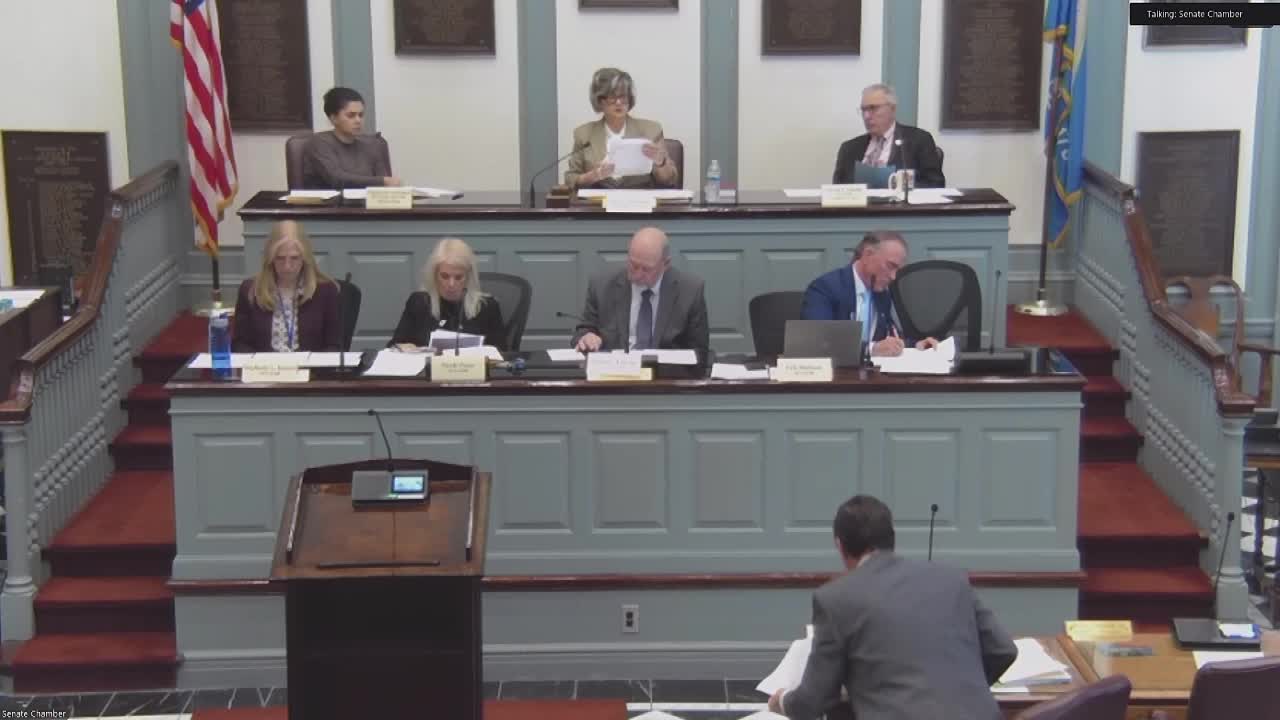
House Bill 38, presented to the Senate Education Committee, would require institutions of higher education that receive state funds used to pay employee salaries to keep and provide records documenting overlap between institutional employment and elected or appointed public office.
Sponsor Senator Brian Pardee (the transcript: Senator Pardee) said the bill responds to an Office of the Auditor of Accounts report that identified gaps in current state practices for tracking dual employment. Pardee described the bill’s purpose as addressing concerns raised by the auditor and said the sponsor in the House, Representative Williams, “worked very closely with the University of Delaware, Delaware State University and Delaware Technical and Community College” on the legislation.
Nut graf: The bill would create recordkeeping obligations for higher-education institutions, authorize the auditor to impose civil penalties for violations and permit the auditor to issue a case decision under the Administrative Procedure Act; supporters say the change improves transparency and public trust in how state funds are used.
Key provisions discussed: Pardee summarized penalties: “The auditor may impose [a] $10,000 fine for the first violation. Second or subsequent violation within 5 years would result in a $50,000 penalty to the Institute of Higher Education.” Pardee and Mark Catrona of the Division of Legislative Services explained the bill applies when state funds are used to pay salaries; capital grants that do not pay salaries would not trigger the requirement. Catrona clarified that a companion bill, House Bill 9, addresses recordkeeping for other public employees and that the two bills were intended to operate together.
Committee members asked how the requirement would affect different institutions. Senator Poore and others raised whether private colleges that currently do not receive state funds to pay salaries (for example, Wilmington University) would be covered; Catrona said the bill covers any institution of higher education when state funds are used to pay the salary of the person in question. Senator Lawson asked whether grant funding counts; Catrona said “if those grants are coming from the state, that would apply.”
Sam Berry from the Office of the Auditor of Accounts testified in support and said: “record keeping is the way that we're able to do our job and making sure that these institutions keep these records, make, sure that our reports are full, complete, and, that we can see if bad behaviour happens and make sure that, people are aware before it happens.”
Discussion vs. decision: The committee discussed interrelationships with House Bill 9, applicability to grants and salary funding, and potential implementation details; the transcript does not record a formal committee vote on House Bill 38.
Ending: Sponsors and staff said they would circulate the bill and follow up; no committee final action is recorded in the transcript.