Get Full Government Meeting Transcripts, Videos, & Alerts Forever!
Get email alerts on the Education Title Ix Access topic
No spam. Unsubscribe anytime.
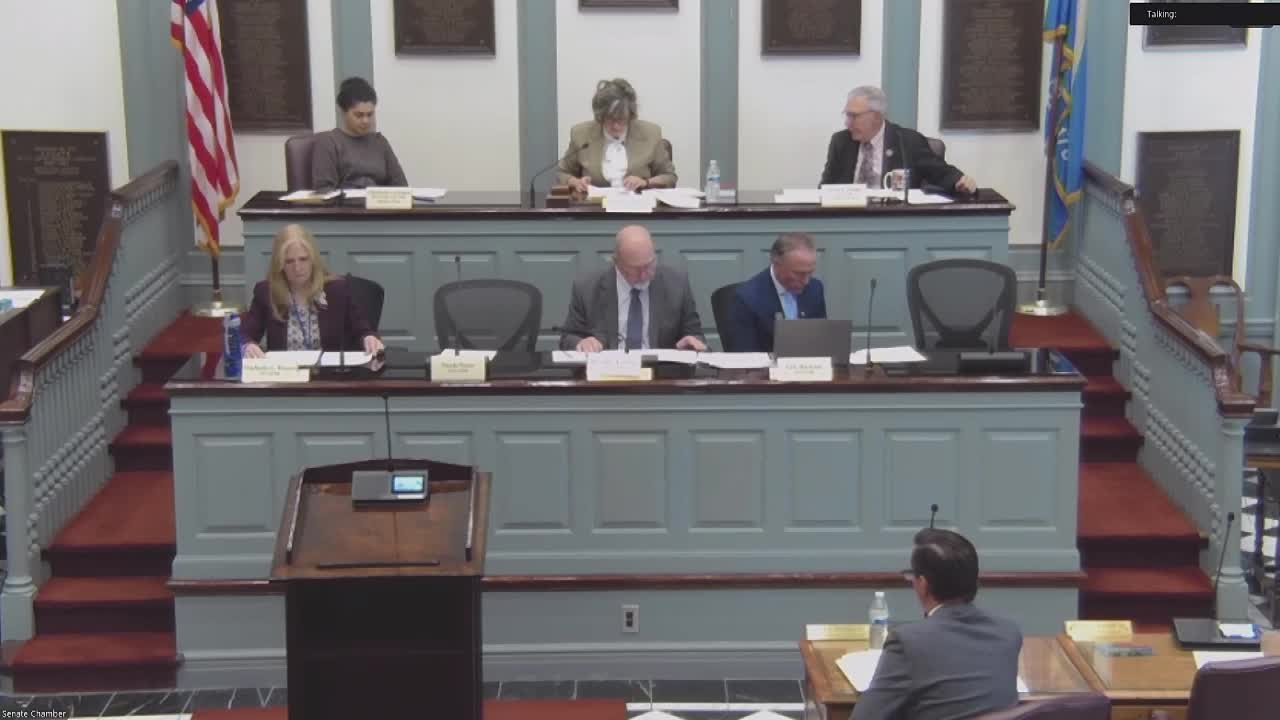
Senate committee debates bill to require clearer Title IX information for pregnant and parenting students
Summary
Senate Bill 91, introduced in the Senate Education Committee on the agenda, would require schools that receive federal funding to prominently publish Title IX policies and reporting processes on their websites and provide clear access to complaint forms and supportive measures for pregnant and parenting students.
Senate Bill 91, introduced in the Senate Education Committee on the agenda, would require schools that receive federal funding to prominently publish Title IX policies and reporting processes on their websites and provide clear access to complaint forms and supportive measures for pregnant and parenting students.
The bill’s prime sponsor, Senator Laura Sturgeon, told the committee it grew out of a women’s caucus meeting where visitors from DAPI (the Delaware Adolescent Program) described how pregnant and parenting students “often do not know their rights, do not know what Title IX covers, or what Title IX coordinators should be doing.” Sturgeon said accommodations can include “temporary leaves of absence for doctor's appointments, birth and postpartum, additional academic support, counseling, opportunities to make up missed work.”
Nut graf: Supporters said the measure aims to make already-existing federal protections easier to find and use, particularly for students who may not know a Title IX coordinator exists or how to file a complaint. Sponsors and the drafting attorney emphasized the bill is intended to ensure compliance and clearer communication rather than to create new federal rights.
Jonathan Harding, the bill’s drafting attorney, told senators: “this bill is drafted with the intent of making sure that the schools are doing what they are already required by the federal government.” Harding said the bill’s principal change is to require that Title IX information — roles of coordinators, investigators, decision-makers, supportive measures and complaint forms — be “immediately accessible to students” on school webpages. Harding added that the state can provide more protection than the federal floor, but the bill as written focuses on access and transparency.
Senators asked how the bill differs from current practice and whether districts already comply. Senator Eric Buxton asked, “What is it that we're requiring that isn't already required?” Harding responded that the bill does not add new federal requirements but requires the state’s Title IX–subject schools to make required materials prominent and accessible. Buxton and Senator Nicole Poore discussed possible next steps, including considering amendments to require written notice to students and families in addition to website posting; Harding said such an amendment “could be done if that's the, if there's a desire for it.”
Public comment largely supported the bill. Jovan Rich, policy and advocacy director at the ACLU of Delaware, said SB 91 “affirms this guarantee by federal law and requires schools to make information about Title IX more prominent on schools' webpages.” Nikhil Vashi, director of education law and policy for Family Equality, testified the bill would help LGBTQ+ families and students who “feel powerless and unsure of where to turn” by making supportive measures and complaint paths easier to find.
Discussion vs. decision: Committee discussion focused on scope (posting vs. new rights), outreach to students and families, and possible technical amendments. No formal committee vote on SB 91 is recorded in the transcript.
Ending: Sponsors said they would work with committee members on possible clarifying amendments (for example, adding written notice to students/families) before seeking further action. The bill’s proponents emphasized it is designed to increase accessibility to the protections Title IX already provides rather than to create new federal-level rights.