Get Full Government Meeting Transcripts, Videos, & Alerts Forever!
Get email alerts on the Artificial Intelligence Commission Student Member topic
No spam. Unsubscribe anytime.
Bill would add nonvoting high‑school student to Delaware Artificial Intelligence Commission
Summary
House Bill 16 would add a nonvoting high‑school student member (10th–12th grade) to the Delaware Artificial Intelligence Commission; sponsor and a recommended student spoke to the Senate Banking committee but no committee vote was taken.
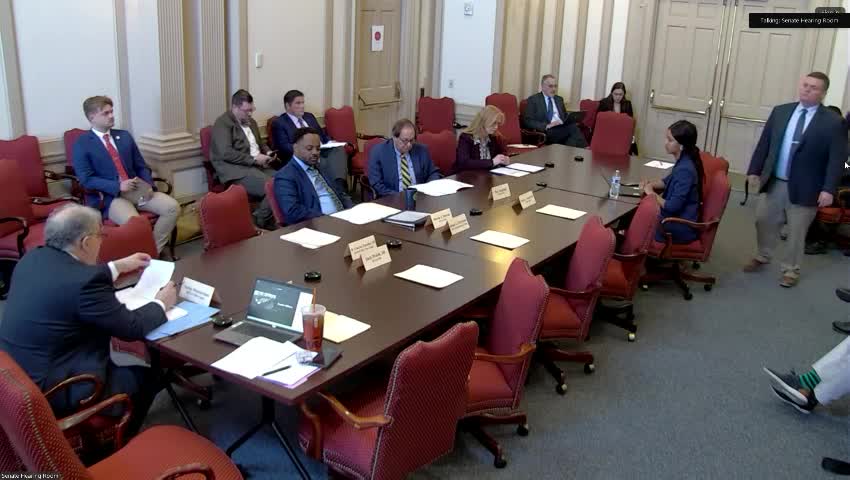
The Senate Banking, Business Insurance and Technology Committee on April 9, 2025, heard House Bill 16, which would add a nonvoting high‑school student member to the Delaware Artificial Intelligence Commission.
Senator Sarah Hansen, the Senate prime on the bill, told the committee the student would be a 10th, 11th or 12th grader from a public or private school and said the Department of Education helped identify students with strong interests in artificial intelligence. Hansen introduced Aiden Gamble, a sophomore at Brandywine High School, as a recommended candidate.
Hansen said the commission, created last year by House Bill 33, has been meeting regularly and that adding a younger perspective would help commissioners “see into the future” and better understand current developments. "Representative Griffith, who was the prime sponsor last year of HB 33, is the prime on the bill. I'm the senate prime on the bill just as it was with HB 33," Hansen said.
Aiden Gamble described his experience and why he thinks a student seat matters: "It is extremely important for a high school student to be a member of the commission as it is essential for high school students and people in general to continue to be able to pursue artificial intelligence in a curious way." He said his work has included independent programming in JavaScript and Python, developing games and experimenting with basic AI models; he also described tracking advances in image, video and reasoning models and raised concerns about prompt injection and confidentiality when models process external documents: "That is especially important with government artificial intelligence models where confidentiality is extremely important."
There was no public testimony in opposition or additional public comment after the presentation. Committee members present indicated they would sign on as cosponsors; the transcript records multiple members saying they would “sign me up” as a cosponsor but no formal committee vote on the bill was recorded during the hearing.
The bill remains at committee; sponsors and staff did not present a formal motion or vote during the April 9 meeting, and the committee moved on to the next agenda item after closing public comment.