Get Full Government Meeting Transcripts, Videos, & Alerts Forever!
Get email alerts on the Medicaid Ltss Eligibility topic
No spam. Unsubscribe anytime.
Senate resolution would raise Medicaid LTSS income limit to 300% of SSI, fiscal note estimates $12M–$34M state share
Summary
Senator Katrina Poore presented Senate Joint Resolution Number 5 to the committee, seeking to raise Delaware’s Medicaid LTSS income eligibility from 250% to 300% of Supplemental Security Income so more people can receive long-term supports at home.
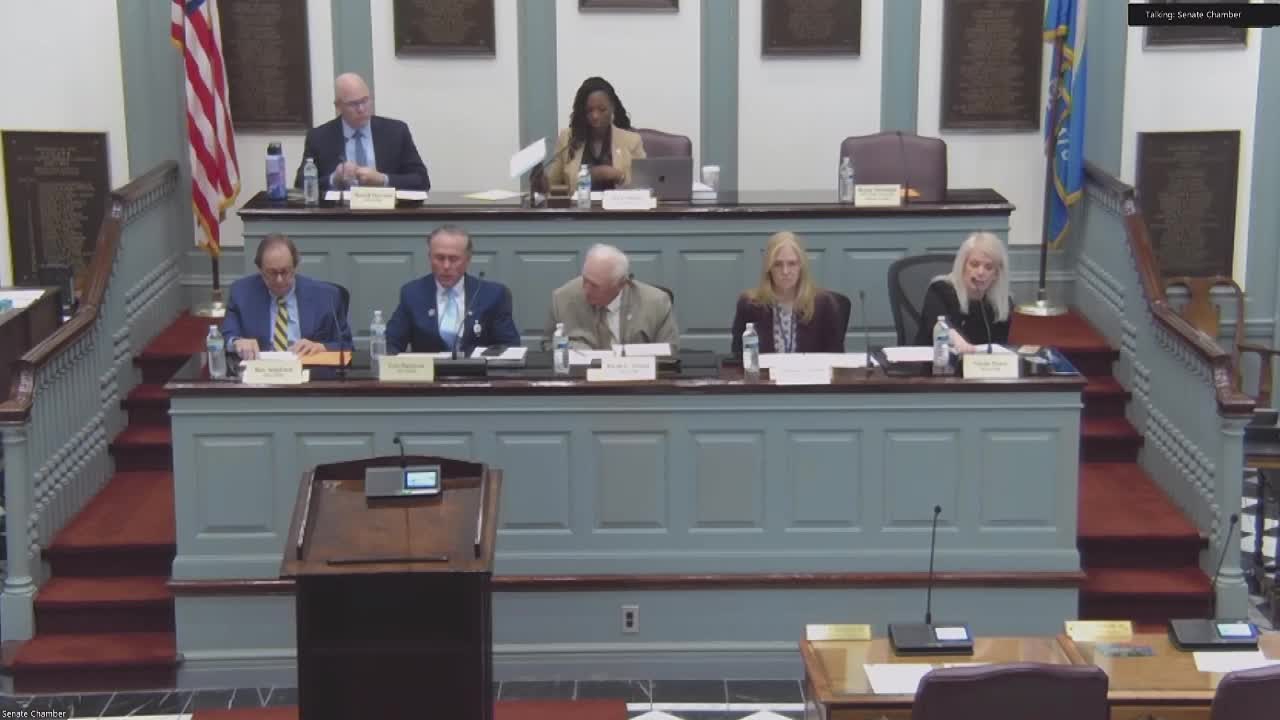
Senator Katrina Poore presented Senate Joint Resolution Number 5 to the Senate Health and Social Services Committee, asking the body to align Delaware’s income eligibility for long-term services and supports (LTSS) — known in the transcript as Medicaid LTSS — to 300% of Supplemental Security Income (SSI). Poore said Delaware’s limit is currently capped at 250% of SSI and that raising the threshold to 300% would expand coverage for people with disabilities, chronic illnesses and older adults who need support to stay in their homes and communities.
“Expanding the eligibility ensures more people can age or recover in place, maintaining their quality of life in their own surroundings,” Poore said, adding that LTSS often covers respite care and supports for unpaid family caregivers.
Senators and witnesses discussed the bill’s fiscal implications. The committee reviewed a fiscal note included in the packet that lists a state Medicaid share between $12,000,000 and $34,000,000 in the early fiscal years examined; Poore said analysts anticipate the expansion could cover roughly 505 to 1,300 additional patients. Committee members flagged budgetability and directed more detailed fiscal scrutiny to the Joint Finance or Finance Committee, where budgeting decisions are made.
Senator Pinkney, the committee chair, described in part from prior health care experience why the change matters to constituents who are narrowly above current thresholds. Drew Wilson, Division Director of Medicaid Medical Assistance (DMMA), answered a technical question from the committee: the income measure cited is not taxed, and when asked whether the Children’s Community Alternative Disability program would be included, he said, “No.”
Christina Brian of the Delaware Healthcare Association testified in support of SJR 5, saying hospitals and providers have worked to identify long-stay patients who may be awaiting placement and that increasing eligibility would improve options and outcomes for patients who are currently stuck in hospital beds for extended periods.
Committee members repeatedly noted this is a finance issue as well as a policy change; senators were advised the matter will proceed to the appropriate fiscal committee for detailed budget review. The transcript records that, after public comment and questions, the committee circulated SJR 5 along with House Bill 87; senators were asked to sign the backer sheet. The record does not show a committee vote to adopt the resolution at this meeting.
Ending: SJR 5 was presented, publicly supported by the Delaware Healthcare Association, and circulated by the committee for further action and fiscal review; no final committee vote was recorded in the transcript.