Get Full Government Meeting Transcripts, Videos, & Alerts Forever!
Get email alerts on the Local Finance topic
No spam. Unsubscribe anytime.
City manager previews draft ordinance to register and fee poker clubs, aims to capture unreported gambling income
Summary
City Manager Josh presented a draft ordinance April 7 that would require poker clubs and similar “competitive and skilled gaming” facilities to register with the city, pay an upfront registration fee and an annual operating fee that could be credited if the club reports taxable winnings.
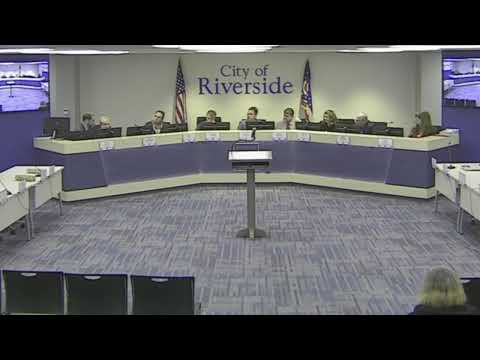
City Manager Josh presented a draft ordinance at the Riverside City Council meeting on April 7 proposing a local registration and fee regime for poker clubs and similar “competitive and skilled gaming” facilities.
The measure, described by Josh as modeled in part on Riverside’s licensing for marijuana dispensaries, would require such facilities to register with the city, pay an initial registration fee and an annual operating fee, and maintain records of winners so the city can verify local income tax obligations. Josh said the city would offer an operating credit the following year if the club submitted receipts and documentation showing winners who exceeded reporting thresholds.
The proposal’s stated purpose is revenue capture: Josh told the council that, based on area club prize pools and an assumption of large, frequent events, a single establishment could generate about $300,000 a year in reportable winnings (2.5% of winnings being the city’s local income-tax share under state reporting rules under discussion). He emphasized the approach is intended to recover taxes the city may be owed, not to criminalize the clubs: “I would not recommend adopting the fees as part of the ordinance,” Josh said while outlining that fee amounts would be set separately in the master fee schedule and the city would give businesses time to comply.
Key features described: - Registration: a one-time initial registration form and fee (city staff suggested an initial-fee benchmark comparable to existing marijuana-dispensary licensing; staff proposed an illustrative $15,000 startup fee for discussion). - Annual operating fee: a recurring charge collected by the city; clubs could earn credits the next year by producing documentation of winners and W-2G-style reporting so the city can calculate local income-tax liability. - Reporting threshold and mechanics: staff discussed aligning reporting with federal/IRS reporting thresholds (the conversation referenced IRS guidance and W-2G reporting), but council and staff acknowledged they retain discretion to set the local threshold because state law does not currently require a municipal reporting mechanism for unregulated gaming halls. - Trigger: the draft ordinance would apply to commercial operations using leased or dedicated commercial space within city limits; private home games and most state-regulated gaming (casinos, bingo halls regulated under separate state code) would be excluded.
Council members asked about implementation details, including whether existing clubs would be grandfathered, how the fee could be collected over time rather than in a lump sum and what reporting threshold the city should require. Josh said the city intends outreach and a phased implementation so existing operators have time to decide whether to comply with the reporting rubric or simply pay the annual fee without reporting winners.
Officials and several council members also described a practical enforcement rationale: registering clubs would create clear contact points for police and city staff if fraud or criminal activity were reported, and would allow the city’s tax-collection agent (CCA) to reconcile reported gambling winnings with local income tax returns. Council members noted uncertainties about cross-jurisdictional players (nonresidents who win at clubs) and how much reporting CCA currently receives.
Josh said staff will circulate draft ordinance language to council members and bring the item back for additional discussion in May; he did not ask for formal action at the April 7 meeting.
Why this matters: Council members said capturing unreported taxable winnings could increase local income-tax collections and close an apparent gap in reporting and enforcement; staff estimated the potential revenue could be material to the city budget depending on frequency and size of events.
What’s next: City staff will distribute the draft ordinance language to council and stakeholders, perform implementation planning and return with the item for further discussion. No vote was taken April 7.