Get Full Government Meeting Transcripts, Videos, & Alerts Forever!
Get email alerts on the Criminal Procedure topic
No spam. Unsubscribe anytime.
Appellate panel hears claim that flawed self-defense instruction and inadequate defense investigation require new trial in Commonwealth v. Sabu
Summary
In Commonwealth v. Sabu (24P652), defense counsel argued the trial judge’s self-defense jury instruction lowered the Commonwealth’s burden and that defense counsel failed to investigate an alleged victim’s criminal record; the Commonwealth defended the instruction and emphasized the video evidence that the appellant was the initial aggressor.
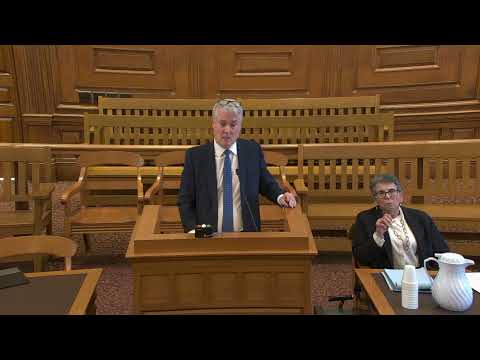
Nick Madison, arguing for the defendant in Commonwealth v. Sabu (24P652), told the court that two errors required a new trial: (1) a self-defense instruction that, in his view, conditioned the Commonwealth’s burden on the jury making certain findings and thus improperly lowered the standard, and (2) counsel’s failure to obtain the criminal history and other investigative material relating to an alleged victim. "These instructions contained two separate but related errors," Madison said, arguing the phrasing could lead jurors to think the defendant bore a burden to establish the defense.
The panel probed whether the phrasing might reasonably be read as a neutral ‘‘checklist’’ and how video evidence and the defense’s strategic choices affected any prejudice. The Commonwealth, represented by Ally Bockhart (with ADA Aaron Knight), argued the jury instructions, viewed as a whole, properly conveyed self-defense law. The prosecutor pointed to the video, arguing it showed the defendant as the first aggressor and that agitating or impeachment evidence from any victim’s record would not have changed the result because the video was dispositive.
Counsel debated whether the defense’s failure to pursue the alleged victim’s records and restraining-order affidavits constituted deficient performance and whether the affidavits would have been admissible or useful if the victim did not testify. The court asked about specific admissibility paths for affidavits and whether any omitted records would have altered the jury’s view given the admitted video.
The panel heard the parties’ arguments and indicated it would decide after review of the record.