Get Full Government Meeting Transcripts, Videos, & Alerts Forever!
Get email alerts on the Appellate Review topic
No spam. Unsubscribe anytime.
Appeals court weighs new-trial and plea-withdrawal claims after attorney-sanctions finding in Collins v. Badgett
Summary
Sarah Halton argued that her client, Mr. Badgett, is entitled to withdrawal of his guilty plea or a new trial because of trial counsel's alleged misconduct and subsequent disciplinary action disclosed after the plea.
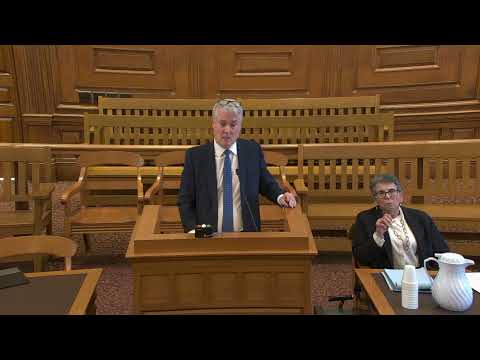
Sarah Halton, arguing for Mr. Badgett in Collins v. Badgett (No. 24239), told the Appeals Court that recent disciplinary findings and later-disclosed social-media postings provided newly discovered grounds to withdraw a guilty plea or grant a new trial. Halton said the client's appointed counsel had been censured by the Committee for Public Counsel Services and that the client had signed a form informing him of a complaint; she argued the line of Supreme Judicial Court authority in Commonwealth v. Du (the "Du" matter) supported relief when counsel manifests racial or religious animus toward a particular defendant.
The panel pressed Halton on practical risks to the client of reopening the case: "Your client's served his 5 years. He's finished his probation. If we reverse, there is a real danger that he'll be tried, get 10 years, and serve another 5 years. Are you confident that this is the path your client wants to take?" a judge asked. Halton replied her client insisted on pursuing the record and the alleged deficiencies in counsel’s representation, including a claim that counsel failed to litigate a suppression motion and did not adequately pursue available recordings and witnesses.
The Commonwealth (ADA McKenzie Simon) defended the judge’s findings at the motion-for-new-trial stage and urged the panel to accept the trial court’s assessment that the defense’s affidavits were contradicted by the plea colloquy and the record. The Commonwealth also emphasized missing proof — for example, Halton had not supplied a challenged booking photo or an affidavit from a key witness — and argued the record did not show prejudice sufficient to overturn the convictions.
The court asked detailed questions about timing, whether the CPCS investigation and findings were disclosed to the defendant at the time of appointment, and whether the evidentiary record supported relief. The panel took argument and indicated it would decide after reviewing the record.