Get Full Government Meeting Transcripts, Videos, & Alerts Forever!
Get email alerts on the Local Government Building Codes And Utilities topic
No spam. Unsubscribe anytime.
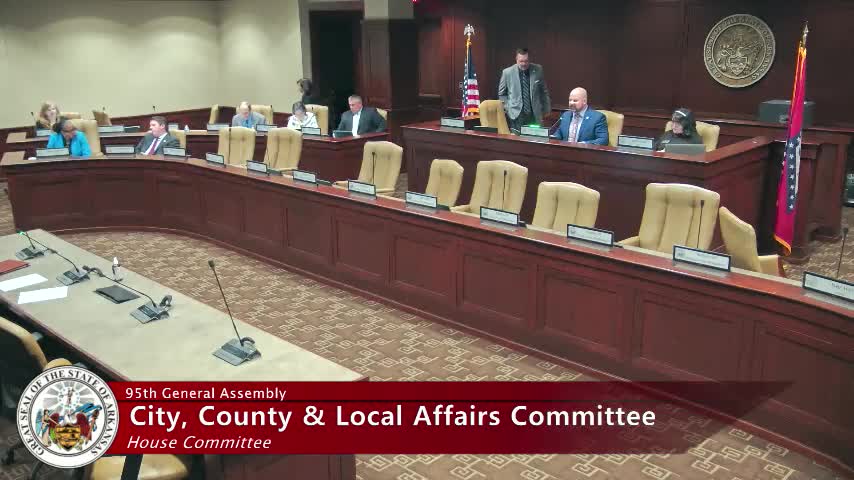
Committee approves bills clarifying when county building codes and municipal services apply
Summary
The committee passed two related bills clarifying that county-owned public buildings follow county building codes and that counties may access municipal utilities for public uses; amendments and witness testimony focused on when city requirements still apply and how health and state codes interact.
A House committee on Monday passed two related measures aimed at clearing disputes between counties and municipalities over which building codes apply to county-owned projects and when counties may connect county facilities to municipal utilities.
Supporters said the bills — Senate Bill 571 (as amended) and Senate Bill 574 — are intended to codify longstanding practice and avoid expensive legal uncertainty for engineers and architects. Opponents and some committee members pressed for clearer limits on the bills’ reach and asked whether the changes would undermine local planning and service protections.
The bills Senate Bill 571, amended in committee, says that when a county builds a public facility inside a municipality’s corporate limits the county may follow county building codes for on-site construction rather than the city’s building code except where state codes (for plumbing, electrical and fire) provide the applicable standard. Mark Whitmore of the Association of Arkansas Counties explained the amendment to the committee as an effort to direct engineers and architects to a single code (county rather than city) when both are in play, while noting state model codes and state-level plumbing/electrical/fire rules remain controlling.
Senate Bill 574 addresses utilities. Sponsors said the measure clarifies that counties may connect county-owned facilities to municipal water or sewer systems for public purposes and that the county will be responsible for any costs required to extend or upgrade those services. Sponsors and municipal representatives said the health department’s design and public-health standards would still apply.
Why it matters Supporters argued the measures remove ambiguity that has left officials and design professionals uncertain whether county projects located inside city limits must comply with potentially more restrictive municipal codes. Representative Puryear (presenting SB 571) told the committee county projects — jails, courthouses or other public facilities — should not be subject to inconsistent or duplicate code requirements.
Municipal concerns and limits acknowledged John Wilkerson, general counsel for the Municipal League, and representatives of the Municipal League noted the distinction between state-mandated codes (such as the state-adopted fire, plumbing and electrical codes) and municipal enhancements. Wilkerson said architects and engineers will still comply with state code requirements and that local enhancements sometimes add further restrictions; the amended language is intended to make clear which code governs design decisions for county-owned public buildings.
Committee members raised practical and equity concerns. Representative Kevin asked whether it is fair for a county-owned building inside city limits to be exempt from city zoning and building standards that apply to private citizens. Sponsors replied that the bills preserve state codes and public-safety inspections and that the measures are aimed at on-site building-code choice (county vs. city) and not a wholesale preemption of municipal land-use authority. Representatives also asked whether counties and cities already work out these problems informally; witnesses from counties and the municipal league said they often do, but reported recent disputes in some regions motivated the bills.
Public-safety and inspection points Witnesses and members emphasized that state fire, plumbing and electrical codes remain applicable and that the public-health authority will review utility connections. Representative Richardson asked if the state must comply with city codes for state projects; witnesses said that is complicated and not always clear, and that the bills standardize which local code engineering professionals should follow for county projects.
Outcome The committee adopted an amendment to SB 571 clarifying that the county building-code approach applies only to county-owned public buildings and confirming continued applicability of state codes. Both measures passed in voice votes: “Ayes have it” recorded for each.
What’s next Supporters said the bills aim to reduce litigation risk by putting in statute a practice county and city officials said often was followed by mutual agreement. Municipal leaders asked for continued local collaboration to prevent future conflicts over specific projects.