Get Full Government Meeting Transcripts, Videos, & Alerts Forever!
Get email alerts on the Land Use Misc topic
No spam. Unsubscribe anytime.
Planning commission reviews draft beekeeping ordinance; staff to refine setback, flyway and removal language
Summary
Farmington planning staff presented a draft beekeeping ordinance on April 8 that would require administrative permits, education or experience verification, setbacks and flyway barriers; commissioners asked staff to clarify exemptions for undeveloped-adjacent lots, refine flyway requirements, and lengthen the post-termination removal window.
Farmington planning staff presented a discussion draft of a proposed beekeeping ordinance on April 8. The draft, modeled in part on the City of Eagan’s ordinance and refined following earlier commission input, would require an administrative permit, education or experience proof, setbacks and flyway barriers for hives and inspection and renewal processes.
Highlights of the draft ordinance and issues raised
Staff summarized key draft provisions: an administrative permit to be approved by staff; proof of completion of a beekeeping basics course or three years of beekeeping experience; hives limited to rear yards; a 20-foot setback from lot lines and 30 feet from adjacent decks, patios or outdoor living spaces; a required flyway barrier when a hive is within specified distances from neighbors; inspections on issuance and renewal; continuous colony management to prevent swarming; and permit termination where a violation or public nuisance exists.
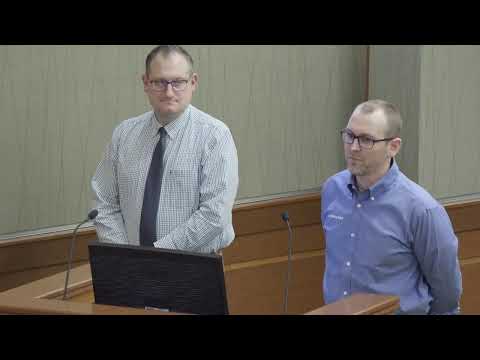
Resident beekeeper Nick Gessel (1981 Deerbrook Path) and several commissioners suggested edits and clarifications. Gessel recommended allowing closer siting to the edge of a property where that edge abuts undeveloped land, a pond or agricultural uses so the hive can be moved away from neighboring backyards. He also raised a potential conflict with existing fence rules: a functional flyway barrier must be within roughly six feet of the hive entrance, so a city-required fence at the property line might not serve the intended purpose. Gessel and commissioners discussed alternative barrier designs; Gessel and staff favored language that would permit a three-sided enclosure or other configurations that “force” an upward flight path rather than a long fence running parallel to the lot line.
Removal timing and permit termination
Commissioners also asked staff to revisit a five-day removal period currently in the draft for terminated permits. Members and the beekeeper said five days may be infeasible for owners to relocate bees, and requested a longer, clearer removal window (for example 14–30 days) or language that allows reasonable time to arrange relocation. Staff said the five-day term was suggested by the city attorney and that staff would revisit that timeframe and consult the attorney’s office.
Next steps
Staff will revise the draft to address the commission’s concerns, including: (1) clearer language on flyway-barrier design that allows functional three-sided enclosures close to the hive rather than a long fence; (2) an approach for allowing closer placement where the backyard abuts undeveloped land, pond or agricultural uses with a requirement to come into compliance if the adjacent land is later developed; and (3) a more workable removal period following permit termination. Staff also noted they will check for potential conflicts with existing fence ordinances and will propose ordinance language to avoid unnecessary variance requests.
Ending
Staff said it will incorporate the commission’s feedback and return a revised draft for future consideration; resident beekeeper Nick Gessel offered to assist with demonstrations or a show-and-tell for commissioners at a later meeting.