Get Full Government Meeting Transcripts, Videos, & Alerts Forever!
Get email alerts on the Sex Offender Registry topic
No spam. Unsubscribe anytime.
Appeals court hears challenge to level-2 classification for non-contact offenses in Doe v. Offender Registry Board
Summary
An impounded appeal questioned whether a series of non-contact indecent-exposure and open-and-gross-lewdness offenses supported a level-2 classification and internet dissemination under the state registry framework.
An impounded appeal (John Doe v. Offender Registry Board, No. 24307) drew extended argument about whether the board’s placement of a registrant at risk level 2 was supported when the underlying offenses were non-contact (indecent exposure and open-and-gross lewdness). The board and its counsel defended the classification; counsel for Doe argued the board’s decision was arbitrary, contradictory and unsupported by the evidence.
Why it matters: The decision governs whether non-contact sexual-offense histories can trigger public Internet dissemination and other registry measures reserved for higher-risk findings; the classification carries consequences for notification and public disclosure.
Attorney Edward Gauthier argued for Doe that the board relied on insufficient evidence and improperly excluded scientific studies and expert testimony showing that non-contact offenders without other risk factors have a low probability (the defense cited a 5–10% figure in a cited article) of escalating to contact offenses. He said the hearing examiner did not make the required explicit finding about the likelihood of placing a victim in reasonable apprehension of a contact offense and that the board improperly applied a "high-risk" regulatory factor tied to an adult offender with a child victim.
The board’s counsel, Roxanne Greenaway, replied that the hearing examiner applied numerous statutory and regulatory factors (the decision cited factor 3 statutory high-risk adult-with-child, factor 7, factor 22, factor 21, factor 13, and mitigation factor 28) and that the record showed multiple stranger victims, public locations including libraries and stores, repeat visits to the same locations and an escalation in conduct from exposure to explicit ************. The board argued those facts supported a moderate risk and moderate degree-of-danger finding and justified Internet dissemination for public safety.
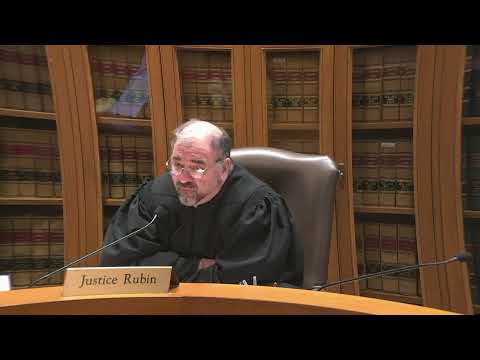
The panel questioned whether the singular legal standard announced in earlier precedent (Doe 496501) requires an explicit showing that a non-contact offender is likely to place victims in reasonable apprehension of a contact offense, or whether a factor-driven analysis can reach the same result. The defense pressed that the board thwarted efforts to introduce research and expert evidence, while the board said it could apply the enumerated factors without outside scientific testimony.
Ending: The court heard full argument and submitted the matter. Its ruling will affect how hearing examiners and the registry apply regulatory factors when underlying conduct is non-contact but occurs repeatedly in public places and near children.