Get Full Government Meeting Transcripts, Videos, & Alerts Forever!
Get email alerts on the Motions Mistrial Evidence topic
No spam. Unsubscribe anytime.
Appeals court addresses alleged motion-of-limine violation and record-check testimony in Commonwealth v. Roman
Summary
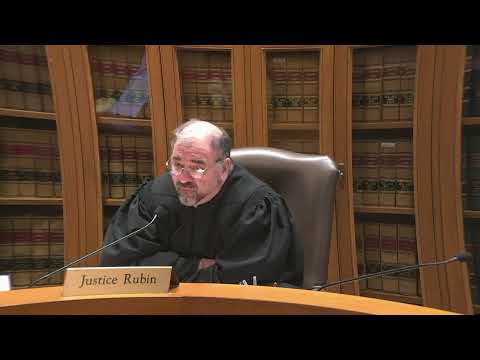
Oral argument focused on whether statements in the prosecutor’s opening went beyond a pretrial motion in limine and whether a DCJIS employee could properly testify about the absence of a license to carry.
The Appeals Court heard argument in Commonwealth v. Roman (No. 24440) over two issues that arose at trial: (1) whether the prosecutor’s opening statement — which, defense counsel said, referenced surveillance, an arrest on a warrant, and other background — violated a pretrial motion in limine and warranted a mistrial, and (2) whether testimony by a DCJIS employee that a record search produced no license to carry was properly admitted without certification or a witness from the Firearm Records Bureau.
Why it matters: The questions affect acceptable scope of prosecutorial openings and the foundation required to prove absence of a public record (here, license-to-carry status) under confrontation and hearsay principles.
Attorney James Methe, arguing for the defendant, said the prosecutor’s opening statements improperly told jurors the police had been "conducting surveillance" of the defendant’s house and that the defendant "was arrested for a warrant," facts the defense contends violated the court’s motion in limine restricting testimony about why police were in the area. Methe argued the prosecutor's wording created an early and prejudicial impression of criminality that a stipulation read the next day could not cure.
Methe also challenged the Commonwealth’s use of a DCJIS employee who testified he ran a name-and-dob search and found no license-to-carry record. Defense counsel argued that the witness lacked foundation about how records are created and maintained and that a custodian or a Firearm Records Bureau official should have provided certified records instead of oral testimony.
Assistant Attorney Anne Kennedy for the Commonwealth answered that the witnessing employee conducted the search, was familiar with how the records were created, maintained and accessed, and was subject to cross-examination, so the testimony did not violate the confrontation clause. Kennedy said the prosecutor’s opening was not a deliberate violation and that the judge took immediate steps — instructing counsel and later asking the parties to craft a stipulation read to the jury — to obviate any prejudice.
The panel questioned both sides on whether the day-later stipulation was adequate, whether the opening phraseology could reasonably have misled jurors into inferring prior criminality, and whether the DCJIS testimony met foundational requirements for the absence-of-record exception. Counsel also asked the court whether to hold the matter for a then-pending SJC decision in a related case (Conwell v. Smith) addressing similar issues; the Commonwealth said Smith was argued March 3 and likely to be dispositive.
Ending: The case was submitted after argument; the court will decide whether the opening statement and record-check testimony were properly handled under the trial judge’s remedial steps and existing precedent.