Get Full Government Meeting Transcripts, Videos, & Alerts Forever!
Get email alerts on the Criminal Law Instructions topic
No spam. Unsubscribe anytime.
Appeals court weighs whether trial counsel erred by not requesting an accident instruction in Commonwealth v. Blackney
Summary
At oral argument, attorneys disputed whether a defendant was entitled to an "accident" instruction at trial and whether medical records mentioning the word "pushed" should have been redacted under the medical-records privilege statute.
The Appeals Court heard argument in Commonwealth v. Blackney (No. 24646) over two principal issues: (1) whether trial counsel rendered ineffective assistance by failing to request an accident instruction after the defendant testified the injury resulted from an accident, and (2) whether references in hospital records that the victim was "pushed" or "kicked" were admissible or should have been redacted under the statutory medical-records rule.
Why it matters: The court’s resolution could affect how trial courts evaluate defensive instructions (accident vs. assault-and-battery) and how hospital-record statements that touch on causation and liability are handled at trial.
Attorney Edward Gauthier, representing the defendant, argued that the evidence plainly supported an accident instruction under Commonwealth v. Jewett and that trial counsel’s decision not to request the instruction — despite telling the court before trial he intended to do so — created a substantial risk of a miscarriage of justice. He said the model accident instruction more clearly highlights the burden on the Commonwealth to prove lack of accident beyond a reasonable doubt and that omission of that instruction prejudiced the defense.
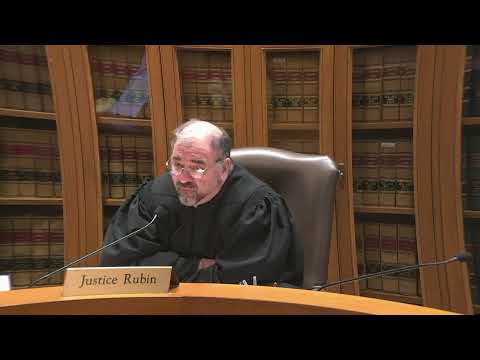
During questioning the panel debated whether the defendant’s testimony amounted to an accidental touching (which the assault-and-battery instruction addresses) or no touching at all. A justice observed that the record could be read as the defendant saying he did not touch the victim and that some justices questioned whether the standard assault-and-battery elements sufficiently covered the defensive theory.
On the medical-records issue, Gauthier argued that phrases such as "pushed off a porch" appearing in treatment notes should be redacted unless directly pertinent to diagnosis or treatment. He cited Commonwealth v. Dubay and other precedents and pressed the court to require the Commonwealth to show by at least a preponderance that the contested phrases were relevant to medical diagnosis or treatment.
Attorney Stacy Gauthier (for the Commonwealth) responded that the failure to file a new-trial motion below and the judge's charge conference made the record insufficient to prove prejudice. She argued that the assault-and-battery instruction covers the accidental-touching issue and that the medical records that referenced being "pushed" were admissible because they bore on the cause of injury and were cumulative to the victim’s testimony; she also noted the jury acquitted on the related "kick" count.
The panel asked about the precise content of the trial record — how the defendant described the contact, whether the charge and model instructions adequately conveyed the burden regarding accident, and whether the hospital notes materially added to the Commonwealth’s case. Counsel finished and both sides submitted the case for decision.
Ending: The panel took the case under submission. Its ruling will guide appellate standards on when an accident instruction is required and how strictly hospital-record statements should be screened for reference to liability.