Get Full Government Meeting Transcripts, Videos, & Alerts Forever!
Get email alerts on the Forensic Evidence topic
No spam. Unsubscribe anytime.
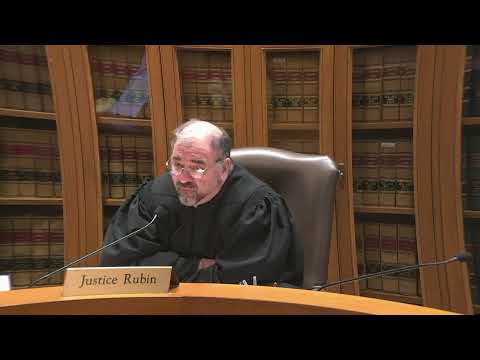
Appeals court hears challenge to gunshot-residue, DNA and docket entries in Commonwealth v. Aheart
Summary
Attorneys argued at the Massachusetts Appeals Court over whether gunshot-residue (GSR) evidence, DNA on a gun trigger and irregular docket/minimus entries warrant relief in post-conviction proceedings for defendant Aheart.
The Massachusetts Appeals Court heard argument in Commonwealth v. Aheart (No. 24734) on whether trial counsel was ineffective for failing to exclude or limit gunshot-residue (GSR) evidence and related expert testimony, whether other forensic evidence was properly admitted, and whether irregularities in the court docket and minimus records require reconstruction of the record.
Why it matters: The case raises contested questions about how forensic evidence such as GSR and nonblood DNA should be presented to juries, the permissible scope of expert testimony, and when clerical or docket irregularities can justify relief in post-conviction proceedings.
Attorney Michael Warrias, representing Aheart, argued that GSR testimony presented to the jury was legally and factually flawed and that the trial judge abused her discretion by admitting it. Warrias told the panel the Commonwealth’s expert, "Mister Biello testified that the presence of GSR on sample stubs from a taken from a sweatshirt, would say the person either fired a weapon, they were in close proximity to a weapon being fired, or they had just handled a weapon that had been fired." He said the third scenario — transference from handling — introduces uncertainty that makes the GSR result nonprobative without further foundation or limiting instruction.
Warrias also emphasized testimony and affidavits from a defense expert that, he said, showed direct transference could have occurred when officers recovered a sweatshirt that was found wrapped around a firearm. "In this case, the police arrive at the scene ... they open it up and wrapped inside it is a firearm. Now, here, it's impossible to separate that contamination," he told the court.
The attorney further argued trial counsel was ineffective for not seeking funds to have a qualified forensic examiner examine a black cylindrical object seized from the vehicle; Detective Lyons testified it might be a firearm accoutrement but, Warrias said, that was speculative testimony that should have been excluded.
The court also spent time on recordkeeping issues. Warrias pointed to apparent irregularities in the docket and minimus: entries with different signatures and dates that appear five years after the events described. He said the record reconstruction required by court rule 8 did not occur and that questioning relevant court personnel might have resolved doubts.
For the Commonwealth, attorney A.D.H.G. Lee defended the rulings below. Lee acknowledged the expert had testified that transfer was possible but argued the presence of nonblood DNA as the defendant's major contributor on the gun's trigger and other facts — injuries, proximity, and spent casings at the scene — supported the jury's conclusion. Lee said the record and multiple filings support the conclusion that there was no improper docket alteration affecting the conviction.
Throughout the argument the judges questioned the parties closely about the scope of GSR inference, what testing and swabbing had been done, whether the trigger and other firearm parts were tested for DNA, and the provenance of various docket entries and minimus signatures.
The case was submitted for decision at the close of argument.
Ending: The court took the case under submission after both sides finished oral argument; any relief would depend on the panel’s review of whether the GSR testimony and documentary irregularities undermined the fairness of the conviction or required a new hearing.