Get Full Government Meeting Transcripts, Videos, & Alerts Forever!
Get email alerts on the Traffic Safety Speed Detection topic
No spam. Unsubscribe anytime.
Live Oak schedules stakeholder workshop, moves to prepare RFP for school‑zone speed detection program
Summary
City officials agreed to hold a stakeholder workshop and begin an RFP process for a school‑zone speed detection program, while staff will confirm whether an ordinance is required before procurement. Council members voiced concern about revenue perception and enforcement details.
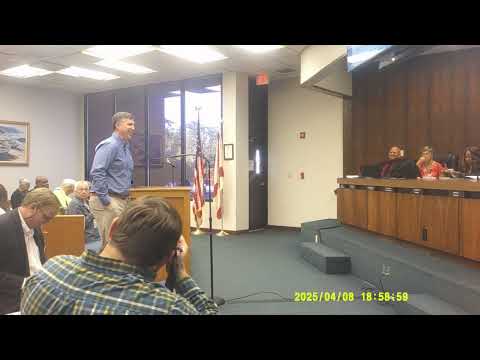
The City Council of the City of Live Oak agreed to schedule a stakeholder workshop and begin preparing a request for proposals (RFP) to evaluate a school‑zone speed detection program, with a goal to place the RFP on the June 10 agenda.
The decision follows a detailed staff briefing on how the detection program would function, how citation funds are allocated under state law and how the program differs from conventional moving‑violation enforcement. City staff and council members said they would hold a workshop with affected stakeholders — including the school district — before finalizing procurement documents.
Joanne Luther, finance director, urged the council to run the workshop while staff assembled an RFP package, saying the RFP can be amended after stakeholder input. "I was going to suggest that you go ahead and have your workshop to discuss with your other community partners the possibility of going forward with this, while my staff worked together to put together the written package, and get it begun to be advertised," Luther said.
City staff explained the legal and operational differences between the proposed system and ordinary moving‑violation enforcement. One staff speaker characterized the detection program as intended to keep many citations out of the court process and described an existing allocation of funds under state law: schools receive a set share of certain fines or payments tied to traffic enforcement. "This is a way this program essentially is designed to sort of take the court system out of it, give the violators a little bit of a break, unless they want to contest," the staff speaker said, adding that schools would still receive their allocation for citations upheld by the hearing officer.
Council members pressed for clarity on several points before a formal procurement or ordinance. Topics discussed included: - Statutory allocation of citation funds and the distinction between civil infractions issued under automated detection systems and moving‑violation charges under Section 316 of the Florida Statutes; staff said allocation to participating stakeholders is governed by statute. - Whether the city needs an ordinance before issuing an RFP; staff said they would research that and report back to determine the timing of the work. - Who will monitor school zones and when; staff noted law enforcement cannot staff every zone daily and that automated systems can provide continuous monitoring during school arrival/departure windows. - Public perception and revenue concerns; several council members said they did not want the program perceived as a revenue generator and requested public input at the workshop.
Council gave direction to staff to arrange a stakeholder workshop in late April (staff discussed April 24 at 4:30 p.m. as a possible date) and to prepare an RFP for placement on the June 10 agenda, while staff will confirm whether an ordinance must be adopted before procurement begins. No ordinance vote or final contract award occurred at the meeting.
City staff said package preparation can begin and be paused if the council or stakeholders decide not to proceed after the workshop. Staff also said the city will contact other jurisdictions that have implemented similar programs to guide procurement and operations.
Next steps identified at the meeting: staff will (1) confirm statutory requirements and whether an ordinance is needed before procurement, (2) schedule and advertise the stakeholder workshop, and (3) draft and advertise the RFP so it can appear on the June 10 agenda if the council so directs.