Get Full Government Meeting Transcripts, Videos, & Alerts Forever!
Get email alerts on the Park Place Development topic
No spam. Unsubscribe anytime.
O'Fallon council approves Park Place steps, wades into business-district and amusement-tax mechanics
Summary
The O'Fallon City Council voted on first-reading ordinances and related measures for the Park Place development and approved a redevelopment agreement and funding mechanics that include a special business district and a local amusement tax to reimburse infrastructure costs.
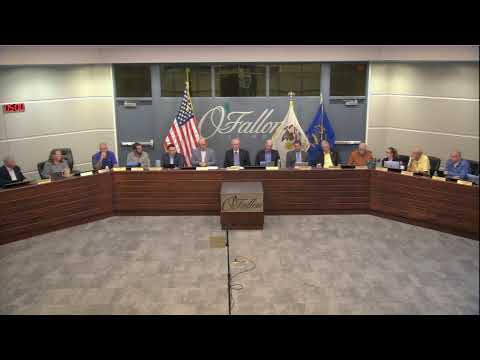
The O'Fallon City Council approved a series of motions on first reading March 25 that clear initial legal and fiscal groundwork for the Park Place development, a multi-year project adjacent to the O'Fallon Family Sports Park.
Council members said the project has evolved after public meetings and technical review, and city staff described how the city will collect and review developer requests for reimbursement under both a statutorily authorized special business district and a city amusement tax.
City staff and council members said the Park Place plan was revised after meetings with residents and that additional studies — including a review of noise, lighting and a required traffic study — remain prerequisites before parts of the project advance.
"I believe this project, Park Place, will benefit the city of O'Fallon," said Councilmember Roy, who said he will vote in favor after contractor and staff changes addressed several resident concerns. "We now have a noise-level study agreement. Hopefully, this will mitigate the sound problem."
Councilmember Andrea, citing her work with the Historical Preservation Commission and conversations with residents, said she had listened to concerns and would vote yes, adding that the vote is the start of a long, multi-year process.
During public comment Carrie Shaffer (Ward 1) asked the council to clarify competing media explanations about how extra taxes tied to Park Place would be allocated. Shaffer summarized four scenarios she had seen reported and asked the city to state which was correct.
City staff member Walter (city staff member) answered on the dais, describing the mechanics and legal framework. He said the special business district (an entity set out under state law) allows businesses within the district to assess an extra 1% sales tax; that revenue flows through the Illinois Department of Revenue back to the city; and the city then reviews developer invoices and reimburses eligible infrastructure costs under the district rules. Walter said the city reviews invoices and reimburses developers only after state collection and city review.
Walter further explained the amusement-tax approach the council approved for first reading: because some Park Place businesses would be entertainment-focused (for example the golf complex), the city will impose a home-rule amusement tax to capture revenue not subject to the retail sales tax. He said the amusement tax will be collected by the city, and — after staff and attorney review with the same eligibility rules used for the special business district — a portion of that revenue may be used to reimburse infrastructure costs. Walter said the redevelopment agreement limits reimbursements under the business-district and amusement-tax arrangements to a capped amount and a time window; he described the cap in the meeting as roughly $23,000,000 or a 20-year limit, whichever comes first.
Councilmembers also stressed existing municipal ordinances and remedies for noise and lighting issues and reiterated that an approved traffic study is required before the project can advance. "We have remedies in place to address those issues," one councilmember said. Staff said Jeff Taylor and city engineers are already working on possible remedies for traffic at the Veneta frontage.
Votes at a glance
- Future land use map for Park Place (Ordinance/First reading, item 8.1): approved on roll call. - Annexation of 80.19 acres at 1354 and 1362 Porter Road (Ordinance/First reading, item 8.2): approved on roll call. - Zoning ordinance for Park Place (Ordinance/First reading, item 8.3): approved on roll call. - Establishment of Sports Park Business District and plan (Ordinance/First reading, item 8.4): approved on roll call. - Business-district taxes for Park Place (Ordinance/First reading, item 8.5): approved on roll call. - Amusement tax (first reading, item 8.6): approved on first reading. - Redevelopment agreement with Pier Property Group (contract/redevelopment agreement, item 8.7): approved on roll call.
All Park Place–related ordinances and the redevelopment agreement advanced on the council's votes the evening of March 25. Several council members spoke in favor while noting further technical reviews and staged construction timelines.
Why this matters
The special business district and the amusement-tax approach create two legal and financial pathways for reimbursing developer-paid infrastructure tied to the Park Place project. That structure determines which revenues developers may recover from future sales or entertainment receipts inside Park Place and sets limits on total reimbursement and duration, potentially shaping how the development finances roads, drainage and other public improvements.
What happens next
Most Park Place items were taken on first reading; the council and staff said subsequent steps include formal traffic and noise studies, engineering review, and additional council readings and votes before specific construction phases move forward. According to staff, developer reimbursements under both the business district and amusement-tax mechanisms require submission of invoices and city review before funds are disbursed.
Ending note
Council members repeatedly framed the vote as an opening step in a long process: they said further studies and ordinance-adoption steps remain, and that staff will evaluate each developer reimbursement request against the eligibility rules the city enforces.