Get Full Government Meeting Transcripts, Videos, & Alerts Forever!
Get email alerts on the Education Funding topic
No spam. Unsubscribe anytime.
District staff present Integrated Programs plan, outline $4.13 million Student Investment allocations for 2025–26
Summary
Staff presented the district’s integrated programs plan that combines Student Investment Account, High School Success and early literacy funding. The application totals $4,133,433.61; staff will return for board action at the next meeting after posting slides and budget materials online.
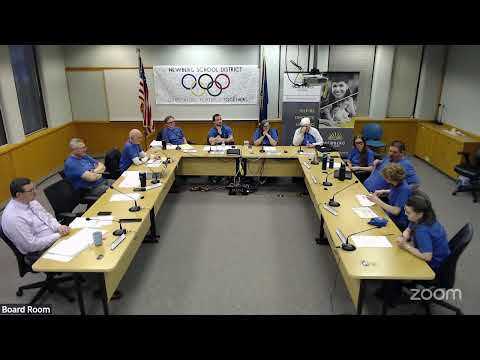
District staff presented an overview of the Newberg School District 29J integrated programs plan and the proposed Student Success application for the 2025–26 biennium during the April 8 board meeting.
Jillian (staff member) described six braided program areas funded through Oregon Department of Education (ODE) grant streams: High School Success, Student Investment Accounts (SIA), Early Indicator and Intervention Systems, early literacy, career and technical education supports and attendance initiatives. The presentation summarized community engagement, performance targets and allocations proposed for the coming year.
Jillian said the combined Student Success allocation for next year is $4,133,433.61. She outlined major spending categories: school counselors and behavioral health staff, licensed mental health therapists, a district math TOSA and English language development specialists, reading specialists, two SROs funded by SIA, credit recovery and CTE classes, summer school and after-school supports, and system software purchases for early intervention and data.
Staff reported community engagement through the ThoughtExchange survey (more than 9,000 ratings), building-level listening sessions, student focus groups, and in-person meetings. Jillian highlighted measurable gains attributed to prior funding: an 11.1% closure on ninth-grade on-track gaps, a 6% improvement in third-grade ELA proficiency gap and a 4% increase in regular attendance for all students with a 3.2% gap reduction for targeted students.
Jillian said the early literacy grant is roughly $300,000 for 2025–26 and will fund reading specialists, high-dosage tutoring and summer literacy programs for K–3 students. Staff emphasized most SIA spending is in staffing and that planned activities remain consistent with prior cycles, with a focus on equity, attendance and supports for students with diverse needs.
Board members asked about focal student groups; Jillian identified students with disabilities, students acquiring English, students of color, students experiencing behavioral or mental health needs and students not meeting grade-level standards. She said the application, slides and budget will be posted on the district website and that staff will seek board approval at the next meeting.
No vote was taken; staff requested feedback and follow-up questions ahead of the formal approval motion at the next board meeting.