Get Full Government Meeting Transcripts, Videos, & Alerts Forever!
Get email alerts on the Sanitation Billing topic
No spam. Unsubscribe anytime.
Rich County Commission tables review of sanitation billing for unsold or short-term rental homes
Summary
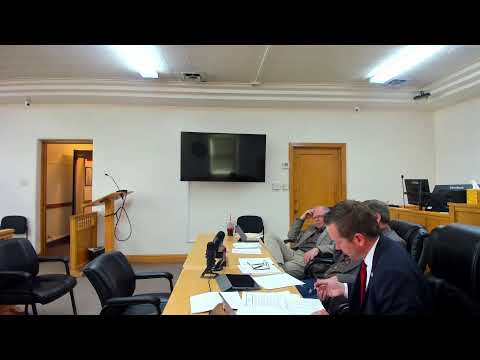
After an extended discussion about whether owners of unsold homes and short-term rentals should be charged the standard $140 sanitation fee, the Rich County Commission voted to table the matter until May and direct staff to review county policy with the county attorney.
The Rich County Commission on April 9 deferred a decision on whether owners of vacant, unsold or short‑term rental homes should be charged the county nnual sanitation fee, voting to table the item until the commission genda in May.
The discussion centered on a dispute involving property owner John Nelson (referenced by staff as Sam Holmes and John Nelson in minutes) who owes $3,080 in sanitation charges and argues he should not pay because, he says, no service was rendered. County staff said the county—harges sanitation when a property has a livable building and that the $140 annual fee is the current policy.
Commissioners and staff said the situation has come up at least four times this year in other properties and identified three recurring complications: houses sold but not yet occupied, units used only seasonally or for short‑term rentals, and subdivisions served by shared dumpsters rather than individual cans. Employees described the current operational trigger as the occupancy/CO process, which automatically sets up service and billing once the certificate of occupancy is issued.
County staff said many of the affected lots currently have no cans at curbside because an account has not been set up, and that the sanitation office places cans when accounts are created. Commissioners and staff discussed alternatives including a per‑use fee, a base connection fee similar to a minimum water charge, or shifting billing responsibilities to homeowners associations where dumpsters serve multiple units. Staff also noted practical limits: private haulers sometimes will not collect small numbers of cans and county landfill rules matter for where waste ends up.
During debate one commissioner said he favored not charging if the county incurs no cost, but also warned that creating refunds could set an undesirable precedent. Another noted that the existing ordinance language may characterize the $140 as providing access to service rather than payment only for actual pickups; staff agreed to check the exact ordinance wording.
After questions about how to track sold properties and the process for setting up accounts, a motion to table the item until the May meeting and to review the sanitation policy with the county attorney passed; commissioners asked staff to bring printed copies of the sanitation policy to the next meeting.
The commission did not adopt a policy change at the April 9 meeting. Commissioners said staff should return with a clear recommendation and any ordinance language that governs whether the annual sanitation fee is an access/connection charge or a usage charge.