Get Full Government Meeting Transcripts, Videos, & Alerts Forever!
Get email alerts on the License Caps topic
No spam. Unsubscribe anytime.
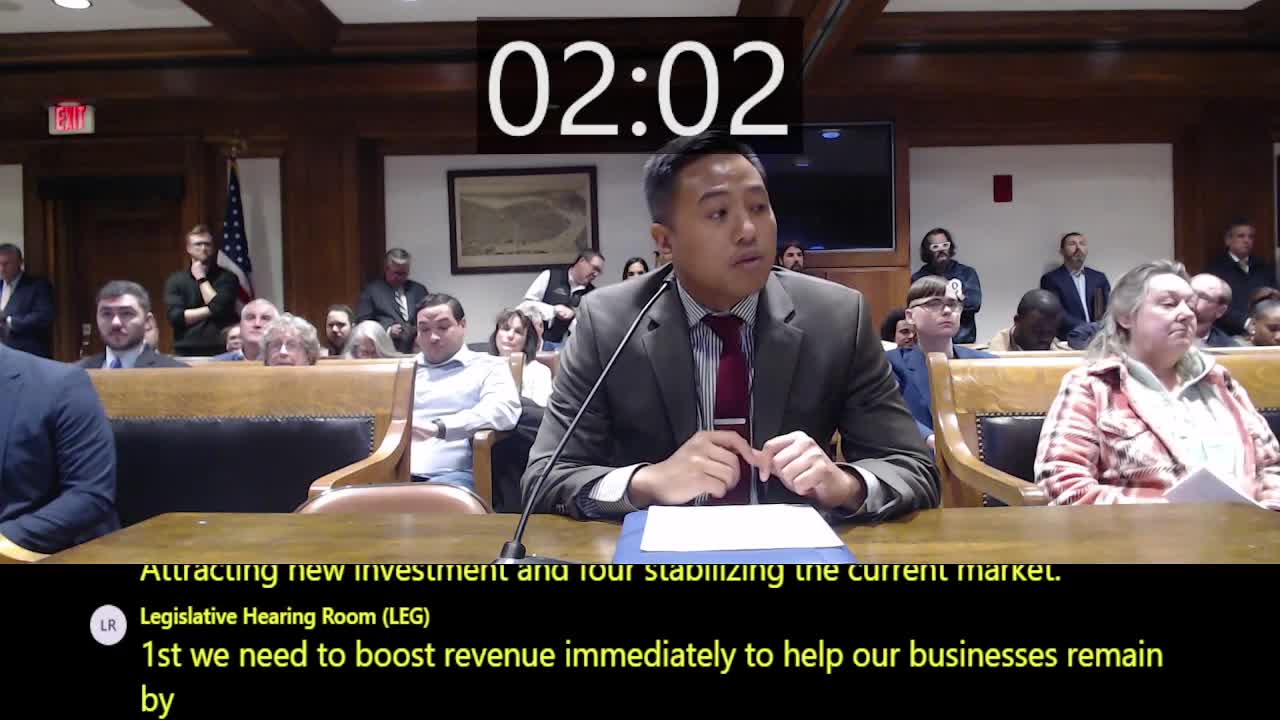
Heated testimony in Massachusetts hearing: should the state raise cannabis license ownership caps?
Summary
Dozens of business owners, equity applicants, patient advocates and industry lawyers testified for and against proposals to raise ownership caps. Supporters said caps block investment and exits; opponents warned raising caps would concentrate power and harm equity goals.
The Joint Committee on Cannabis Policy heard extensive, often emotional testimony about proposals to raise the number of cannabis retail licenses a single person or entity can control.
Background: Massachusetts currently limits how many adult-use retail licenses one owner may control. Multiple bills on the docket would raise that cap (variously to six or higher) or allow additional licenses by acquisition. Proponents — including many operators, investor-side attorneys and some trade groups — asked lawmakers to raise or loosen the cap, arguing it would unlock investment, create exit options for struggling small operators and stabilize a market hit by oversupply and price declines. Opponents — including social equity applicants, patient advocates and some legislators — warned such changes would enable multi-state operators to consolidate market power and undercut the equity purposes that motivated legalization.
Arguments for raising caps: Lawyers who represent investors and operator groups said capital in the cannabis industry is scarce and expensive because of federal restrictions, and many approved licensees cannot secure funding to get to final licensure or to scale. Attorney Kevin Conroy and Mike Ross told the committee that raising ownership limits would allow investors who are already in the market to invest in other Massachusetts licensees; the lawyers said the 10 largest operators control only about 7–8% of licenses and that fears of monopolization were overstated. Trade-group witnesses and many operators said raising the cap would create exit options and better valuations for existing owners, protecting jobs and communities.
Arguments against raising caps: Social equity operators and advocates — including Senator Liz Miranda and members of the Massachusetts Cannabis Equity Council — urged the committee to keep tight ownership limits and instead strengthen enforcement of ownership rules (S.88), expand targeted funding and technical assistance, and enforce transparency and anti-circumvention rules. Senator Miranda said the caps were intended to prevent major firms from leveraging economies of scale to push out small, local and equity-focused owners. Several social-equity business owners said they would be harmed if well-capitalized firms could buy additional stores and cut prices.
Local operator perspectives: Independent retailers and founders offered mixed testimony. Some small businesses and employee-owned companies supported modest cap increases (3 to 6) to secure exits and achieve scale without producing monopolies; other local owners opposed raising caps, saying it would hand advantages to deep-pocketed buyers and contribute to consolidation seen in other states.
Policy trade-offs: The hearing surfaced a key split: whether to prioritize immediate capital and exit options for failing operators (via expanded ownership) or to preserve an equity-centered market structure by limiting consolidation and investing in programs that support independent and equity owners. Several witnesses proposed middle-ground changes such as phased increases, acquisition-only pathways, tighter anti-circumvention enforcement, and prioritizing social-equity transfers in any acquisition framework.
Committee action and next steps: No vote was taken. The committee will balance competing economic arguments with equity goals as it considers amendments. Some members asked for data on market concentration and for comparisons with states that altered ownership limits.