Get Full Government Meeting Transcripts, Videos, & Alerts Forever!
Get email alerts on the Workplace Violence Healthcare topic
No spam. Unsubscribe anytime.
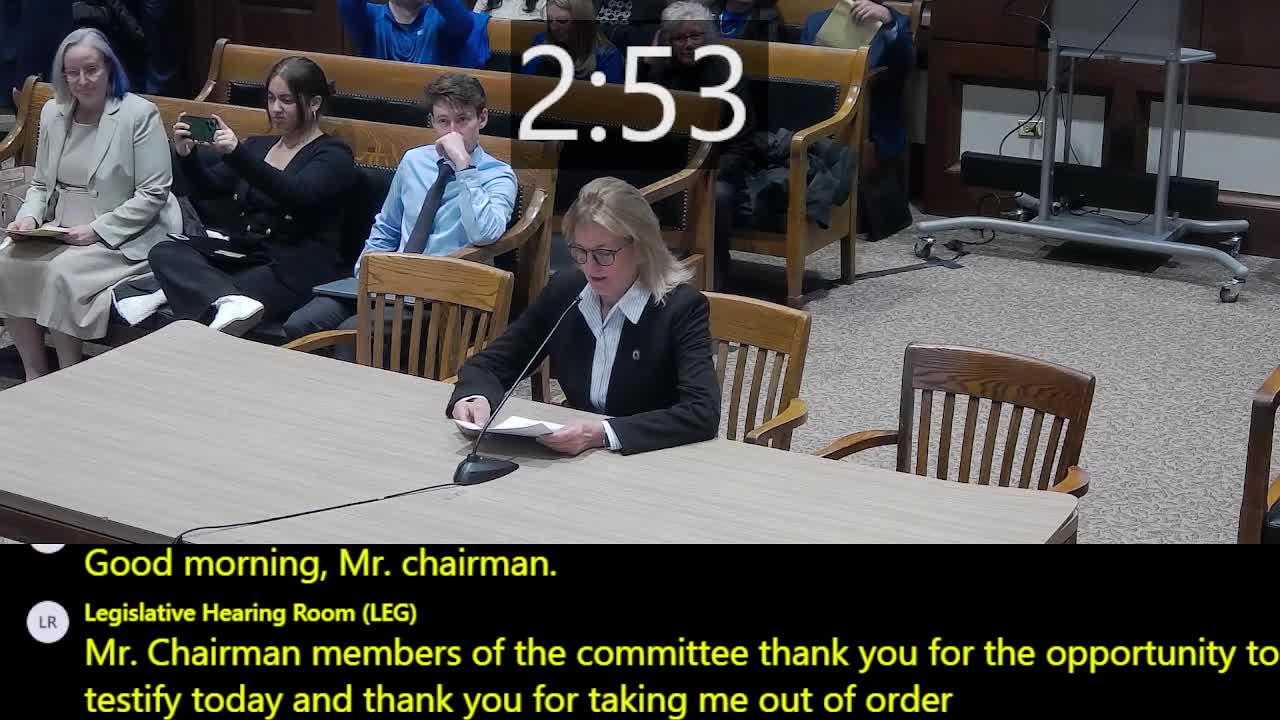
Mass. hearing spotlights S.1718 to require hospitals to adopt workplace-violence prevention programs
Summary
Senators and witnesses told the Joint Committee on Public Safety and Homeland Security that violent assaults on hospital staff have risen and urged passage of S.1718, which would require hospitals to develop facility-specific risk assessments and comprehensive workplace-violence prevention programs.
Senators and witnesses told the Joint Committee on Public Safety and Homeland Security that violent assaults on hospital staff have risen and urged passage of S.1718, which would require hospitals to develop facility-specific risk assessments and comprehensive workplace-violence prevention programs.
Supporters said the bill combines prevention, reporting and enforcement elements crafted with labor and employers. Steve Walsh, president of the Massachusetts Health and Hospital Association, told the committee: “What happens every 36 minutes in a Massachusetts hospital? … It's the assault of 1 of our workers every 36 minutes.”
The bill would require employers to engage the workforce in assessments and training, create regular reporting, and strengthen enforcement tied to Department of Public Health licensing. The legislation also includes job protections and additional paid leave for workers who are assaulted and must attend legal proceedings. Julie Pinkham, executive director of the Massachusetts Nurses Association, described the bill as “built around prevention, transparency, and accountability.”
Union leaders said they helped negotiate the compromise now before the committee. Carrie Medina, vice president of the community care team at SEIU 1199, said the bill “appropriately mandates that facility employers include worker input in developing a facility specific risk assessment” and that worker participation in designing prevention measures is essential to success.
Committee members pressed witnesses on avoiding the inadvertent criminalization of people in behavioral-health crises. Walsh and other witnesses said the bill attempts to bifurcate responses: protecting workers’ rights to care and time off after harm while ensuring that patients experiencing a behavioral-health episode are not automatically treated as criminal actors. Walsh said the sponsors were “very clear that a person that is in the middle of a behavioral diagnosis cannot formulate the intent necessary to commit a crime.” Dr. Melissa Leibach, chief of emergency medicine for Mass General Brigham’s seven community hospitals, urged stronger penalties for attacks on clinicians, telling the committee such incidents often leave staff traumatized and perpetrators discharged: “a misdemeanor means no warrantless arrest, no departure in police custody, especially when warranted.”
Witnesses representing hospitals, nurses and unions told the committee they negotiated language across sessions and that the current draft reflects those compromises. Testimony emphasized annual assessments to keep prevention measures current and that programs must be flexible to reflect differences between urban medical centers and smaller community hospitals.
Committee members and witnesses encouraged additional coordination with district attorneys and law-enforcement partners on implementation and enforcement protocols. No formal committee action or vote was recorded during the hearing.
S.1718 remains before the Joint Committee on Public Safety and Homeland Security for further consideration; supporters asked that it be reported out favorably so legislative action can continue.