Get Full Government Meeting Transcripts, Videos, & Alerts Forever!
Get email alerts on the Worker Safety topic
No spam. Unsubscribe anytime.
Family, unions and safety advocates press for «department of workplace and consumer safety» at CCC after worker fatality
Summary
Multiple witnesses, including the mother of a worker who died, unions and safety groups urged the Joint Committee to back H.194 to create a safety department inside the Cannabis Control Commission to protect workers and consumers.
Family members of a deceased cannabis worker, labor unions and workplace-safety groups urged the Joint Committee on Cannabis Policy to report H.194 favorably, a bill that would create a department of workplace and consumer safety within the Massachusetts Cannabis Control Commission.
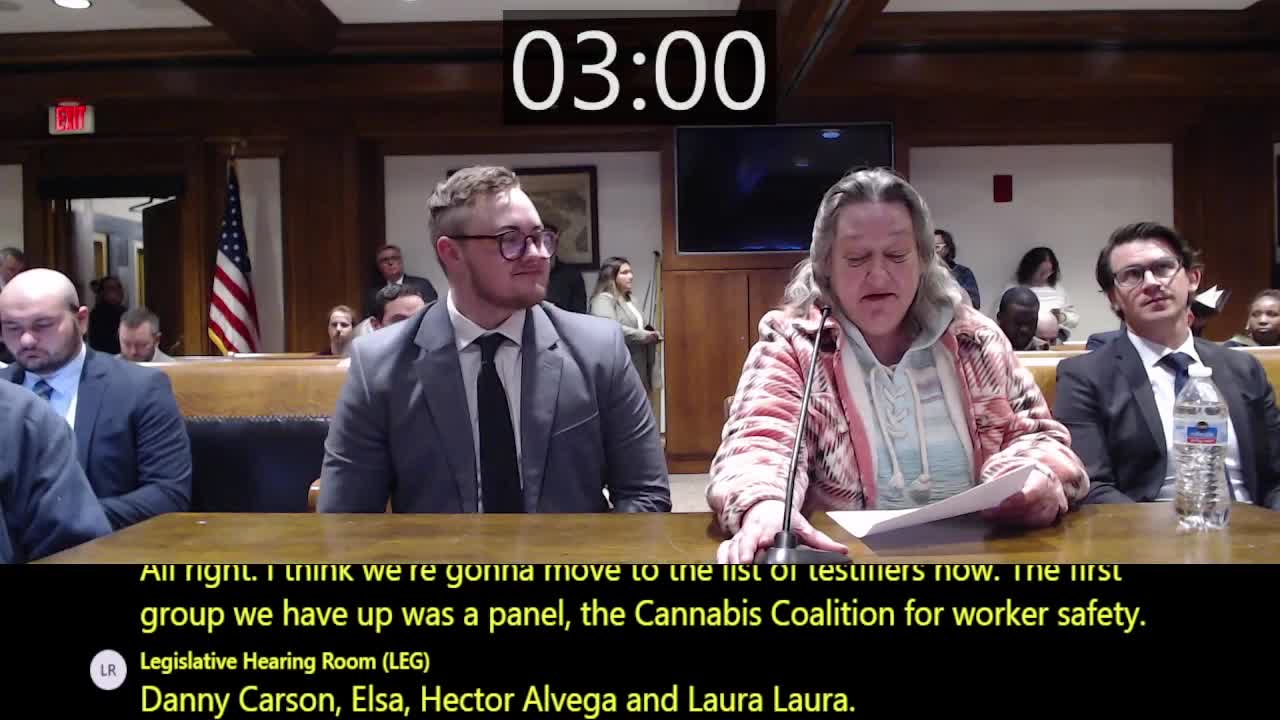
Lorna McMurray’s mother, Laura Bruno, told the committee her daughter collapsed and later died after an on-the-job asthma attack while working at a production facility in Holyoke. "Lorna's asthma attack was caused by occupational exposure to cannabis dust," Bruno said. She asked the committee to "support Bill H194 and take meaningful action to create safe, safer workplaces and protect lives." Bruno directly sought regulatory changes to prevent similar deaths.
Why it matters: Multiple witnesses described symptomatic workers, inconsistent personal protective equipment (PPE), mold and dust exposure and alleged retaliation when workers raised concerns. Danny Carson, co-founder of the Coalition for Cannabis Worker Safety, said his group had tested more than 100 retail products for total yeast and mold; 47% exceeded the safe threshold adopted by the state. Labor representatives, including United Food and Commercial Workers Local 1445, urged the CCC to adopt enforceable, industry-specific protections.
What advocates asked for: Witnesses, including public-health and occupational-safety groups, urged the CCC be authorized to require industry-tailored injury and illness prevention programs; standardized training and vendor training that explicitly covers hazards in cultivation and processing; respirator fit testing, ventilation standards and respiratory protection; whistleblower protections to prevent retaliation; and technical assistance for small businesses to implement protections.
What was said: Al Vega of the Massachusetts Coalition for Occupational Safety and Health said the CCC should require workplace injury and illness prevention programs tailored to the cannabis industry and incorporate health and safety into required vendor training. UFCW political director Jack Kentsla said unions represent more than 1,000 cannabis workers in Massachusetts and that standardization of protections is overdue.
Committee response and follow-up: Committee members asked witnesses to point to examples in other states; advocates cited Washington and Nevada as models with worker-safety rules for cannabis. Witnesses also urged the committee to require the CCC to publish clear enforcement standards and to fund a dedicated enforcement capacity.
Next steps: The committee heard H.194 and a range of other proposals in a lengthy hearing. Supporters want the bill to require the CCC to put worker and consumer safety at the top of its enforcement priorities, to create an anonymous reporting line, and to develop enforceable rules and training standards directly tailored to cultivation, processing and retail operations.