State advisory commission hears overview of CCRCs, focuses on contracts, refunds and resident representation
Loading...
Summary
Members of the Joint Committee on Aging and Independence heard an overview of continuing care retirement communities, discussed differences among contract types, consumer disclosures including refund timelines, and raised concerns about advertising and resident representation on nonprofit boards.
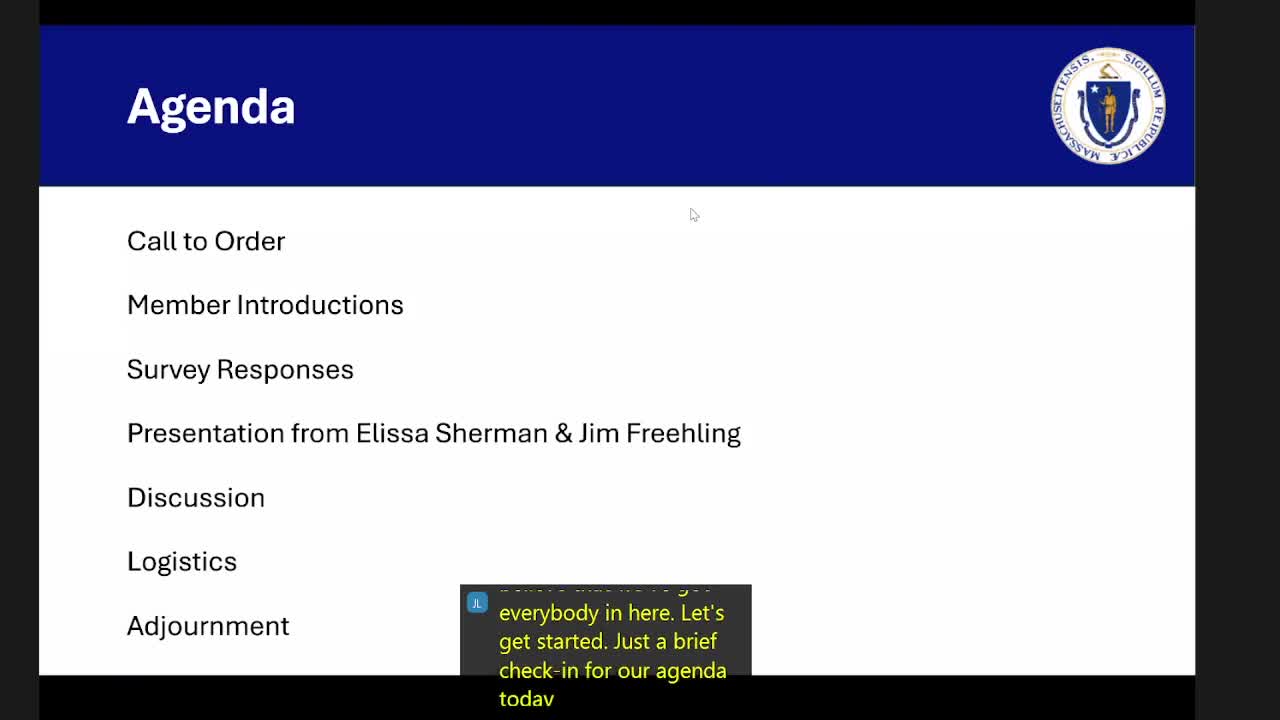
The Joint Committee on Aging and Independence met to review the continuing care retirement community (CCRC) model, with presenters describing contract types, disclosure rules and common consumer questions about refunds and governance.
The panel heard that CCRCs combine housing and health services under multi‑year contracts and typically require an entrance fee plus monthly payments. "A contract is effective for either the life of the individuals or for a period of time in excess of 1 year," said Alyssa Sherman, president of LeadingAge Massachusetts. Sherman told the commission that CCRCs are often referred to as "life plan communities," but that the commission’s statutory work uses the term CCRC.
Why the issue matters: commissioners and members said many consumers are satisfied with CCRCs but that affordability, transparency and advertising practices can confuse prospective residents. Jennifer Filarew, researcher for the Joint Committee on Aging and Independence, said survey responses the commission received so far show financial viability and affordability, consumer protections, and regulation and monitoring as top priorities for the panel.
Presentation highlights and contract types Jim Freleng, president of Brookhaven at Lexington, described Brookhaven as a Type A ("life care" or "extensive") contract community. "Brookhaven is a type a, contract. That is a contract that our consumer wants, our residents want," Freleng said, explaining that Type A contracts typically include more predictable monthly costs in exchange for a higher entrance fee.
Alyssa Sherman summarized three common contract models: Type A (life care, with predictable monthly costs but higher entrance fees), Type B (modified contracts that may limit included health services and charge additional fees once a specified amount of care is used) and Type C (fee‑for‑service, in which care is billed at market rates and entrance fees are generally lower). "There are a variety of different living arrangements," Sherman said, noting some CCRCs do not operate nursing facilities but provide access to home health, assisted living or other supports.
Disclosure, reporting and oversight Speakers noted that certain contract terms and financial disclosures are required in Massachusetts: Sherman said the relevant requirements appear in statute and consumer‑protection rules and are reported to the Executive Office of Elder Affairs (EOEA) for posting to a public website. The transcript identifies the statutory references as "Mass General Laws, Chapter 9,376" and "chapter 93, section 76 of the attorney general's Consumer Protection Statute." (These text fragments were cited by presenters during the meeting and are recorded in the transcript.)
Refunds, timing and related consumer questions Commissioners pressed providers on how quickly entrance‑fee refunds are paid when a unit is vacated. Freleng said Brookhaven’s model is 90% refundable based on reoccupancy and that the community uses an amortization approach: "If a person's there for fewer than 100 months, then 1% per month is held back until the unit is reoccupied," he said, adding, "The remaining amount that has not been amortized is paid back within a hundred and 20 days initial." He also said families typically have 30 days to remove a deceased resident’s belongings before the community reclaims the unit.
Alyssa Sherman and other presenters said LeadingAge Massachusetts is collecting more data from member communities on refund terms and timelines to inform the commission. Tara Gregorio of the Mass Senior Care Association and Senator Patricia Jalen urged that the timing of refunds and the variability across communities be a data point for the commission’s public policy work.
Advertising and consumer confusion Multiple participants said marketing language can blur the line between CCRCs (contract communities with entrance fees) and rental senior living developments. Robin Lipson of the Executive Office of Elder Affairs said EOEA posts financial statements for CCRCs and emphasized the need for clearer consumer information. Several commissioners and resident representatives urged the commission to consider disclosure or advertising rules so consumers can distinguish CCRCs from other senior housing products.
Resident governance and board seats Several resident speakers urged stronger resident representation on nonprofit boards. Christine Griffin, a resident at Linden Ponds, said, "The fact that we don't sit on the board is is a problem," and asked the commission to consider recommending statutory changes. Providers and association representatives described a range of governance practices: some nonprofits select resident board members through governance committees and some communities give residents strong input through resident associations, standing committees and regular trustee‑resident meetings.
Next steps and logistics The commission was told that the top topics from member surveys—financial viability/affordability, consumer protections and regulation/monitoring—will guide the work plan. Presenters offered site visits; Brookhaven invited commissioners to tour its campus. The group tentatively scheduled a public hearing for 06/03/2025 at 10:00 a.m.; the commission also set May 12 as the next meeting date to focus on regulation standards and monitoring. LeadingAge Massachusetts said it will collect and share data on entrance‑fee refund terms and average timing from member communities.
The meeting closed with chairs and staff confirming slides and minutes will be shared with commissioners and that a virtual option will be provided for the public hearing. The commission will return at its May meeting to examine oversight, disclosure and advertising practices, and to review the refund/timing data the provider associations gather.