Get Full Government Meeting Transcripts, Videos, & Alerts Forever!
Get email alerts on the Climate International Aid topic
No spam. Unsubscribe anytime.
Panel urges voluntary tax checkoff to send donations to U.N. fund for least developed countries
Summary
Senate 19 22 would add a voluntary checkoff on Massachusetts income tax returns to let residents donate to the United Nations Least Developed Countries Fund or to qualifying nonprofits, proponents told the Joint Committee on Revenue.
Proponents of Senate 19 22 told the Joint Committee on Revenue that the bill would create a voluntary checkoff on Massachusetts personal income tax returns to allow donations to the United Nations Least Developed Countries Fund (LDCF) or to qualifying nonprofits that further the LDCF mission.
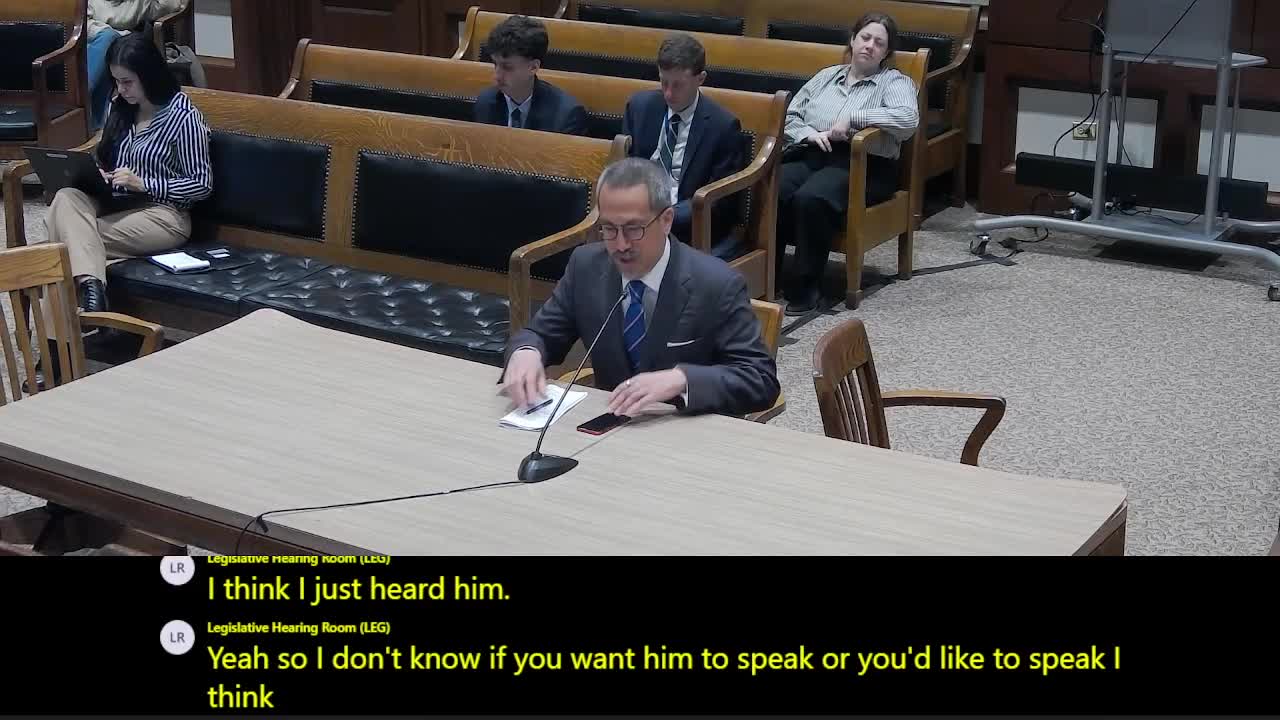
Keith Bergman, a Concord resident and former town manager with the Climate Reality Project Boston Metro chapter, told the committee the LDCF has supported projects that build resilience in the countries most affected by climate change and that a state checkoff would enable residents to contribute directly. “By passing this bill this year, Massachusetts can make a real difference,” Bergman said. He said the fund has supported hundreds of projects with roughly $2.1 billion in grants benefiting millions of people worldwide.
Larry Yoo, a Somerville resident and former co‑chair of the Climate Reality Project Boston Metro chapter, described the bill as a low‑cost, voluntary program that would not obligate the Commonwealth but would let taxpayers contribute to adaptation projects such as improved early‑warning systems and climate‑resilient farming practices.
Committee members asked how the LDCF list of eligible countries is determined and whether the public would receive guidance about where donated dollars actually flow. Senator Rauch asked whether funds could reach countries on the U.N. least‑developed list — including, as she cited from U.N. materials, nations such as Yemen — and whether donors would know if money went to projects in those countries. Bergman said the list is maintained by the United Nations and that the fund is administered through U.N. mechanisms; he did not provide additional detail on public notification.
Senator Keenan highlighted that the bill allows transfers to a U.N. LDCF trustee or to a 501(c)(3) whose mission furthers the LDCF, and asked who would determine what nonprofits could receive funds under state law. A committee member said written clarification would be provided to explain procedures for transfers and oversight.
No vote or committee action was recorded at the hearing. Testifiers asked the committee to report the bill favorably so Massachusetts residents could make voluntary donations to vulnerable countries through an established U.N. facility or vetted nonprofits.