Get Full Government Meeting Transcripts, Videos, & Alerts Forever!
Get email alerts on the Charitable Immunity topic
No spam. Unsubscribe anytime.
Supporters urge repeal of Massachusetts' $20,000 charitable-immunity cap, calling it outdated
Summary
Victims' advocates, attorneys and Representative Gentile urged the Judiciary Committee to eliminate the charitable-immunity cap (G.L. c.231, §85K), arguing the $20,000 limit for most tort claims — and $100,000 for malpractice — leaves seriously injured plaintiffs undercompensated and shifts costs to taxpayers.
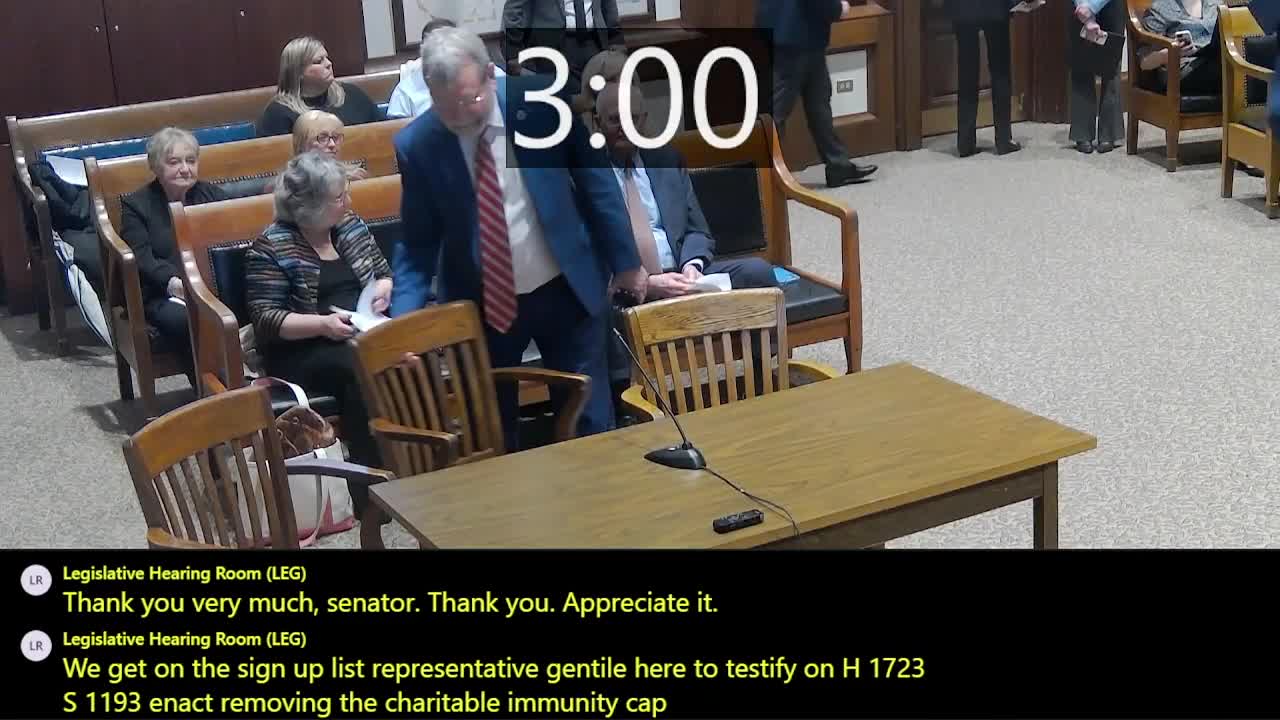
Representative Gentile and several witnesses urged the Joint Committee on the Judiciary to favorably report H.17‑23/S.11‑93, a bill to remove the charitable-immunity cap codified in General Laws chapter 231, section 85K.
Representative Gentile described how the current statutory cap yields inequitable outcomes when deeply resourced nonprofit institutions are defendants, saying that an individual struck and severely injured by a vehicle owned by a large nonprofit may obtain only $20,000 under the existing rule while the nonprofit and its insurers avoid paying full compensation.
Attorney Jeffrey Beeler told the committee that the charitable-immunity rule originated in an English common-law case more than a century ago, was subsequently abandoned in England and most U.S. jurisdictions, and remains an “outlier” in Massachusetts. He said the cap was set decades ago and that hospitals, universities and other charities carry substantial liability insurance; eliminating the cap would allow injured persons to recover against insurers and reduce the likelihood that injured people become public wards on Medicaid or MassHealth.
Beeler and other speakers framed the measure as both a fairness and fiscal-policy reform: they argued it restores access to meaningful compensation for victims and shifts costs back to private insurers rather than public assistance programs. Speakers urged the committee to move the bill forward and questioned why insurers and charities should retain a statutory shield when they carry insurance to cover foreseeable negligence.
Committee members did not take a formal vote during the hearing; supporters asked for a favorable report to advance the bill.