Get Full Government Meeting Transcripts, Videos, & Alerts Forever!
Get email alerts on the Education Funding topic
No spam. Unsubscribe anytime.
Students, educators warn Ways and Means: chapter 70 and local aid shortfalls forcing staff, program cuts
Summary
Dozens of students, teachers and municipal leaders told the Joint Committee on Ways and Means that the state's school funding formulas leave many districts unable to maintain staff and programs. Speakers pressed for fixes to chapter 70, full reimbursement for transportation and a higher minimum per-pupil grant.
Hundreds of students, educators and local officials told the Joint Committee on Ways and Means on April 1 that Massachusetts' current K'12 funding formulas are driving cuts across the Commonwealth and risking class-size increases, program eliminations and, in some districts, further layoffs.
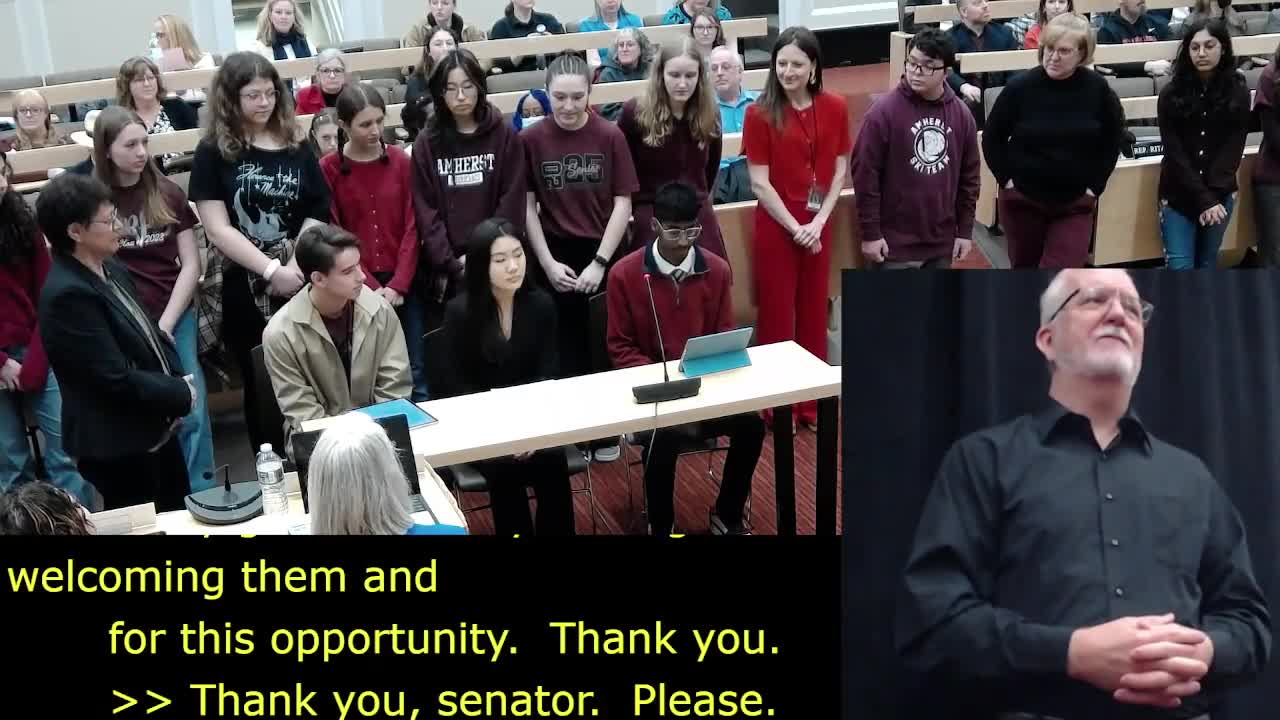
"Electives are a cornerstone of opportunity at every school," said Yatharath Rajakumar, a 16-year-old student who testified for Amherst Regional High School students. "Cutting electives may seem right, but each class allows students to express creativity and have fun."
Parents, students and superintendents from Western and Central Massachusetts described similar scenes: districts that passed recent overrides but still face multi-million-dollar deficits; regional districts that say they are held harmless by the state formula yet still cannot meet level services; and rural districts that contend it costs substantially more per pupil to operate a small or regional school.
"Chapter 70 has left countless school districts across Massachusetts behind," said Owen Daggett, a Northampton High School student. "It would be a complete disaster for this motion to be overlooked and deny thousands of students across Massachusetts the education that they deserve."
Municipal leaders and school committee members gave a local budget view: Lunenburg, a nonregional district, reported a $2 million shortfall that equates to 9.5% of permanent staff; Groton'Dunstable and other regionals described repeated losses of positions and the prospect of further cuts if the state does not change the growth formula or augment targeted aids such as the special-education circuit breaker and transportation reimbursement.
Rep. Mindy Domb's colleagues and local senators repeatedly urged the committee to "crack open" chapter 70 so funding keeps pace with real costs and inflation. Students and educators highlighted immediate priorities: fully fund the circuit-breaker program for special education, reexamine Chapter 70's inflation adjustment, increase minimum aid and establish a multi-year schedule to fully reimburse in-district transportation costs.
Superintendents said their budgets are squeezed by health-care and collective-bargaining cost growth, rising special-education placements and long bus routes that do not qualify for additional state aid. "We cannot provide adequate education with this financial strain," said one regional official.
Why this matters: Districts that cannot stabilize staffing and core supports risk losing programs that affect students' daily learning, such as reading specialists, school counselors, music and arts, and career programs. Several advocates warned that deferred action will push more districts toward repeated overrides, deep service cuts and long-term declines in access and outcomes.
Committee members noted the size and scope of the problem and repeatedly asked for concrete proposals. Speakers urged immediate supplemental steps for FY26 while recommending a broader statutory review of chapter 70 ahead of the next budget cycle.
End note: Testimony at the hearing included students from Amherst and Northampton, district superintendents and municipal leaders. Several witnesses asked legislators to fund proposals circulated by education associations and municipal coalitions; they also asked the committee to reconvene the K'12 funding review process to deliver a multi-year solution.