Get Full Government Meeting Transcripts, Videos, & Alerts Forever!
Get email alerts on the Mental Health topic
No spam. Unsubscribe anytime.
Department of Mental Health outlines FY26 trade-offs: inpatient funding prioritized, case management halved, Cape unit paused
Summary
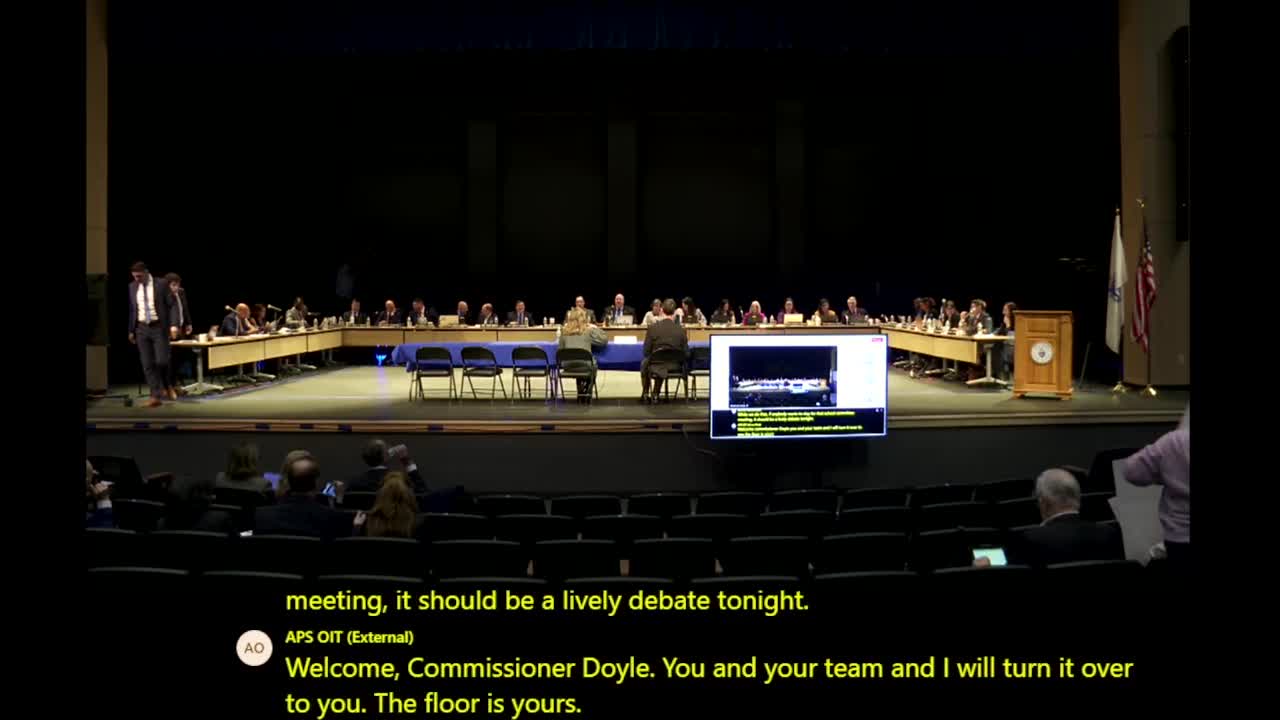
Commissioner Brooke Doyle told the Joint Committee on Ways and Means that the governor’s House 1 budget increases DMH funding but that rising demand, inpatient over‑occupancy and higher operating costs mean the department must prioritize inpatient services and restructure community case management.
Commissioner Brooke Doyle of the Department of Mental Health told the Joint Committee on Ways and Means that the governor’s House 1 budget would raise DMH funding but still requires program reductions and operational changes to balance rising costs.
Doyle said the department serves about 29,000 people statewide — roughly 4,100 of them youth — and that the governor’s FY26 proposal would fund DMH at about $1.275 billion, roughly a 7% increase over last year. She emphasized that demand and acuity have grown, and that all of DMH’s inpatient beds are currently full: "All of our beds, literally 100% of them are occupied," Doyle said, adding that some units have operated over capacity for nearly two years.
Why it matters: Doyle said the department must prioritize continued full funding of its state‑operated inpatient services — more than 700 beds statewide — because those beds serve patients whose needs cannot be met elsewhere, including people transferred from Bridgewater State Hospital. To pay for that priority, the department proposed a package of changes affecting state‑run and contracted services.
Key proposals and effects - Pacasset unit (Cape): Doyle described the Pacasset 16‑bed acute unit as a small, acute‑care facility that admits patients who are appropriate for that level of care and noted safety limits tied to staffing. The governor asked the department to “pause any action” on planned changes and to form a working group to review access to mental health treatment on Cape Cod; Doyle said the working group has not yet started.
- Case management: Doyle said the department would reduce a category of case management staff by 50% and restructure delivery toward an "open access" or mobile model rather than the current assigned‑caseworker pairing. She said site offices, directors and supervisors would remain, and that existing enrolled clients would continue to receive services; the department estimated the cut would reduce 33 case manager positions. "We will continue to have a full complement of supervisors," Doyle said, and described plans for proactive outreach lists and increased use of critical‑needs case management.
- Youth continuum (IRTP and CIRT): Doyle said adolescent intensive residential treatment programs (IRTP) and the Clinically Intensive Residential Treatment program (CIRT, ages 6–12) have been underutilized and face staffing and referral‑process barriers. Because many of these programs are paid in full regardless of occupancy, the department proposed "right‑sizing" — reducing the number of IRTP sites and closing or resizing underused slots — to match demand and maintain safe staffing.
- Other youth programs and ARPA wind‑down: Doyle said some reductions reflect the end of ARPA grant funds that had temporarily supported expansions, including parts of jail diversion grants and some Youth PACT teams; the department proposed maintaining the most promising teams and prioritizing co‑response where possible.
- Behavioral Health Helpline: Doyle highlighted the statewide behavioral health helpline, noting it operates 24/7 in 200 languages and has handled roughly 75,000 calls and 23,000 texts/chats since launching in 2023.
Questions and concerns from committee members Several legislators pressed Doyle on geographic equity and access. Senator Joana Olivera (Western Massachusetts) and other Western Mass. members objected to suggestions that distance makes programs less viable; Doyle replied that the department must weigh parental preferences and staffing constraints when deciding whether a distant placement is safe and feasible. Representative Rodney Elliott and others urged caution about cutting case managers, raising concerns that walk‑in or open‑access models may not catch people who need ongoing outreach. Doyle and the committee exchanged specifics about workforce, collective bargaining protections for affected employees, and whether the department planned to expand private contracts (Doyle said it did not).
What the department said it will do Doyle said the reductions are designed to preserve core inpatient capacity and to shift resources toward early intervention and community‑based services where possible. She repeated that no current clients would be disenrolled from ongoing services and that site offices, supervisors and directors would remain in place while delivery models are redesigned.
Ending note Doyle called the FY26 proposal "the largest budget we've ever seen" for DMH and urged continued partnership with the legislature and stakeholders as the administration and department work through the proposed changes.