Get Full Government Meeting Transcripts, Videos, & Alerts Forever!
Get email alerts on the Consumer Finance Payday Loans topic
No spam. Unsubscribe anytime.
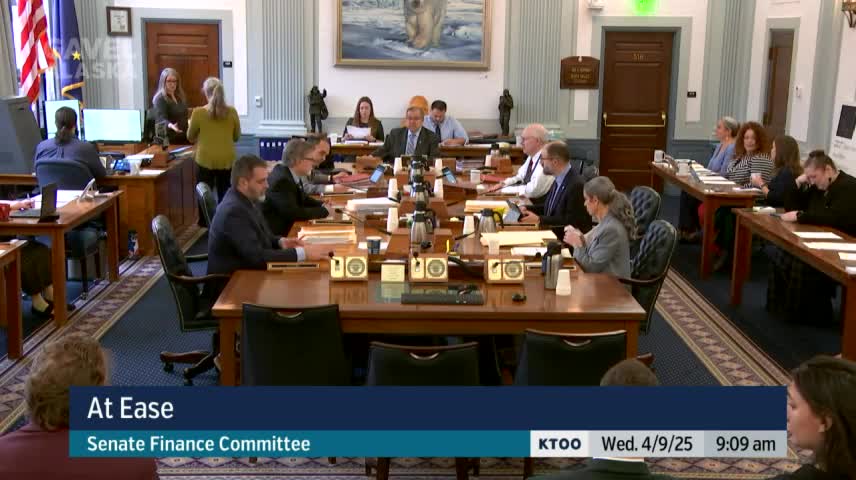
Finance committee adopts CS and advances payday‑loan reform imposing 36% APR cap (SB39)
Summary
The committee adopted a committee substitute for SB39 and moved the bill from committee. The substitute imposes a 36% APR cap on small‑dollar loans under $25,000, removes an existing exemption, and clarifies that pawnbroking and mutual savings banks are not covered.
Juneau — The Alaska Senate Finance Committee on April 9 adopted a committee substitute for Senate Bill 39 and reported the measure from committee. The bill would regulate small‑dollar loans under $25,000 by imposing a 36% annual percentage rate cap and removing a current exemption for payday‑loan businesses.
"Senate Bill 39 involves regulations for payday lending businesses imposing a 36% cap and removing the current exemption that exists for them in our typical laws," said Senator Forrest Dunbar, the bill's prime sponsor. Dunbar told the committee that passage would bring Alaska in line with roughly 19 other states that have similar caps and that a federal law prevents targeting service members for predatory loans.
Liz Harpold, a Senate Finance Committee aide, explained the changes rolled into the committee substitute (CS): pawnbroker activities unrelated to payday lending are exempt and mutual savings banks are not affected because they are governed by existing statute. Senator Stedman moved to adopt the CS; the committee adopted it by unanimous consent. Senator Kiel later moved the CS from committee and the chair said, "Seeing none, that bill passes from committee."
Committee members asked whether a 36% cap would restrict access to larger small‑business or consumer loans in the $10,000–$25,000 range, with concerns that traditional banks might not serve that market. Dunbar and committee counsel pointed to experience in other states where traditional lenders have filled some of that demand and to research suggesting high default and bankruptcy rates among borrowers who take out high‑cost roll‑over loans.
Why it matters: The CS would extend consumer protections to a broader set of small loans and remove a statutory exemption; supporters said the cap reduces harmful rollover borrowing, while some members sought further data on market impacts for middle‑range loans.
Next steps: The committee reported SB39 from committee with an attached fiscal note and recommendations; staff signed the committee report and the bill proceeds to further legislative consideration.