Get Full Government Meeting Transcripts, Videos, & Alerts Forever!
Get email alerts on the Farmworker Housing topic
No spam. Unsubscribe anytime.
Committee sends farmworker-housing bill to Rules after contentious testimony over scope and worker protections
Summary
Senate Bill 999 (dash 2) — which would adjust which employer-provided housing is treated as an Oregon OSHA-regulated "farmworker camp" and move certain habitability issues toward landlord–tenant frameworks — was sent to Senate Rules without recommendation after substantial opposition by farmworker advocates.
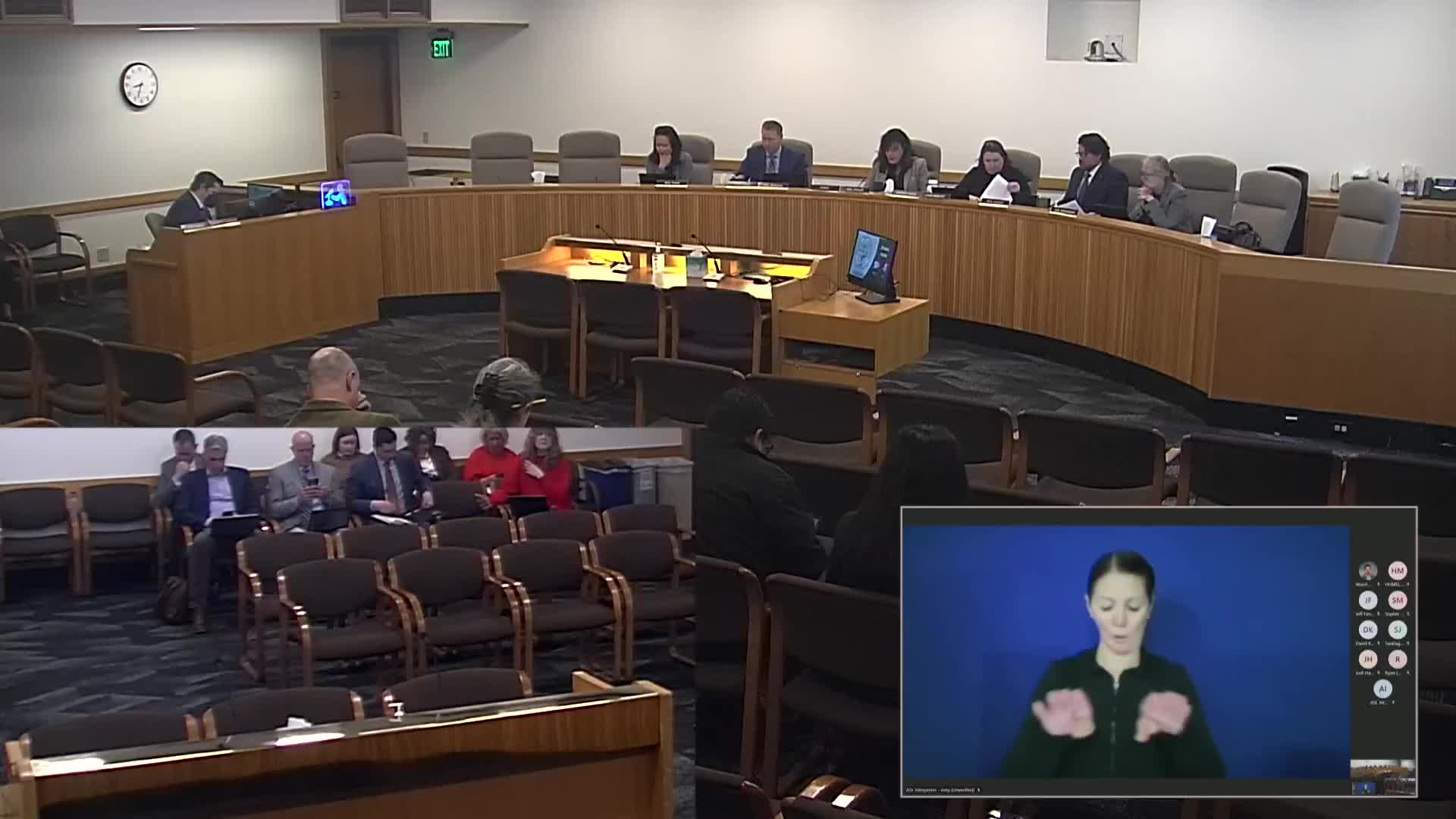
The Senate Committee on Labor and Business on April 8 voted to send Senate Bill 999, as amended (dash 2), to the Senate Rules Committee without recommendation after extensive public testimony and debate over whether shifting regulatory authority would reduce farmworker housing protections.
Why it matters: SB 999 seeks to clarify and narrow the statutory definition of "farmworker camp" and to align Oregon OSHA’s applicability with federal OSHA definitions for temporary or seasonal housing. Opponents warned the proposed changes would remove well-established protections for workers who live in employer-provided housing, including single-family dwellings and small residences that have historically been regulated as agricultural labor housing.
What the dash-2 amendment does: According to staff, the dash-2 replaces the measure and incorporates several clarifications. It aims to apply habitability requirements to permanent housing that employers provide and to align Oregon OSHA’s definition of farmworker camp more closely with the federal Department of Labor’s definition of a temporary labor camp. The amendment attempts to reserve Oregon OSHA’s direct citation authority to housing that meets the statutory farmworker-camp definition, while placing habitability standards for single-family, longer-term employer housing into a landlord–tenant habitability framework (ORS 93.20). The sponsor said the intent is to preserve existing permanent housing on farms while ensuring safety standards.
Public testimony and concerns
- Farmworker advocates (Northwest Workers’ Justice Project, Oregon Law Center, BECU and others) strongly opposed the dash-2. Testifiers warned the amendment would remove decades of protections, including recently adopted Oregon OSHA rules that apply to single-family dwellings housing five or fewer workers, and would leave people without safeguards such as potable-water testing, laundry provisions for pesticide-contaminated clothes, heat-illness protocols and protections from pesticide drift.
- Employer and business representatives and the bill sponsor said the intent is to preserve housing that is effectively permanent and avoid forcing family-style farm housing into temporary-camp rules that may be a poor fit. The sponsor said the goal is to avoid removing affordable employer-provided housing from the market due to the expense of compliance with rules intended for dormitory-style temporary camps.
- Oregon Law Center and other advocates cautioned that federal OSHA’s authority covers only temporary housing and that exempting other housing types from Oregon OSHA would create a significant protection gap for workers.
Legal and process notes: Department of Consumer and Business Services (DCBS) Director Andrew Stolfi told the committee that federal OSHA standards apply to temporary or seasonal employer-provided housing; Oregon’s state plan must remain at least as effective as federal OSHA. Legislative Counsel noted that Oregon’s landlord–tenant statutes generally exclude employer-provided housing if occupancy is conditioned on employment, so moving habitability requirements into landlord–tenant law would not necessarily import the full suite of landlord–tenant protections for tenants living in employer-provided housing.
Committee action and next steps: Senator Bonham moved that SB 999 be returned to the Senate President requesting re-referral to the Senate Committee on Rules without recommendation. The motion passed on roll call (approx. 4–1; Senator Patterson recorded a no vote). The sponsor and committee members asked for continued stakeholder engagement in Rules to reconcile worker protections with the sponsor’s intent to preserve housing availability.
Quotes
"My intent with this bill is to preserve existing housing…provided to farm workers and their families on a more permanent basis," sponsor Senator Bonham said.
"We are very, very concerned with the dash-2…this would leave farm workers in agricultural labor housing without protections that have been afforded to them for many, many decades," Marta Sonato of the Oregon Law Center said.
Ending: The committee’s referral to Rules signals further negotiation. Stakeholders on both sides asked for more time and drafting work to ensure habitability and occupational-safety protections are not inadvertently removed while addressing the sponsor’s concerns about housing availability and regulatory fit.