Get Full Government Meeting Transcripts, Videos, & Alerts Forever!
Get email alerts on the Lumber Grading Pilot topic
No spam. Unsubscribe anytime.
Committee approves pilot to train lumber graders for small sawmills; bill sent to Ways and Means
Summary
The committee adopted the dash-4 amendment to SB 1061, directing OSU Extension (with DCBS) to pilot a basic lumber-grading training program for small sawmills and to issue certifications and five-year recertifications; the bill was referred to Ways and Means to cover a small fiscal impact.
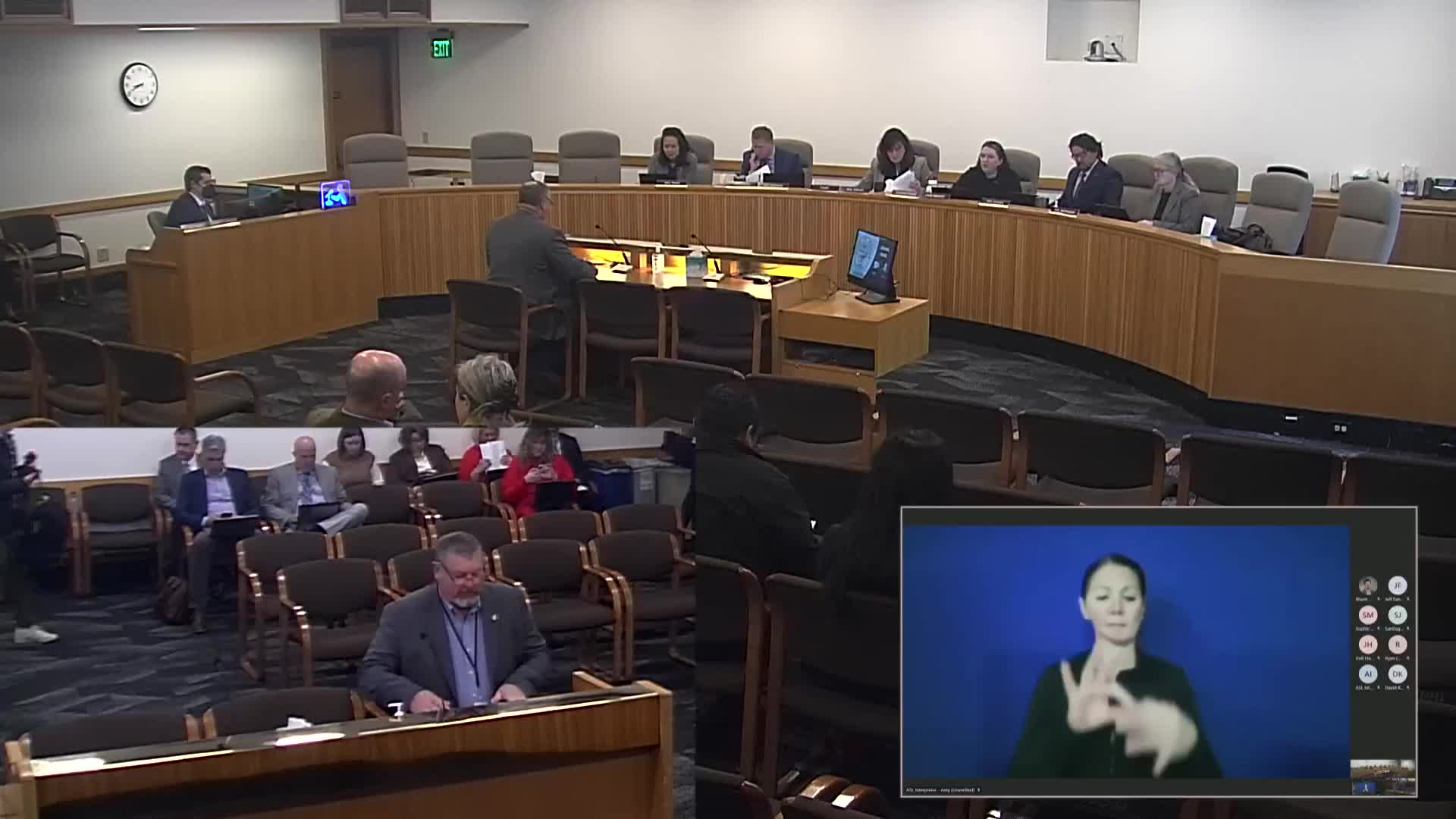
The Senate Committee on Labor and Business on April 8 adopted the dash-4 amendment to Senate Bill 1061 and voted to send the measure to the Joint Committee on Ways and Means for a small fiscal appropriation.
Why it matters: Proponents said the pilot would help small Oregon sawmills and rural communities by training graders to establish basic grading capacity for dimension lumber used in single-family and duplex construction. Supporters framed the program as a way to use locally harvested timber, reduce reliance on imported lumber and expand workforce opportunities in rural counties.
What the bill does: The dash-4 amendment requires the Oregon State University Extension Service, in consultation with the Department of Consumer and Business Services (DCBS), to establish an annual basic lumber grading training pilot. The pilot would include certification and recertification (every five years) for individuals who complete the program. DCBS must adopt rules allowing builders, designers or owners to use lumber graded by a certified individual and may not require product-labeling approaches that the bill disallows; the program sunsets on Jan. 2, 2033. The amendment replaces the introduced version and specifies training, certification, and rulemaking responsibilities.
Committee debate and testimony: Sponsor Senator Todd Nash said the bill responds to lost milling capacity — "40 years ago there were 69 active commercial sawmills; 62 of those have shut down" — and aims to support small sawmills and cleanup of forests while helping housing supply. Testimony included:
- David Kretchman, president of the American Lumber Standard Committee (ALC), opposed the bill as drafted. He noted existing accredited processes and raised concerns about insufficient training, instructor qualifications and unclear design values for self-graded lumber.
- Sophie Morin, American Wood Council, requested stronger oversight and recommended explicit alignment with PS 20 design-value standards referenced in the Oregon residential specialty code.
- Chris Edwards, Oregon Forest Industries Council, said the council had many earlier concerns but appreciated changes in the dash-4 and the inclusion of liability protections; the council registered neutrality on the dash-4.
- Jeff Fantozzi, Pacific Lumber Inspection Bureau, opposed the bill as drafted and emphasized the need for extensive hands-on practice, third-party verification and product labeling to preserve building-code assurances.
- Jody Hack, Oregon Home Builders Association, supported the dash-4 and said the program could create workforce opportunities in rural areas and support homebuilding using local materials.
Committee outcome and next steps: The committee adopted the dash-4 amendment by voice/consent and then approved the motion to send SB 1061 as amended to the Senate with a due-pass recommendation and referral to Ways and Means. A fiscal note of about $212,000 was mentioned; the bill will need funding and technical rulemaking by OSU Extension and DCBS if it advances. Sponsor Nash indicated he would carry the bill out of Ways and Means if it returns.
Quotes
"We grow trees really well — we should be using them for housing production," sponsor Senator Todd Nash said.
"We greatly appreciate the improvements that the dash-4 amendment has made," said Sophie Morin of the American Wood Council, while noting oversight and quality-assurance questions.
Ending: The committee advanced the pilot to Ways and Means, where members said they will examine the fiscal note and the program's design, including certification standards and ongoing oversight.