Get Full Government Meeting Transcripts, Videos, & Alerts Forever!
Get email alerts on the Public Safety topic
No spam. Unsubscribe anytime.
Wilsonville police report: calls down overall, person crimes up slightly; behavioral‑health clinician shows community follow‑up value
Summary
Chief Robert Werb presented department staffing and four‑year data showing fewer public‑initiated calls, a drop in property crimes since a 2022 spike, and increased use of a behavioral‑health clinician who completed 561 contacts last year including 89 follow‑ups and 121 crisis responses.
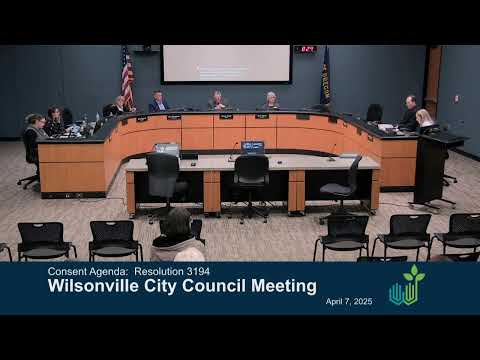
Chief Robert Werb, Wilsonville’s contracted police chief through the Clackamas County Sheriff’s Office, gave a data‑driven overview of the department’s operations and crime trends at the April 7 meeting.
Werb reported the department’s authorized staffing at 23 personnel and described shift assignments that keep a sergeant and multiple deputies continuously assigned to the city. He said the department benefits from county resources—accident reconstruction, behavioral‑health clinicians, K9, SWAT and search‑and‑rescue—that can be deployed as needed.
Using four years of data, Werb said public‑initiated calls (911 and walk‑ins) have declined since 2021, while self‑initiated activity by officers—traffic stops, business checks and other proactive work—has increased. Property crimes spiked in 2022 and then trended downward; person crimes (assaults, domestic and other crimes against persons) have fluctuated and showed a modest increase in the most recent year. Werb provided comparative rates per 1,000 residents against other county and regional contract cities to give context for Wilsonville’s numbers.
Werb highlighted the behavioral‑health clinician assigned to the department as a major program success. Over roughly two years the clinician handled 561 contacts last year, including 121 same‑day crisis responses and 89 follow‑ups. Werb said 20 percent of those clients were houseless at the time of contact; 74 percent of cases were resolved in the community and 24 percent required referral to higher‑level care or emergency services.
Werb also noted completion of a building upgrade in 2024 that added a private interview space and improved lobby privacy. He closed by listing community‑engagement programs—Coffee with a Cop, bike rodeos, National Night Out and school resource officer activities—that the department uses to maintain community relations.
Councilors thanked Werb and commended the department’s community policing orientation and the behavioral‑health clinician’s follow‑up work. Several councilors noted that the department’s structure—contracting with the county—allows the city to access specialized county resources while retaining officers who appreciate the small‑city assignment.
No council action was required on the presentation.