Get Full Government Meeting Transcripts, Videos, & Alerts Forever!
Get email alerts on the Youth Vaping Flavored Tobacco Policy topic
No spam. Unsubscribe anytime.
Committee narrows sale of flavored tobacco to OLCC stores, sends SB 702 to Finance and Revenue
Summary
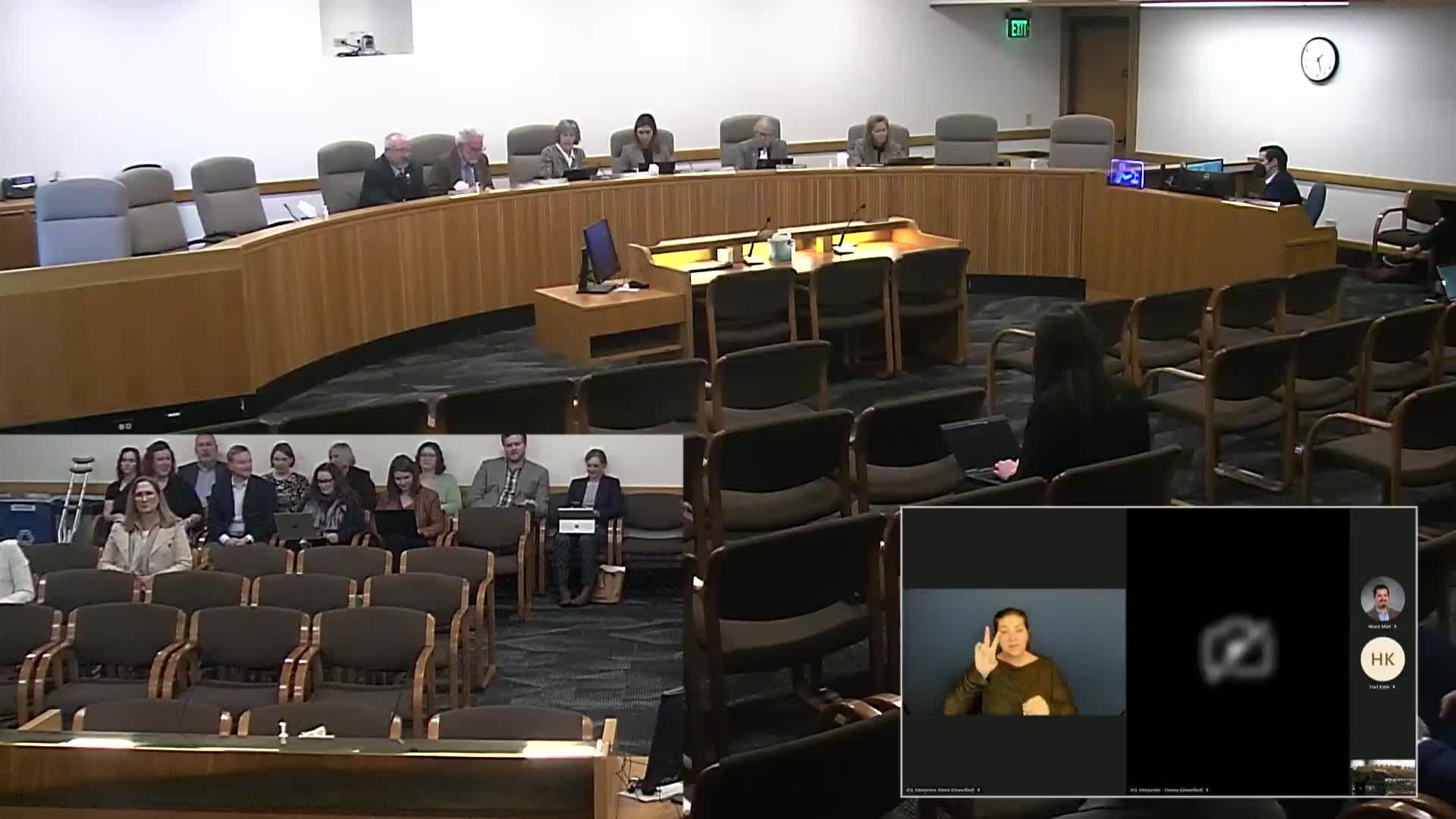
The Senate Committee on Early Childhood and Behavioral Health on April 8 adopted a dash-3 amendment to Senate Bill 702 that would limit the sale of flavored tobacco products to OLCC-operated liquor stores and referred the measure to the Senate Committee on Finance and Revenue.
Chair Tara Reynolds reopened discussion April 8 on Senate Bill 702 and described a dash-3 amendment that would limit the sale of flavored tobacco products and flavored inhalant-delivery systems to Oregon Liquor and Cannabis Commission (OLCC) stores that sell liquor.
Reynolds framed the dash-3 change as a middle-ground enforcement mechanism: OLCC-run liquor stores already have age-verification processes and restricted access. "I just want to make clear it's not marijuana stores," Chair Tara Reynolds said, clarifying the amendment’s scope. She said the change would make access harder for underage people while still allowing adults legal access in tightly regulated retail settings.
Senator Patterson offered personal testimony about the harms of early tobacco use and described his brother’s recent death from lung cancer after starting smoking as a teenager. "They shouldn't be selling those to children," Senator Patterson said as he shared his brother's experience and urged action to reduce youth access.
Committee staff summarized the amendments and noted there are multiple amendment options on OLISS, including ones that (1) change the operative date and definition of characterizing flavor; (2) establish a task force on youth vaping; (3) restrict flavored product sales to OLCC-run stores (dash-3); and (4) require electronic ID scanning at point of sale (dash-4). Staff told the committee that fiscal and revenue statements for the dash-3 amendment are available on OLISS and that both were issued as "light" fiscal/revenue analyses requiring further study in the next committee.
Vice Chair Anderson moved to adopt the dash-3 amendment; the amendment was adopted on a roll call and the committee then moved SB 702, as amended, to the floor with a due-pass recommendation and referred the measure to the Senate Committee on Finance and Revenue for fiscal and revenue analysis. The clerk recorded the roll-call votes and the motion passed.
Members debated enforcement and policy approach. Some members said narrowing points of sale to OLCC stores creates an enforcement advantage; others opposed adding retail restrictions and preferred education and broader enforcement across all retailers. The committee closed the work session on SB 702 and sent the bill to Finance and Revenue for further fiscal and policy study.