Get Full Government Meeting Transcripts, Videos, & Alerts Forever!
Get email alerts on the Unconscious Bias Jury topic
No spam. Unsubscribe anytime.
Utah Supreme Court justice tells prospective jurors to guard against unconscious bias
Summary
Justice Jill Pullman told prospective jurors in a court video that unconscious bias affects everyone and offered steps jurors can take during trials and deliberations to reduce its impact, citing studies and examples such as hiring-resume experiments and blind orchestra auditions.
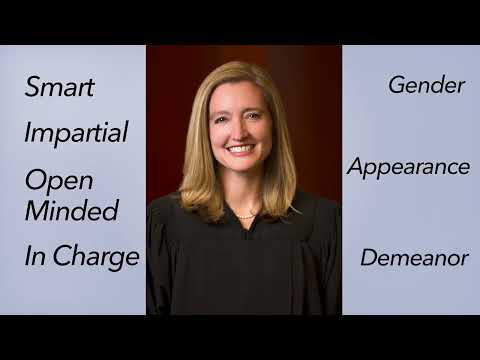
Justice Jill Pullman of the Utah Supreme Court told prospective jurors in a court-produced video that unconscious bias affects everyone and urged them to take specific steps during trials and deliberations to help ensure a fair trial.
Pullman said jurors must be aware that unconscious bias operates without conscious intent and can influence judgments. "First, everyone has unconscious bias. And second, because this type of bias happens on an unconscious level, it impacts our thinking and decision making without us knowing," she said. She framed juror vigilance as a safeguard for the constitutional right to a fair trial.
Pullman explained how the brain forms rapid associations and mental shortcuts that can influence impressions of people and situations. She used everyday examples — recognizing a chair or reacting to a traffic signal — to show how automatic responses work, then connected that process to judgments about people. The video presented brief demonstrations designed to slow instinctive responses, including a color-naming exercise that highlights conflicting signals and requires extra time to answer accurately.
Pullman cited empirical examples to illustrate unconscious bias. She described a academic hiring study in which identical resumes assigned male or female names produced different evaluations of competence and hire-worthiness. She also referenced the adoption of blind auditions by several orchestras, which concealed candidates' identities and corresponded with a substantial increase in female musicians in ensembles.
The justice gave jurors three practical steps, drawn from research, to check for unconscious bias: know that unconscious bias exists, examine decisions and judgments carefully, and question whether a decision would change if a person's race, gender, age, disability or appearance were different. "If we take the time to examine what's influencing our decisions, we can help prevent unconscious bias from affecting our judgments," Pullman said, adding that jurors who notice bias during deliberations should revisit the evidence and discuss it with fellow jurors.
Pullman emphasized that good intentions alone do not prevent unconscious bias and that awareness and deliberate reflection are necessary. She closed by stressing the importance of the jury role and thanking jurors for their service: "You are about to become part of the most important tradition in our justice system, the right to a trial by jury. Thank you for your service and your effort to ensure everyone receives a fair trial."