Get Full Government Meeting Transcripts, Videos, & Alerts Forever!
Get email alerts on the Health Care topic
No spam. Unsubscribe anytime.
Senate Health Care Committee advances dozens of health bills; fertility coverage, workforce and vaccine funding among measures moved
Summary
On April 8 the Oregon Senate Committee on Health Care advanced multiple bills across coverage, workforce, provider payment and program funding; several measures were referred to Ways and Means and others sent to Rules for further work.
The Oregon State Senate Committee on Health Care met April 8 and approved motions to move a broad package of bills addressing insurance coverage, provider payment, workforce programs and vaccine funding, sending many to the Joint Committee on Ways and Means for fiscal review.
Why it matters: The committee acted on measures that could affect insurance benefits for fertility care, prosthetics and orthotics, reimbursement for urgent-care and primary-care providers, and a $6.8 million vaccine funding proposal; several bills also direct studies that would shape later policy and budget decisions.
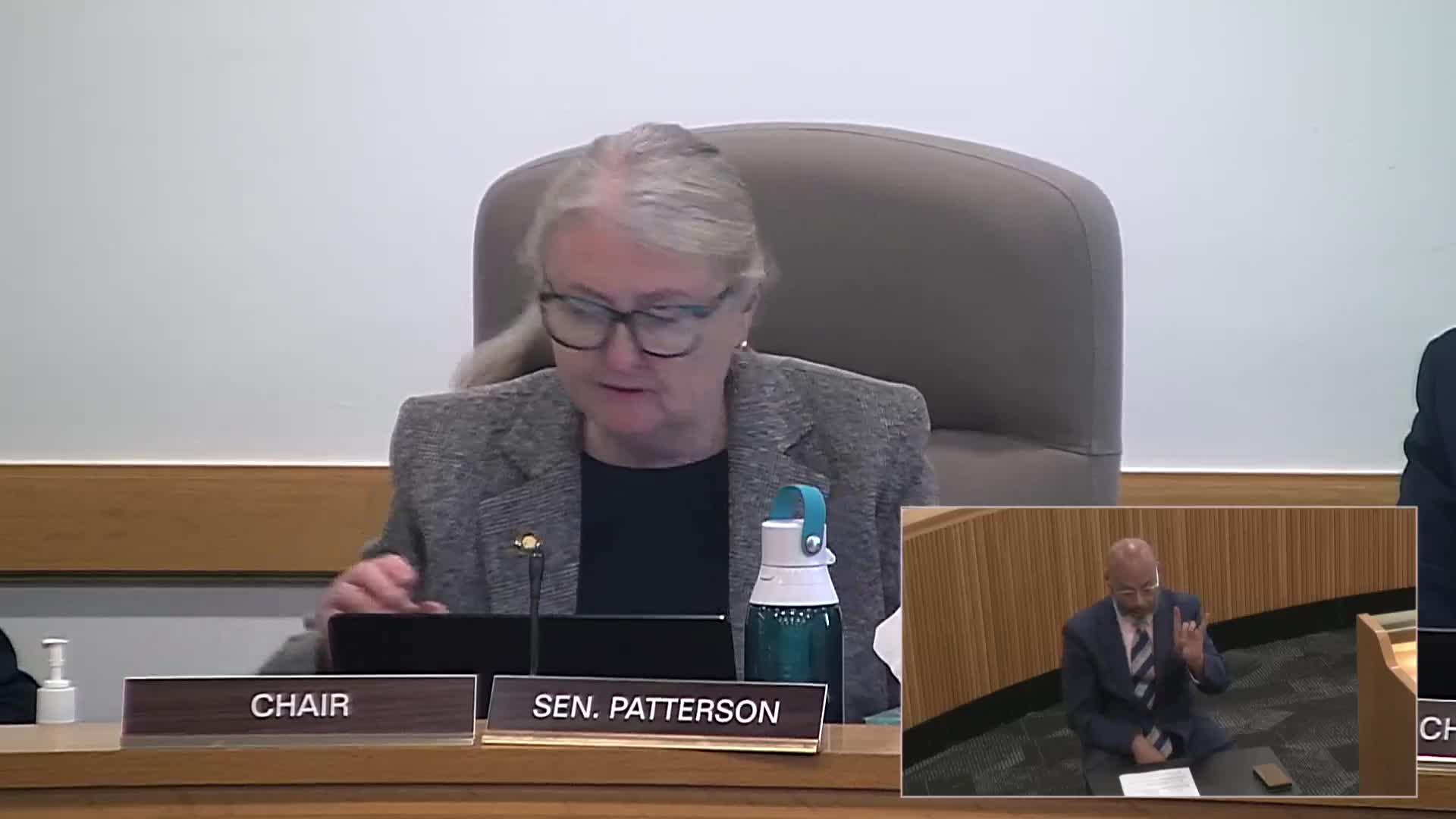
The meeting was chaired by Chair Patterson and Vice Chair Hayden. LPRO staff provided bill summaries and fiscal paperwork throughout the session. After brief discussion on many items, committee members adopted amendments and approved motions to advance bills either with a due-pass recommendation, without recommendation to Rules, or with referral to Ways and Means when additional fiscal analysis was requested.
Key highlights
- Fertility coverage (Senate Bill 535): The committee adopted a dash-3 amendment that narrows exemptions for employers and insurers and set a report date of Feb. 15, 2027. The amendment and the bill were adopted and the measure was moved to the floor with a due-pass recommendation and referral to the Joint Committee on Ways and Means by prior reference. Vice Chair Hayden and other members discussed concerns about insurance mandates and cost; at least one legislator recorded a “no” vote on the final motion.
- Prosthetics and orthotics (Senate Bill 699): The committee adopted a dash-5 amendment that clarifies medical-necessity standards, allows plans to require confirmation from the prescribing provider for replacements less than three years old, exempts PEBB and the Oregon Educators Benefit Board, and sets the operative date for certificates issued Jan. 1, 2026 or later. The bill was moved to the floor with a due-pass recommendation.
- Urgent-care reimbursement (Senate Bill 716): A dash-4 amendment replacing the bill was approved; it would define eligible rural urgent-care centers (on-site radiology and laboratory) and require a 20% higher reimbursement for those centers for services vs. noneligible urgent-care centers. The measure was advanced with a due-pass recommendation and referral to Ways and Means.
- Primary care fairness and provider payment (Senate Bill 28 and related workforce bills): The committee adopted a dash-2 amendment to SB 28 (which would establish a primary-care fairness rate benchmark and require equal reimbursement for independent primary care providers for identical CPT-coded services) and moved it to Ways and Means for further fiscal analysis. The committee also advanced related workforce and study bills (including SB 27 and SB 283) that appropriate or request funding and studies of the workforce and clinical education; several of those measures were referred to Ways and Means due to fiscal impacts.
- Facility fees reporting and restrictions (Senate Bill 539): The committee adopted a dash-1 amendment that clarifies definitions of campus and facility fees, and requires reporting by hospitals. The amended bill was moved to the floor with a due-pass recommendation.
- Vaccine funding proposal (Senate Bill 42): The committee approved a dash-2 amendment that would appropriate $6.8 million from the general fund to the Oregon Health Authority for vaccine purchases and operations and moved the bill to Ways and Means for further consideration.
- Dental claims and timely payment (Senate Bill 532): The committee adopted a dash-1 amendment that redefines a “clean claim,” sets an operative date of Jan. 1, 2027, and moved the bill to the floor with a due-pass recommendation.
- Medigap open enrollment (Senate Bill 11 81): The committee moved the bill to the floor with a due-pass recommendation; sponsors indicated intent to pursue a dash-1 amendment in the House to address community rating and open-enrollment timing.
- Hospital price transparency (Senate Bill 10 60): The committee adopted a dash-3 amendment that removes certain OHA enforcement and individual civil-penalty provisions from the intro bill; at the sponsor’s request the committee moved the amended bill to Rules without recommendation to allow additional time for stakeholder work.
- Complex rehabilitation technology repairs (Senate Bill 549): The committee replaced a prohibition on prior authorization with a requirement that OHA and CCOs make prior-authorization repair determinations within 72 hours; stakeholders committed to further work if the bill advances. The amended bill was advanced with a due-pass recommendation.
- COPA shared services office (Senate Bill 442): The committee approved a bill to establish a COPA shared services office in DHS and OHA to assist Compact of Free Association (COFA) citizens in accessing benefits, and moved the bill to Ways and Means with a due-pass recommendation; the motion passed unanimously.
- Indian Health Scholarship Program (Senate Bill 772): The committee adopted a technical dash-1 amendment directing DAS to distribute funds to OHSU, and moved the bill to Rules without recommendation so sponsors and stakeholders can continue work.
- Guardianship grants (Senate Bill 11 88): The committee adopted a dash-1 amendment permitting grant funds to cover reasonable attorney fees for legal assistance when initiating protected proceedings tied to hospital discharge challenges; the bill was moved to Ways and Means with a due-pass recommendation.
How the committee acted (Votes at a glance)
- SB 284 (OHA study of health care): Moved to the floor without recommendation; referred to Rules (motion passed). - SB 535 (fertility coverage; dash-3 adopted): Moved to the floor with due pass; referred to Joint Committee on Ways and Means (motion passed). - SB 442 (COPA shared services office): Moved to the floor with due pass; referred to Ways and Means (motion passed unanimously). - SB 532 (dental claims; dash-1 adopted): Moved to the floor with due pass (motion passed). - SB 539 (facility fees; dash-1 adopted): Moved to the floor with due pass (motion passed). - SB 683 (primary care physician access study): Moved to the floor with due pass; referred to Ways and Means (motion passed). - SB 942 (coverage for adult children with disabilities; dash-1 adopted): Moved to the floor with due pass; referred to Ways and Means (motion passed). - SB 699 (prosthetics and orthotics; dash-5 adopted): Moved to the floor with due pass (motion passed unanimously). - SB 716 (urgent care reimbursement; dash-4 adopted): Moved to the floor with due pass; referred to Ways and Means (motion passed). - SB 772 (Indian Health Scholarship; dash-1 adopted): Moved to Rules without recommendation (motion passed). - SB 28 (primary care fairness; dash-2 adopted): Moved to the floor with due pass; referred to Ways and Means (motion passed). - SB 42 (vaccine funding; dash-2 adopted, $6.8M): Moved to the floor with due pass; referred to Ways and Means (motion passed). - SB 549 (CRT repair prior auth; dash-3 adopted): Moved to the floor with due pass (motion passed). - SB 24 (DOC health staffing; dash-2 adopted): Moved to the floor with due pass; referred to Ways and Means (motion passed). - SB 10 60 (hospital price transparency; dash-3 adopted): Moved to Rules without recommendation (motion passed to move without recommendation). - SB 11 37 (autologous breast reconstruction; dash-1 adopted): Moved to the floor with due pass; referred to Ways and Means (motion passed unanimously). - SB 11 61 (organ transport vehicle licensing; dash-1 adopted): Moved to the floor with due pass; referral by prior reference to Ways and Means rescinded (motion passed). - SB 11 74 (nutritionist licensure; dash-3 adopted): Moved to the floor with due pass; referred to Ways and Means (motion passed). - SB 27 (workforce investments; dash-3 adopted): Moved to the floor with due pass; referred to Ways and Means (motion passed). - SB 283 (workforce study and reimbursements; dash-2 adopted): Moved to the floor with due pass; referred to Ways and Means (motion passed). - SB 11 88 (public guardian grant program; dash-1 adopted): Moved to the floor with due pass; referred to Ways and Means (motion passed). - SB 8 24 (DCBS behavioral-health reporting; dash-2 adopted): Moved to the floor with due pass; referral by prior reference to Ways and Means retained (motion passed). - SB 5 98 (non-opioid therapy coverage; dash-2 adopted): Moved to the floor with due pass; referred to Ways and Means (motion passed). - SB 11 81 (Medigap annual open enrollment): Moved to the floor with due pass (motion passed).
What’s next: Many measures that carried fiscal impact were sent to the Joint Committee on Ways and Means for more detailed budget analysis. Several bills were moved to Rules without recommendation so sponsors and stakeholders can continue work on amendments. The committee reconvenes April 15 at 3 p.m.
Attribution: Where quoted during the meeting, committee members spoke on the record; for example Vice Chair Hayden said during consideration of SB 284, “This is a placeholder Bill...I’m still gonna be a no on it.” The committee relied on LPRO summaries and fiscal paperwork for referral decisions.
Ending: The committee advanced a broad slate of health-policy proposals in a single session, steering many to the budget committee for fiscal review and sending others back to Rules so sponsors and stakeholders can refine language ahead of further floor action.