Get Full Government Meeting Transcripts, Videos, & Alerts Forever!
Get email alerts on the Community Violence topic
No spam. Unsubscribe anytime.
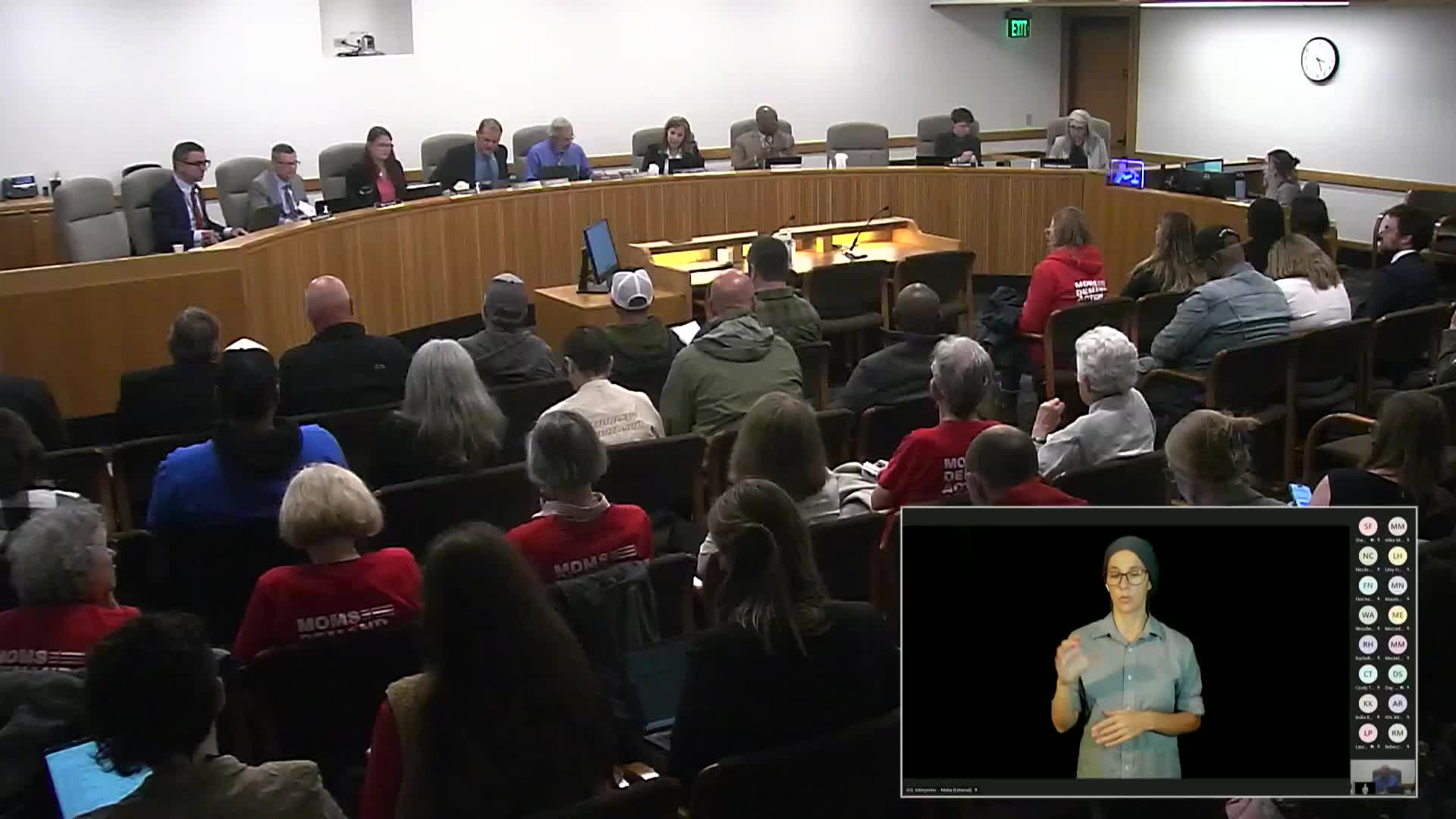
Senate Judiciary sends community violence intervention grant bill to Ways and Means after hours of testimony
Summary
The Senate Committee on Judiciary voted Tuesday to advance Senate Bill 1015, a measure directing the Oregon Department of Justice to establish a grant program to fund community violence intervention efforts and to set eligibility and oversight criteria for awards.
The Senate Committee on Judiciary voted Tuesday to advance Senate Bill 1015, a measure directing the Oregon Department of Justice to establish a grant program to fund community violence intervention efforts and to set eligibility and oversight criteria for awards.
Advocates, survivors and service providers told the committee the programs reduce shootings and other violence when funded and sustained. “This term may be newer, but what it is, intervening before violence occurs or working to support those who've been affected to keep them out of the cycle of violence has been around and unfunded,” said Ajeneek Savage, a community member who described losing family members to gun violence.
The bill would define community violence for grant purposes, require the DOJ to create an oversight board that includes survivors and researchers, and require grantees to report annually on use of funds and outcomes. The measure sets an operative date of Jan. 1, 2026, directs rulemaking as needed, and was referred to Joint Ways and Means by prior reference.
Why it matters: Witnesses told senators that CVI programs — which include outreach workers, hospital-based services and focused deterrence efforts — deliver measurable reductions in shootings and attendant social and fiscal costs when operated with consistent, multi-year funding. National research and local examples were cited repeatedly during testimony.
Supporters gave detailed accounts of program effects and implementation needs. Lionel Irving, executive director of Love is Stronger, urged the committee to fund CVI to prevent further funerals and obituaries: “I would like to see that switched around. I appreciate you guys for having us up here, and I just urge you to pass this bill.”
Researchers and national groups also testified. Nicole Sierra summarized peer-reviewed and gray literature on Cure Violence, focused deterrence (Ceasefire), Advanced Peace and hospital-based programs, noting reductions in violence in cities including Chicago, Philadelphia and Baltimore. Mike McLively, policy director for the Giffords Center for Violence Intervention, described Richmond, Calif.'s drop in shootings after similar investments.
Several community organizations and networks described how CVI work is done on the ground: mentorship, case management, mediation, housing and employment supports, and direct outreach by individuals with lived experience. “We need funding to go to programs that are run by people with lived experience and survivors,” said Laurie Palmer, founder of Go Get Your Child and Soul Survivors.
Committee action: Senator Thatcher moved that the committee give SB 1015 a do-pass recommendation and refer it to the Joint Committee on Ways and Means by prior reference. The motion carried on a voice roll call; committee members recorded as voting yes included Senator Broadman, Senator Gelser (as recorded), Senator Manning, Senator McLean, Vice Chair Thatcher and the committee chair. The committee requested that Senators Solomon and Manning carry the bill if it leaves Ways and Means.
What remains: The bill now moves to Ways and Means for consideration of funding and program details. Multiple witnesses asked for multi-year grants and explicit reporting and accountability provisions; the committee minutes show the bill includes reporting requirements and an oversight board.
A closing note: Committee members and many witnesses emphasized that CVI is intended to be a public-safety strategy distinct from criminal-justice-only approaches and that its success hinges on stable funding and evaluation.