Get Full Government Meeting Transcripts, Videos, & Alerts Forever!
Get email alerts on the Transportation:funding topic
No spam. Unsubscribe anytime.
League of Cities outlines city-level transportation revenue and cautions on shifting 50-30-20 split
Summary
A League of Oregon Cities presentation to the committee summarized city transportation revenue sources and warned that many cities face budget stress; the speaker urged that any adjustment to the 50-30-20 distribution recognize local funding constraints and the statewide role of local revenue.
The committee received an informational briefing on local transportation revenue and the implications of the 50-30-20 revenue split from Jim McCauley, legislative director at the League of Oregon Cities.
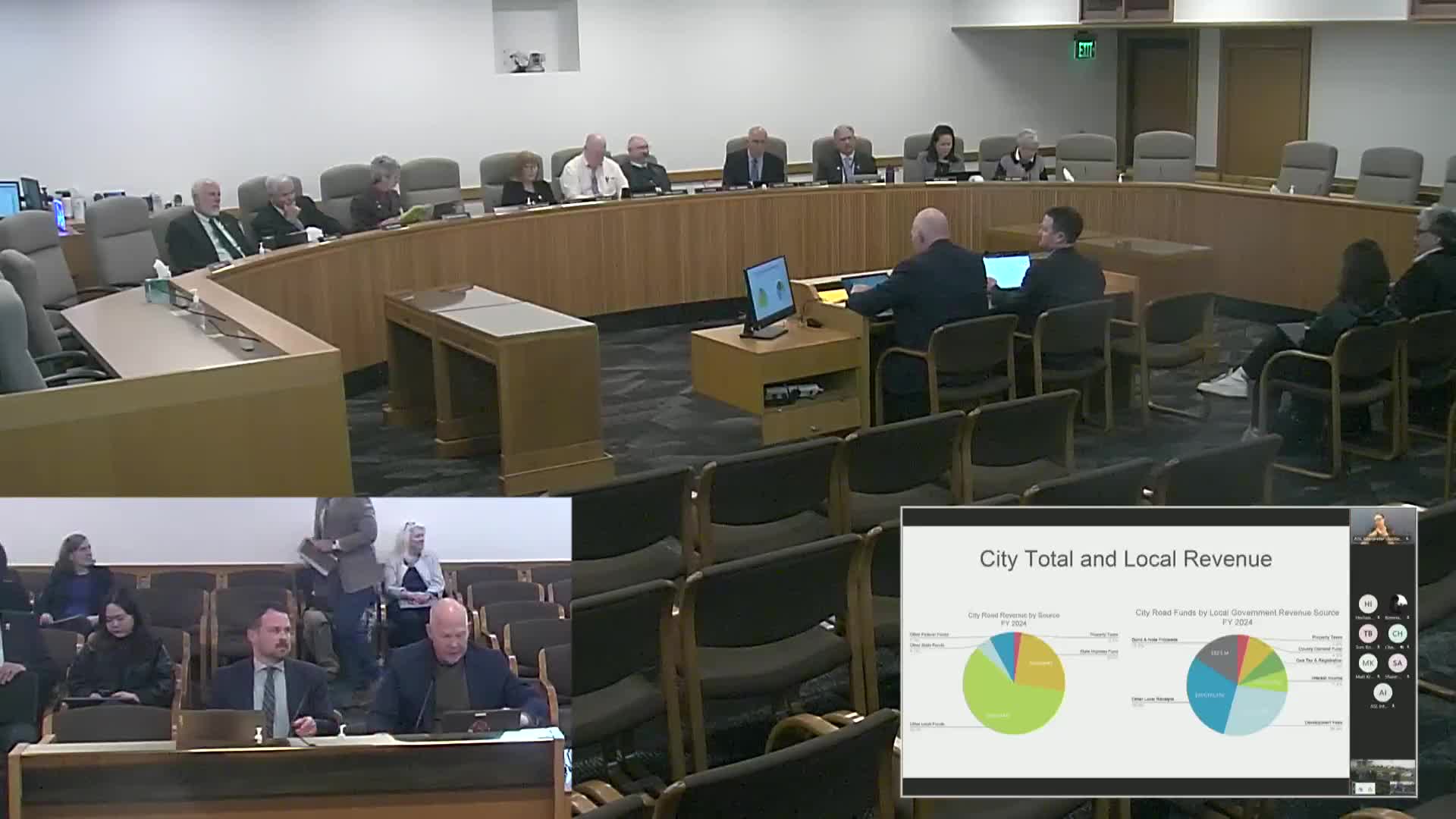
McCauley presented a snapshot of city transportation revenues and needs for several representative cities (Bend, Lebanon and Portland) and smaller communities, highlighting lane miles, traffic signals, streetlight counts, bridge inventories and deferred maintenance figures. He emphasized that cities collectively manage a large share of Oregon’s roadway network (over 38,000 lane miles) and that local revenue sources fund the majority of city transportation spending. He noted that small cities often rely on grant programs (for example, the small city allotment program) for capital projects and that many local revenue options (such as gas taxes or utility fees) are subject to voter approval.
McCauley also highlighted budget stress facing cities and counties, referenced reporting that many counties face budget shortfalls, and described local challenges with voter approval of small gas tax increases. He said the current revenue sharing formula reflects a longstanding recognition that local governments fund much of the transportation system and urged legislators to include city and county partners in any package design. Committee members asked clarifying questions about local revenue generation, voter approval dynamics and the role of SDCs (system development charges) in capital funding.
The briefing closed with committee members indicating they would continue the conversation in future hearings and that staff would follow up on additional questions.