Get Full Government Meeting Transcripts, Videos, & Alerts Forever!
Get email alerts on the School Safety Mapping topic
No spam. Unsubscribe anytime.
Witnesses urge $2 million for school critical-incident mapping as committee hears OEM budget bill
Summary
The Public Safety Subcommittee on Wednesday, April 9, heard public testimony urging a $2,000,000 appropriation within the Oregon Department of Emergency Management budget to create a grant program for critical-incident mapping of school buildings.
The Public Safety Subcommittee on Wednesday, April 9, heard public testimony urging a $2,000,000 appropriation within the Oregon Department of Emergency Management (OEM) budget to create a grant program for critical-incident mapping of school buildings.
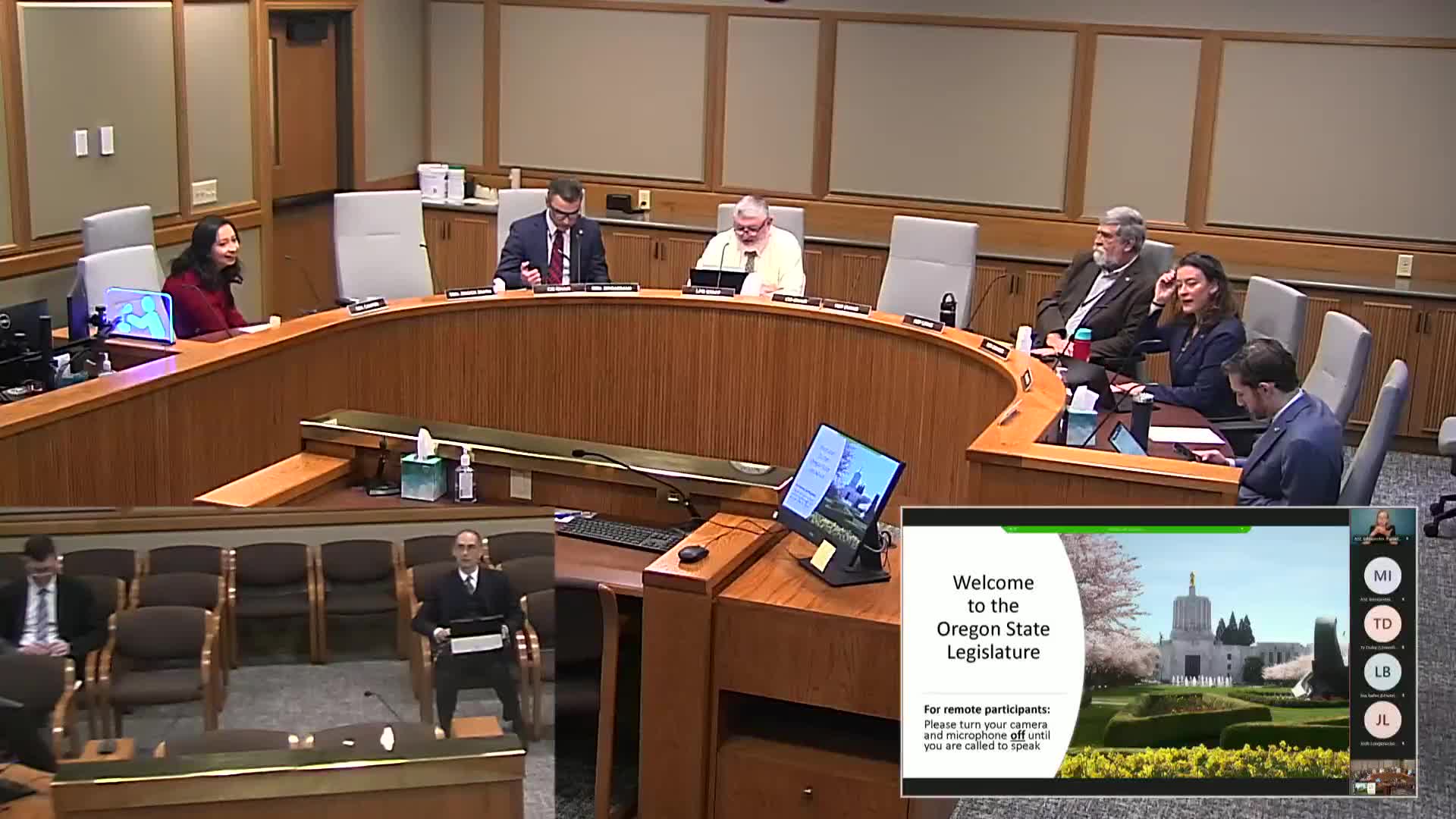
The proposal was raised during a public hearing on Senate Bill 5517, OEM’s primary budget bill for the 2025–27 biennium. A committee member opened the hearing and staff from the Legislative Fiscal Office provided an overview of the day’s agenda before witnesses gave testimony.
Chief Ty Dubey, chief of police for the Baker City Police Department and a retired Oregon State Police officer, said standardized, accessible maps would help multiple responding agencies coordinate inside large school buildings during emergencies. “Having the ability to know the exact details of a building for all those responding ... is a true game changer in my view and will truly save lives,” Dubey said.
Josh Longnecker, who identified himself as a public-safety practitioner and testified in support of SB 5517, asked the legislature to appropriate $2,000,000 to OEM to create a mapping grant program. “Emergency response mapping of our schools would ensure that first responders have adequate and uniform information during an emergency and enables efficient communication and navigation during a critical incident,” Longnecker said. He told the committee he and his colleagues have “mapped over 20,000 schools” and cited resource constraints in Oregon school districts as a barrier to wider adoption.
Lisa Bates, a special education administrator with more than 25 years’ experience in Oregon schools, also urged support for the OEM budget and the mapping funding. Bates said psychological safety and quick response times matter when “lives are at stake,” and that maps used during drills and by EMS could improve emergency response. “We have to invest our money in school safety,” Bates said.
Committee staff recorded that three people had signed up to testify and that all participants appeared remotely. After testimony, the committee chair closed oral testimony but left the written record open for 48 hours from 8 a.m. on the day of the hearing for additional electronic submissions. The subcommittee did not take a vote on SB 5517 during the session.
No formal direction to staff or further committee action was made on the record during the hearing. The hearing concluded with a brief preview of the next day’s agenda, when the Department of Administrative Services Office of Economic Analysis will present updated population forecasts for corrections and related agencies.
Votes at a glance: none — the subcommittee held a public hearing and left the written record open for 48 hours; no floor or committee votes were recorded during this session.