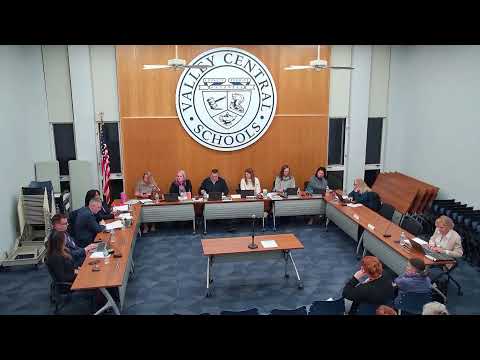
Valley Central board votes 5–2 to gather more information on intermediate-school option for Walden
Loading...
Summary
The Valley Central Board of Education voted 5–2 to direct district staff to gather additional information comparing an intermediate-school reorganization (K–3 at elementary schools with a 4–6 intermediate) against rebuilding or renovating Walden Elementary; board members asked for cost, enrollment projections and state-aid implications.
The Valley Central Board of Education on April 7 voted 5–2 to direct district staff to gather more detailed information comparing an intermediate‑school reorganization to the previously discussed options for Walden Elementary, including renovation or construction of a single new school. The board said it wants cost estimates, enrollment projections and an assessment of State Education Department (SED) funding/aid implications before making a final decision.
Board members discussed an intermediate model during a roundtable at the meeting. One board member described an intermediate configuration as K–3 in neighborhood elementary schools and grades 4–6 in an intermediate building; that board member — who identified herself on the record as Angela (surname not given in the transcript) and who has served on the board — said preliminary analysis showed “significant savings” (she cited a figure of about $30 million in the discussion) compared with building a single new elementary school. The speaker also argued an intermediate model could better align staffing and instructional specialties and could help address anticipated high‑school crowding over a longer planning horizon.
Several board members asked staff for a common packet of analyses to inform deliberations. Requested materials included more detailed cost estimates (beyond earlier “T‑shirt” estimates), the estimated taxpayer impact per household over the life of financing for each scenario (e.g., 20‑ or 30‑year debt service), updated five‑ and ten‑year enrollment projections, and clarification about whether SED would provide building aid for a reorganization or reopening of a closed building (the consensus in the meeting was that SED typically evaluates the next five years of enrollment when considering aid and that reopening an existing building or reorganization may not automatically trigger SED aid without demonstrated need).
District staff and the district architect said they would compile the requested analyses and provide timing for return to the board. The motion to gather information passed by a 5–2 margin; board members said after the vote that once the packet is delivered the board will need to make a decision and not continue indefinitely gathering options.
At the same meeting several community members spoke — some in favor of preserving Walden’s place in the village and others urging transparency on timing and costs. Board members reminded the public that SED approval and public voting timelines mean any project would be multiple years away: the first formal step is state approval, followed by a public vote, and construction timelines extend beyond those steps.
Board President (name not specified in the transcript) said staff will outline the exact items requested and return with a schedule for the analyses.