Get Full Government Meeting Transcripts, Videos, & Alerts Forever!
Get email alerts on the Transportation:rail Safety topic
No spam. Unsubscribe anytime.
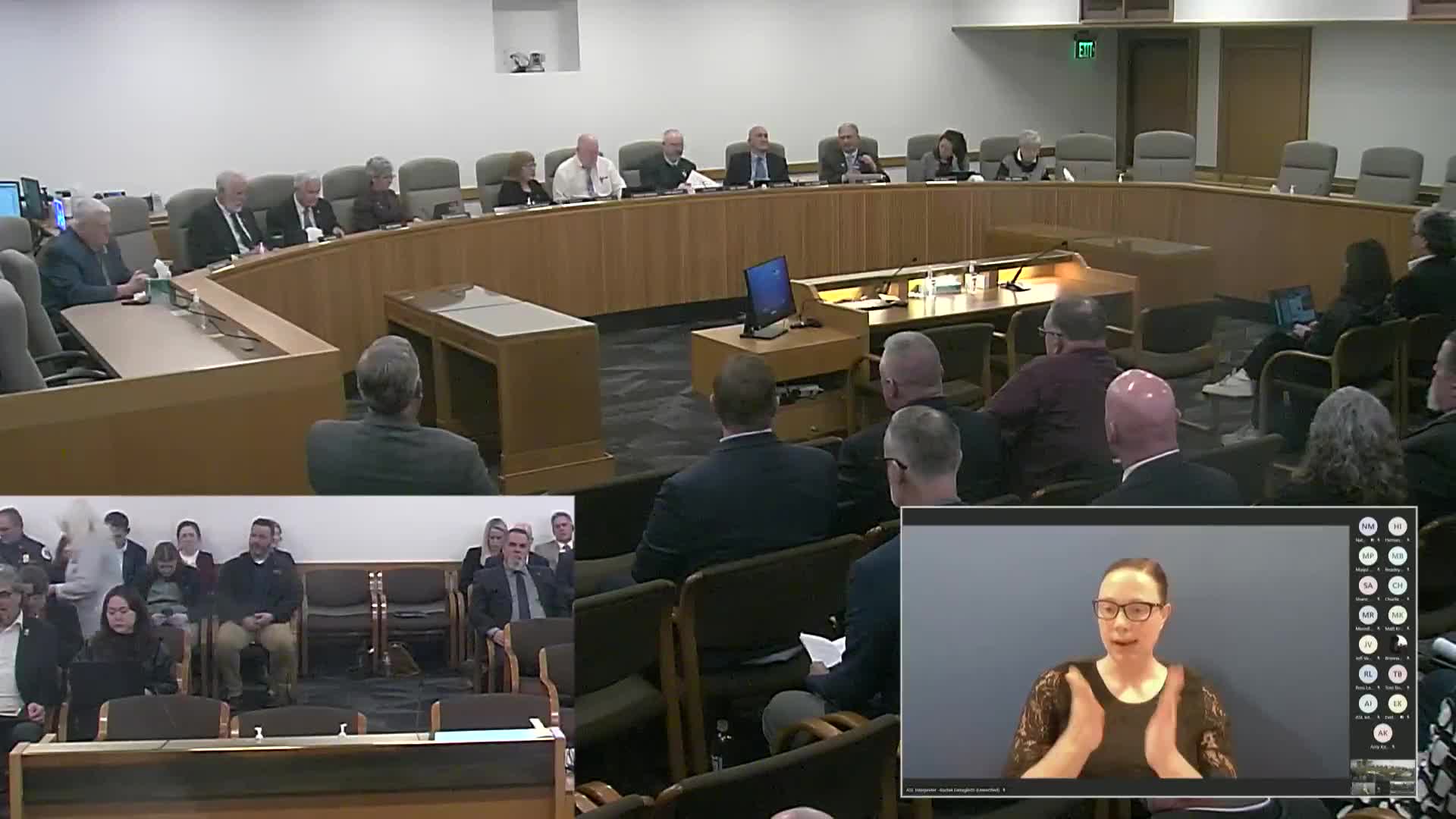
Heated public hearing on two-person crew mandate highlights divide between labor and railroads
Summary
Senate Bill 723, requiring a minimum two-person crew on trains in Oregon with specified federal exemptions, drew lengthy and sharply divided testimony at a joint committee public hearing.
Senate Bill 723, a measure to require trains operating in Oregon to staff locomotives with at least two crew members, was the subject of an extended public hearing featuring testimony from labor unions, railroad companies, local officials and other stakeholders.
Staff summarized the bill as requiring a minimum two-person crew, allowing exceptions where the Federal Railroad Administration (FRA) has provided special approval, and authorizing civil penalties (ranges described in staff summary) for violations. The dash-3 amendment reported by staff removed language specifying that the two-person crew must be a certified locomotive engineer and certified conductor and deleted language designating the violation as a class D violation in certain statutory sections.
Union and labor witnesses argued the bill is necessary for safety. Daniel Garrison, Oregon Safety and Legislative Director for SMART Transportation Division, said conductors are ‘‘the first responder on the scene of a train derailment’’ and emphasized the conductor’s role in identifying hazardous cars and aiding emergency response. Dan Garrison and other union-affiliated witnesses described fatigue and the safety benefits of a second set of eyes, particularly on remote or mountainous routes. Jonathan Cornelius, a 22-year freight conductor, testified that the engineer’s duties often require attention away from external observation and that a second qualified person adds a critical safety layer. Several family members and union representatives recounted incidents where a second crew member had taken emergency actions that they said prevented worse outcomes.
Railroad company witnesses including Aaron Hunt (Union Pacific), McKee Parkerson (Union Pacific vice president of labor relations), Johan Hellman (BNSF), and other industry representatives opposed the bill or urged handling crew-size decisions through collective bargaining and by federal rule. Union Pacific witnesses cited investments in technology and infrastructure, recent safety improvements and the Railway Labor Act’s national collective-bargaining framework. Industry witnesses also warned state legislation could conflict with federal rules and create operational inefficiencies for freight and short-line carriers.
Short-line and shoreline railroad representatives testified about the operational differences of shorter, local lines and requested flexibility; some said they typically operate with two crew members but have negotiated exemptions with unions and the FRA.
No committee vote was recorded in the public hearing transcript. The hearing record included substantial oral testimony for and against the bill and numerous written submissions referenced by labor witnesses.