Get Full Government Meeting Transcripts, Videos, & Alerts Forever!
Get email alerts on the Nih Funding topic
No spam. Unsubscribe anytime.
Researchers and advocates urge Oregon lawmakers to press Congress to protect NIH funding
Summary
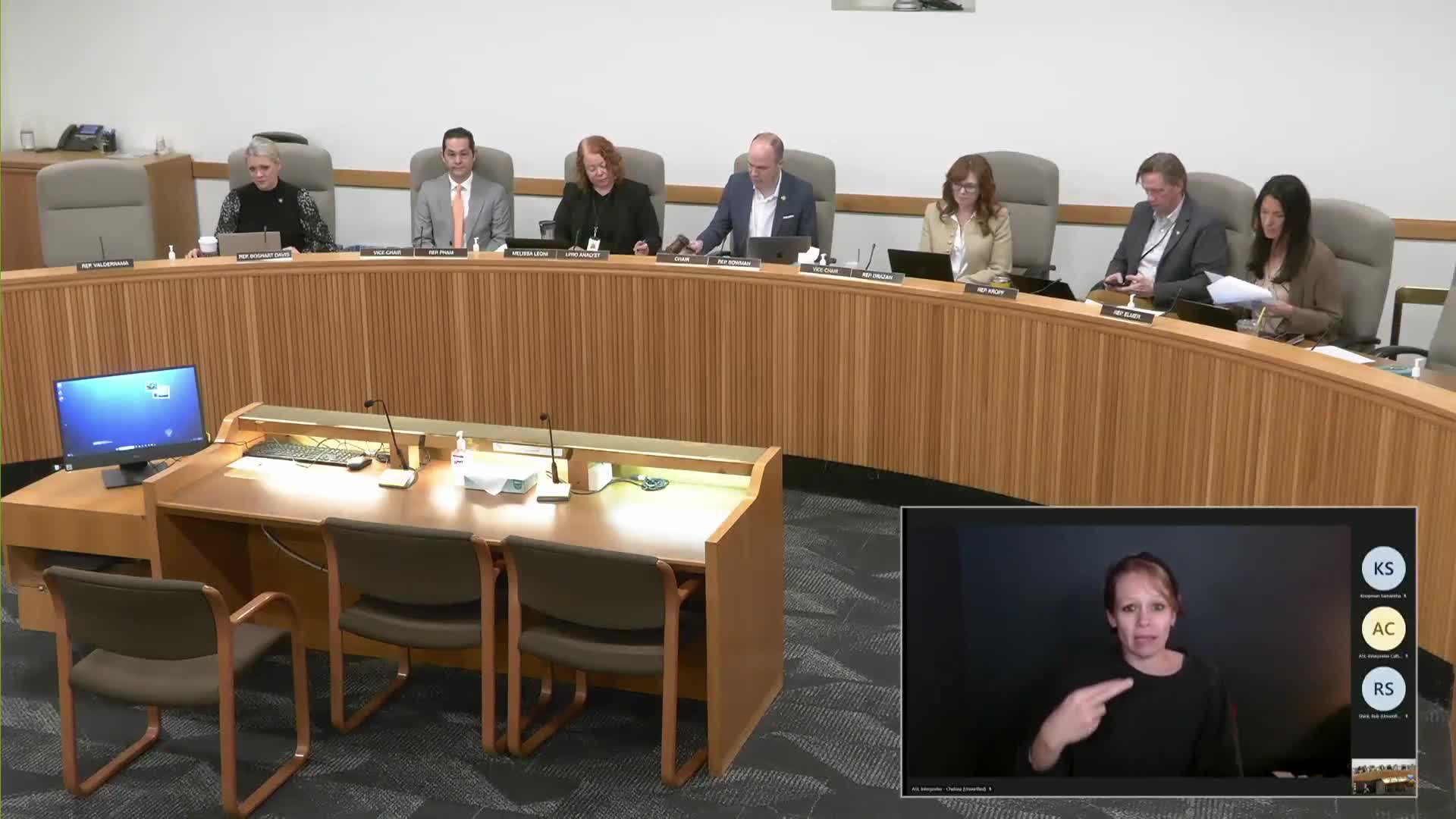
At a House Committee on Rules hearing, lawmakers, union representatives and OHSU researchers testified in support of House Joint Memorial 6 urging Congress to maintain stable National Institutes of Health funding.
Witnesses at a House Committee on Rules public hearing urged lawmakers to pass House Joint Memorial 6, which asks Congress to ensure robust annual funding for the National Institutes of Health (NIH) and to protect grant‑based research funding that supports projects at Oregon institutions.
Representative Zach Hudson, a chief sponsor, said NIH funding "fuels the development of innovative treatments" for conditions including Alzheimer’s, opioid addiction, heart disease and cancer. Other witnesses described how NIH grants support basic science, clinical trials, workforce development and local economic activity.
Lamar Wise, political director for OR/AFSCME, said NIH grants are foundational and warned that recent administrative actions prompting litigation could threaten independent, peer‑reviewed funding decisions. "Controlling this funding threatens not just innovation but jobs, economic growth, and health outcomes for every Oregonian," Wise said. James Braithwaite, a senior research engineer at OHSU’s Center for Health Systems Effectiveness, told the committee potential indirect‑funding cuts now subject to litigation "would reduce the funds OHSU receives for centralized support of research by more than 40%," and could lead to layoffs and a slowed research pace.
Abigail Moore, a research assistant at the Knight Cancer Institute, described lab‑level impacts: "Indirect funds ... keep our lights on and they keep the water running. Without this funding, we literally could not do research," she said, noting that maintaining sample storage and high‑quality biobanks requires continuous infrastructure support. Testimony also highlighted recent NIH‑funded awards to OHSU researchers, a training program for MD/PhD fellows in drug development, and grants announced in February 2025 for gene‑editing and imaging projects.
No committee vote was recorded on HJM 6 during the public hearing. Committee members heard the panel and moved to subsequent agenda items.
Notes: Testimony included both sponsors and researchers; witnesses framed NIH funding as critical to patient outcomes, workforce development and Oregon’s research economy.