Get Full Government Meeting Transcripts, Videos, & Alerts Forever!
Get email alerts on the Veterans Property Tax Exemptions topic
No spam. Unsubscribe anytime.
Senate committee hears bill to widen property-tax breaks for disabled veterans and surviving spouses
Summary
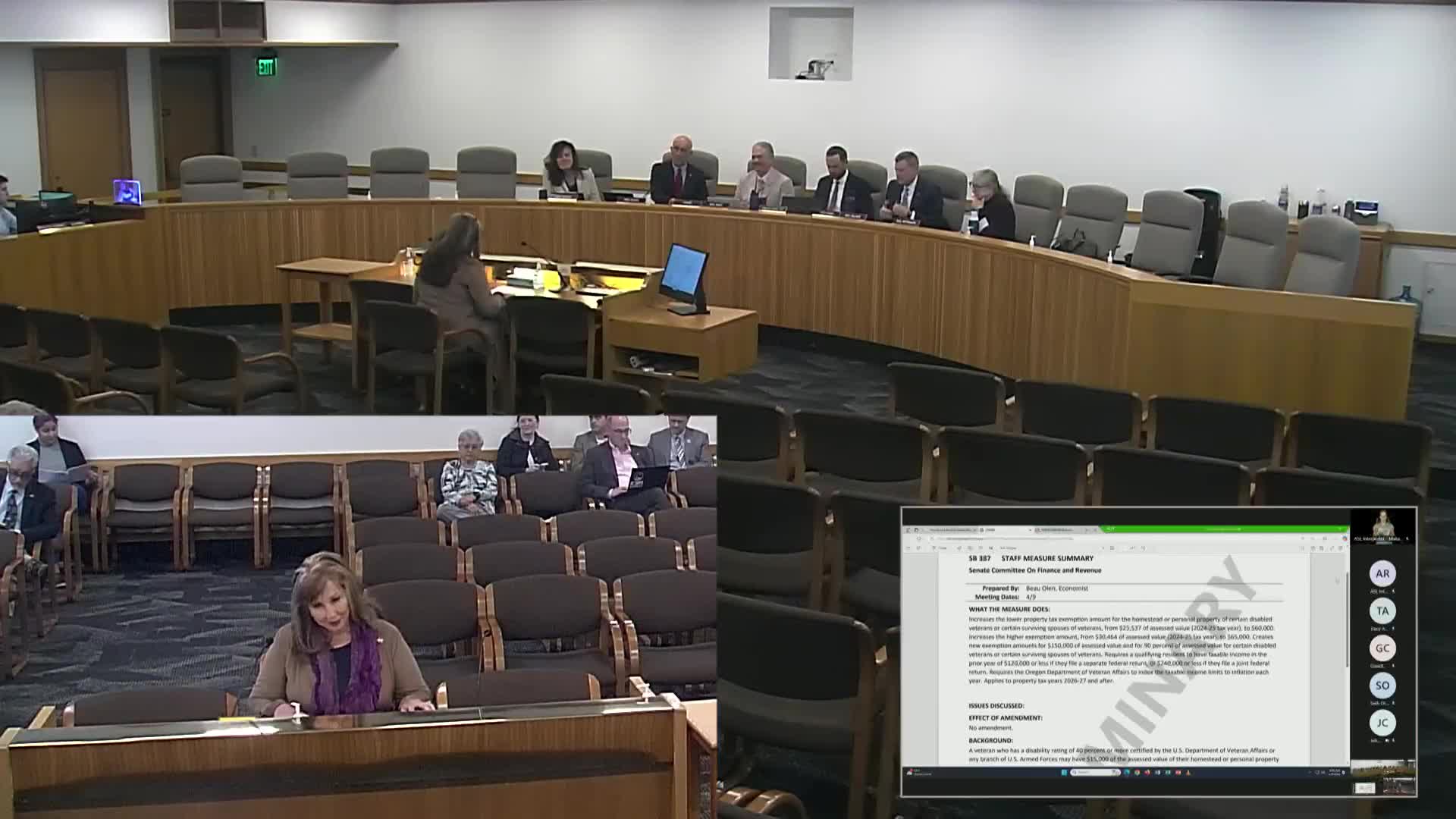
Senators heard public testimony Wednesday on Senate Bill 387, a measure that would increase Oregon’s property-tax exemptions for disabled veterans and extend larger breaks to totally disabled veterans and surviving spouses who do not remarry.
Senators heard public testimony Wednesday on Senate Bill 387, a measure that would increase Oregon’s property-tax exemptions for disabled veterans and extend larger breaks to totally disabled veterans and surviving spouses who do not remarry.
Sen. Kim Thatcher, R‑Senate District 11, told the Senate Committee on Finance and Revenue the bill “bumps up property tax breaks for disabled veterans and their surviving spouses,” raises existing exemptions and “adds new ones for totally disabled vets,” and directs the Oregon Department of Veterans Affairs to reimburse counties for some of the additional cost. “It honors the sacrifices with actions and not with just words,” Thatcher said.
Under testimony from the bill’s sponsor, the bill increases current exemptions that Thatcher described as roughly $15,000–$18,000 for veterans with a 40% or greater VA disability rating to new exemption levels of about $60,000–$65,000, and adds a $150,000 exemption for veterans who are totally disabled. Thatcher said the bill would also allow a nearly full property‑tax reduction where the retirement benefit is insufficient: she described a provision to wipe out “90% of their property taxes” when taxes consume more than 14% of a veteran’s income. The bill includes income limits: $120,000 for single filers and $240,000 for joint filers, and indexes those limits for inflation. Thatcher said the changes would take effect July 1, 2026.
Representatives of veterans’ organizations supported the bill. Tim Cowan, chair of the American Legion Legislative Commission for Oregon, said the American Legion “is in favor of Senate Bill 387” and emphasized the need to support suicide‑prevention efforts and other services for veterans. John Calhoun of Tax Fairness Oregon praised the sponsors for proposing state reimbursement to counties but urged caution on scope and cost; he called the bill “an extraordinarily generous increase in benefits and eligibility” and suggested tighter income limits or other amendments to limit fiscal exposure.
Thatcher said the bill’s fiscal design attempts to “keep the counties whole with state cash” for the higher exemptions and estimated about 37,000 veterans might qualify statewide under broader eligibility. She told senators that the committee would pursue further work and informational analysis to refine income limits and cost estimates.
The committee held the bill’s public hearing and closed testimony; no committee vote or formal action was recorded at the hearing.