Get Full Government Meeting Transcripts, Videos, & Alerts Forever!
Get email alerts on the Campaign Finance Rewrite topic
No spam. Unsubscribe anytime.
Subcommittee reviews major rewrite of campaign finance law; keeps 48‑hour supplemental reporting and raises late fee to $500
Summary
Members of the Government and Veterans Affairs Committee, joined by Appropriations members, Legislative Council and Secretary of State staff, reviewed a comprehensive rewrite of the state’s campaign finance law that relocates current rules into a new chapter and makes technical and a few substantive changes.
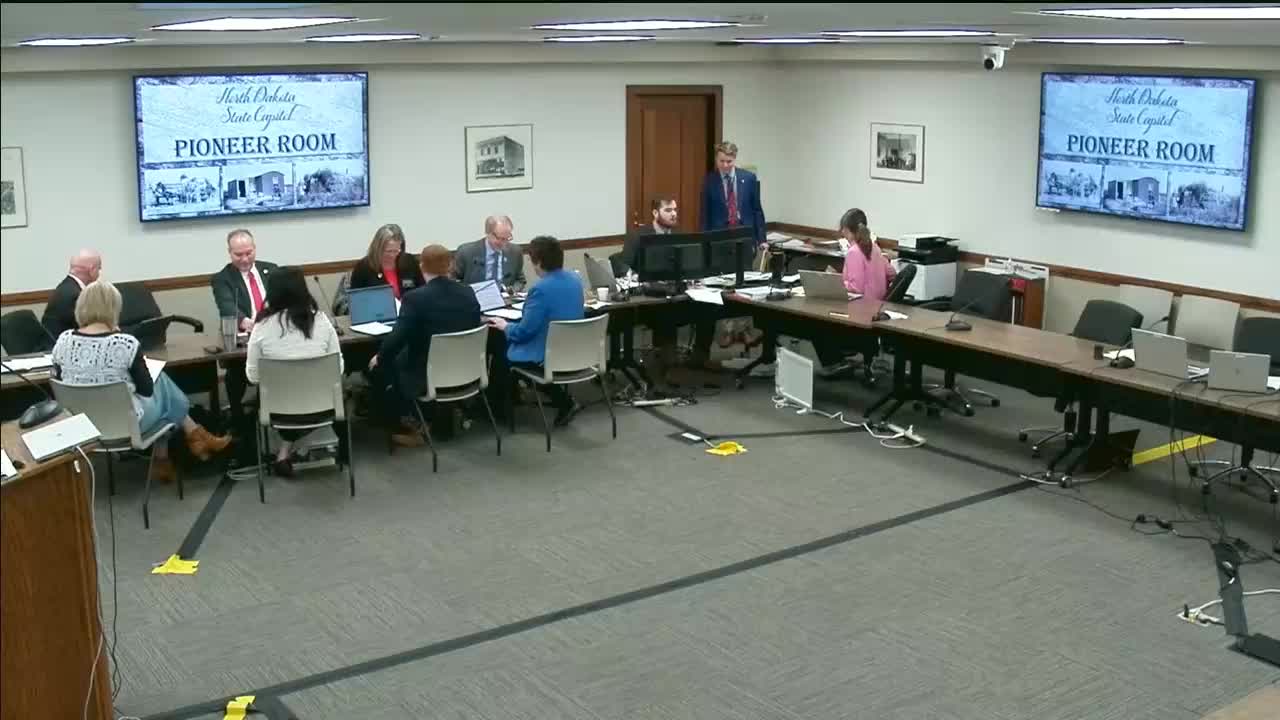
Members of the Government and Veterans Affairs Committee, joined by members of Appropriations, staff from the Secretary of State’s Office and Legislative Council, met in subcommittee to review House-file 02/1956, a comprehensive rewrite that moves existing campaign finance law into a new chapter and makes technical and a few substantive changes.
Representative Vicki Steiner, District 37, opened the session by saying the amendment “looks like we've completely rewritten the entire campaign finance law, but it's actually just moving existing law into 0.2 and there are a few changes.” Dustin Richard of Legislative Council then walked the group through the new chapter and line-by-line redline.
The amendment repeals the existing chapter 16.1 and relocates provisions into a new chapter (cited in the draft as 16.108) while retaining most current reporting and disclosure requirements. Major points discussed included: an exempt‑records threshold, aggregation of expenditures and contributions, the trigger date for supplemental statements, balance reporting, disclosure thresholds for large aggregated contributions, and late‑filing fees.
On public access, Legislative Council staff described the bill as creating an exempt‑records rule for small transactions: contributions and expenditures under $250 would not be accessible through an open‑records request, while aggregated totals exceeding $250 would be. “The intent of the amendment is to make everything under $250 exempt records,” Dustin Richard said. The group debated whether the public request would return aggregated totals only or allow inspection of itemized entries; committee members pressed for clearer split language so that candidates’ and committees’ different reporting methods are treated consistently.
The group discussed supplemental (so‑called “48‑hour”) statements. The Senate draft had used fixed calendar dates and a three‑day deposit window for supplemental reporting; committee members rejected the three‑day change and directed staff to retain the existing 48‑hour timing measured from the deposit date. Members also endorsed changing references throughout the chapter from “receipt” to “deposit” to create an audit trail tied to verifiable bank deposits rather than receipt/postmark timing.
Other reporting details mirrored current law: reporting periods (the draft enumerates reporting windows such as Jan. 1–April 30, May 1–Sept. 30, Oct. 1–Dec. 31 for ballot years), a requirement that campaign software produce aggregated totals, and a provision that the ending balance of a campaign fund on the last day of the reporting period is not made publicly accessible on the Secretary of State website.
The amendment continues an existing requirement that aggregated contributions above $5,000 must include additional contributor information (employer, occupation, principal place of business). It also transfers and preserves existing provisions about conduits, independent expenditures, special requirements for ballot‑measure committees, and a general prohibition against soliciting or accepting contributions from foreign nationals — extended in this draft to explicitly cover political committees.
Committee members debated enforcement and penalties. The draft keeps a chapter‑wide criminal penalty for willful violations (class A misdemeanor language), but members noted practical limits: the Secretary of State is a filing agency and would likely refer serial non‑filers to the attorney general or local prosecutors. The subcommittee discussed whether increased fines or repeated penalties would be more effective than criminal referral; members asked staff to consider graduated penalties and public disclosure of delinquent filers to increase compliance.
The subcommittee also agreed to revert late‑filing fees in the draft to match the Senate language and to publish late fees on the Secretary of State’s website. Committee members signaled support for changing the top late‑fee tier to $500 (previously discussed at lower amounts) to increase visibility and deterrence for serial delinquents.
Finally, staff and agency representatives flagged federal limits: organizations that operate as federal 501(c)(4) entities are not required by federal law to report the same contributor information, which limits how the state law can reach some out‑of‑state or federal nonprofit actors.
The subcommittee directed Legislative Council and Secretary of State staff to redraft language clarifying aggregation and open‑records treatment for candidates versus committees, replace “receipt” with “deposit” throughout, retain 48‑hour supplemental reporting tied to deposit, and reflect agreed fee levels; revised language was requested by Friday.
The session closed with the chair thanking Legislative Council and agency staff for the line‑by‑line review and scheduling follow‑up drafting and caucus coordination prior to further consideration on the House floor.