Get Full Government Meeting Transcripts, Videos, & Alerts Forever!
Get email alerts on the Freestanding Emergency Centers topic
No spam. Unsubscribe anytime.
Committee weighs measure to let freestanding emergency centers offer outpatient services to support rural access
Summary
Sen. Hinojosa’s SB 1511 would allow freestanding emergency centers to provide outpatient care, imaging and labs and add consumer protections to limit facility fees and balance billing; supporters said the change would sustain rural access while skeptics warned of past abuses by some operators.
Sen. Hinojosa laid out the committee substitute for Senate Bill 15-11, which would expand the permitted services of freestanding emergency centers (FECs) to include outpatient care, diagnostic imaging and laboratory work and services contracted for employer outpatient care. The substitute includes consumer protections intended to limit facility fees, require cost estimates, prohibit balance billing for insured patients and provide dispute processes.
"Statistics show that just a 1% increase in outpatient revenue will decrease the likelihood of an FEC closure by 5%," Hinojosa told the committee, arguing expanded outpatient authority would help sustain FECs in low-population rural communities.
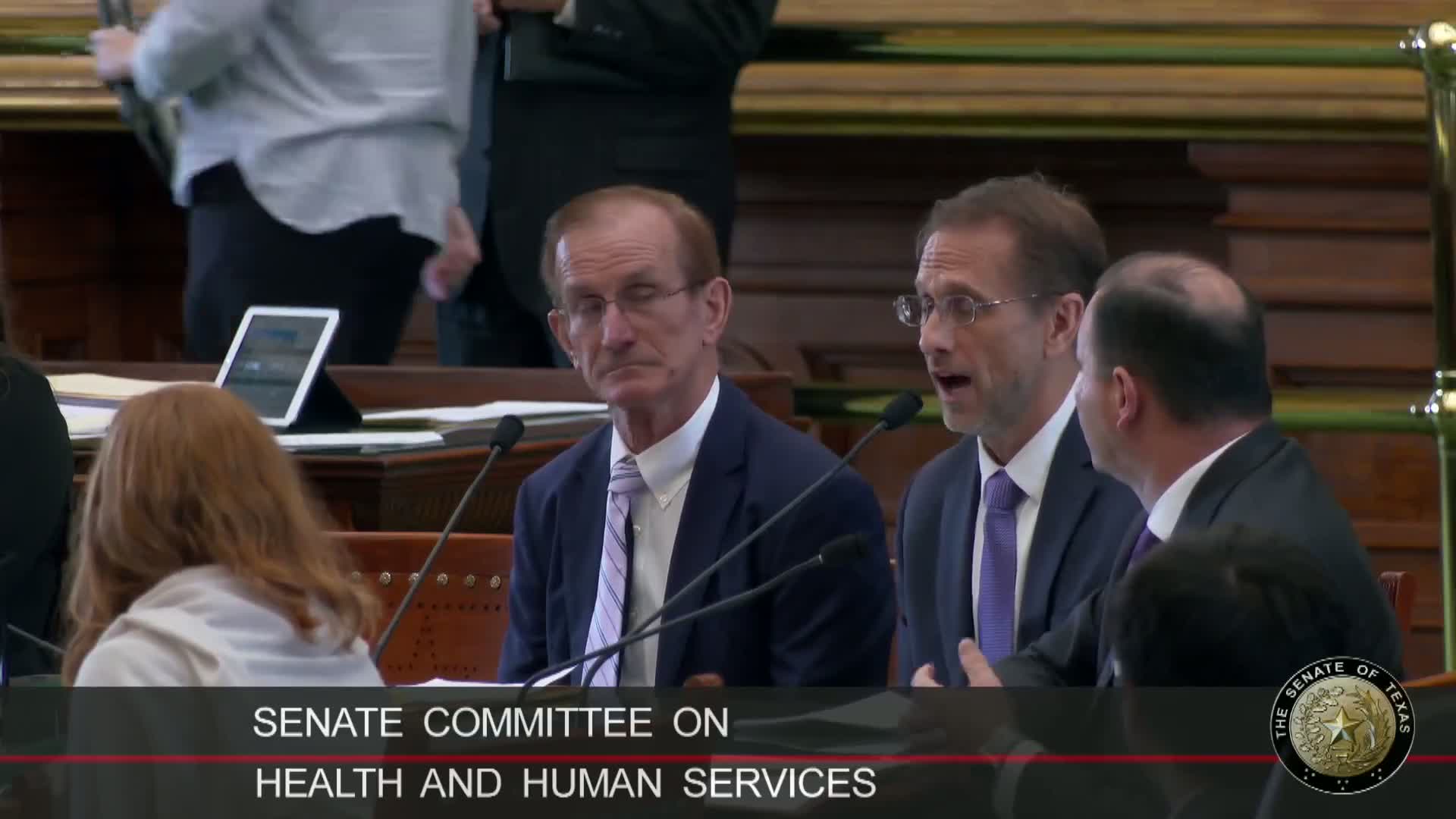
Supporters included industry representatives such as Rob Morris of the National Association of Freestanding Emergency Centers and Lonnie Schwartlich, an ER physician; Rob Morris noted hospitals and hospital-affiliated FECs already provide outpatient services and said the change would allow broader access and rural sustainability. Morris acknowledged past bad actors and said the substitute builds in patient protections to address those concerns.
Sen. Hancock and other members raised concerns about earlier proliferation of for-profit FECs in affluent areas and how facility fees and balance billing have affected consumers. Jamie Dudensingh of the Texas Association of Health Plans testified neutral while urging careful design of protections; Dudensingh emphasized prohibitions on balance billing included in the sub and recommended clear network and pricing rules.
Questions from members focused on limiting overlap with existing hospitals, whether the expansion should be limited to rural or underserved areas, and how Medicare/Medicaid participation affects sustainability. Witnesses said federal legislation (the Emergency Care Improvement Act) is pending to allow Medicare/Medicaid coverage in some FECs; proponents said FECs could help stabilize rural access if paired with payment reforms.
The committee left SB 15-11 pending and closed public testimony.