Get AI Briefings, Transcripts & Alerts on Local & National Government Meetings — Forever.
Committee hears bill to create streamlined court remedy for fraudulent deeds
Loading...
Summary
Senate Bill 1734 would create an expedited, low-cost judicial process to declare fraudulent deeds void and provide affidavits and recording tools for property owners to clear title, testimony said. County clerks and the Land Title Association told the committee the measure responds to a recent rise in deed fraud.
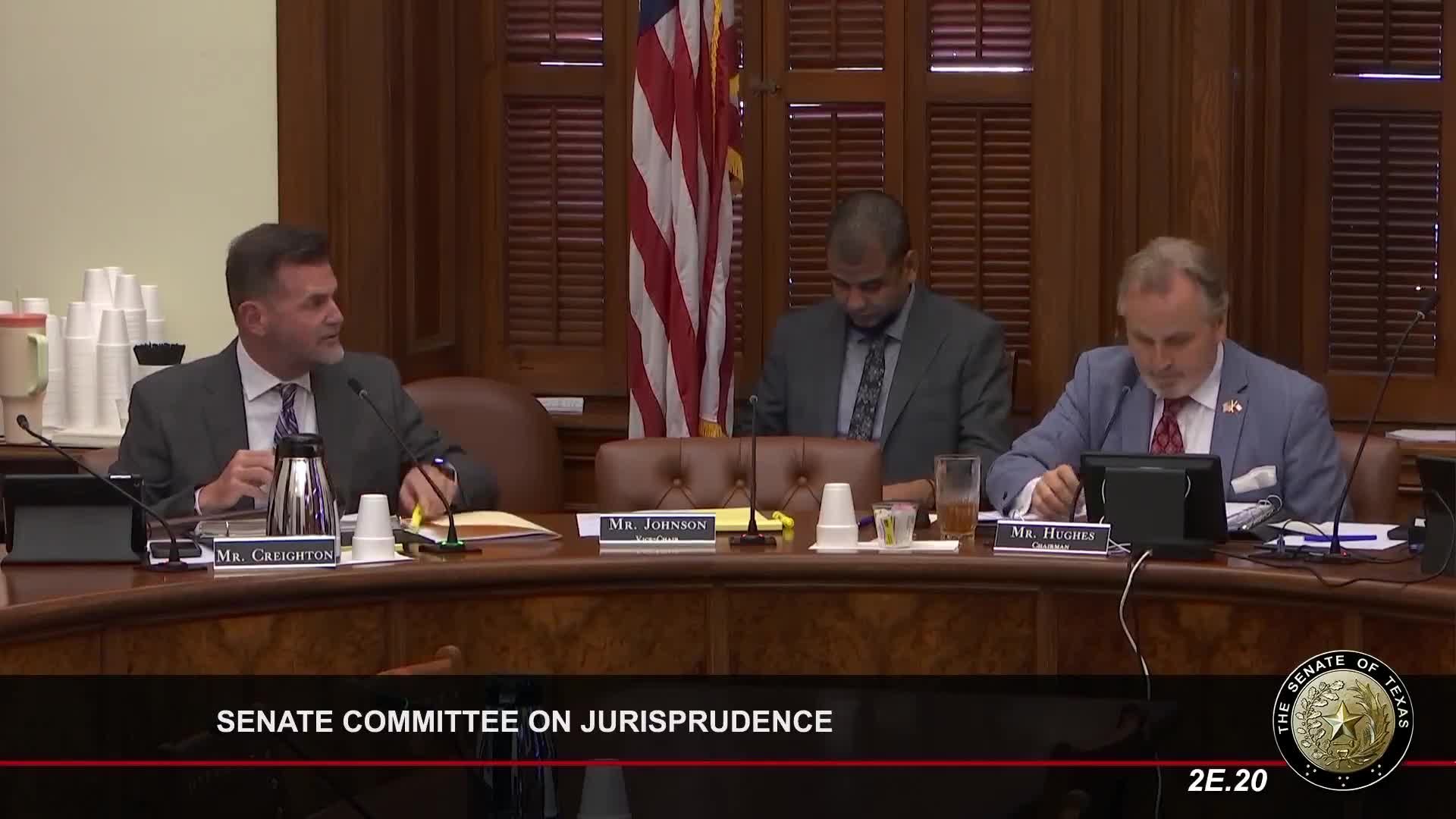
Senator Kelly (Hughes), speaking for Senator West, presented Senate Bill 17 34 to the Committee on Jurisprudence as a targeted remedy for deed fraud. "Senate bill 17 34 creates a legal process allowing property owners to seek judicial determination that a fraudulent deed in their chain of title is void," Hughes said, describing the bill as a "streamlined ex parte approach" to clear title.
Leslie Johnson of the Texas Land Title Association told the committee the bill supplements Government Code provisions and adds two real property code provisions to permit affidavit filings in the real property records and a certificate of mailing. "Once that affidavit and that certificate have been of record with the county clerk for a period of 120 days, then the process of getting that order from the court with the presumption that the conveyance or the deed at issue is in fact a fraudulent transfer" can proceed, Johnson said.
John Warren, Dallas County clerk, said the mechanism is intended to be low-cost for property owners and county clerks, noting "there's no filing fee to have this petition heard by a district judge, and there's no filing fee to have it recorded with the county clerk's office." He and Johnson described deed fraud as having increased beginning in late 2021 and through 2022, with victims often unaware of a fraudulent recording until they attempt to sell or refinance.
Supporters said the bill is modeled on the existing fraudulent lien remedy in Government Code 51.901 and would provide affidavit templates, recording procedures and purchaser protections to reduce the time and cost of clearing title.
The committee took public testimony and closed the hearing; the bill was left pending.
Why it matters: Witnesses described deed fraud as an "epidemic" in recent years that can leave a cloud on title requiring expensive quiet-title litigation. The bill intends to provide property owners and clerks a standardized process to identify and void fraudulent deeds more quickly and at lower cost.