Get Full Government Meeting Transcripts, Videos, & Alerts Forever!
Get email alerts on the Probate Estates topic
No spam. Unsubscribe anytime.
Committee hears bill to modernize probate notices, allow courts to cancel estate letters at closing
Summary
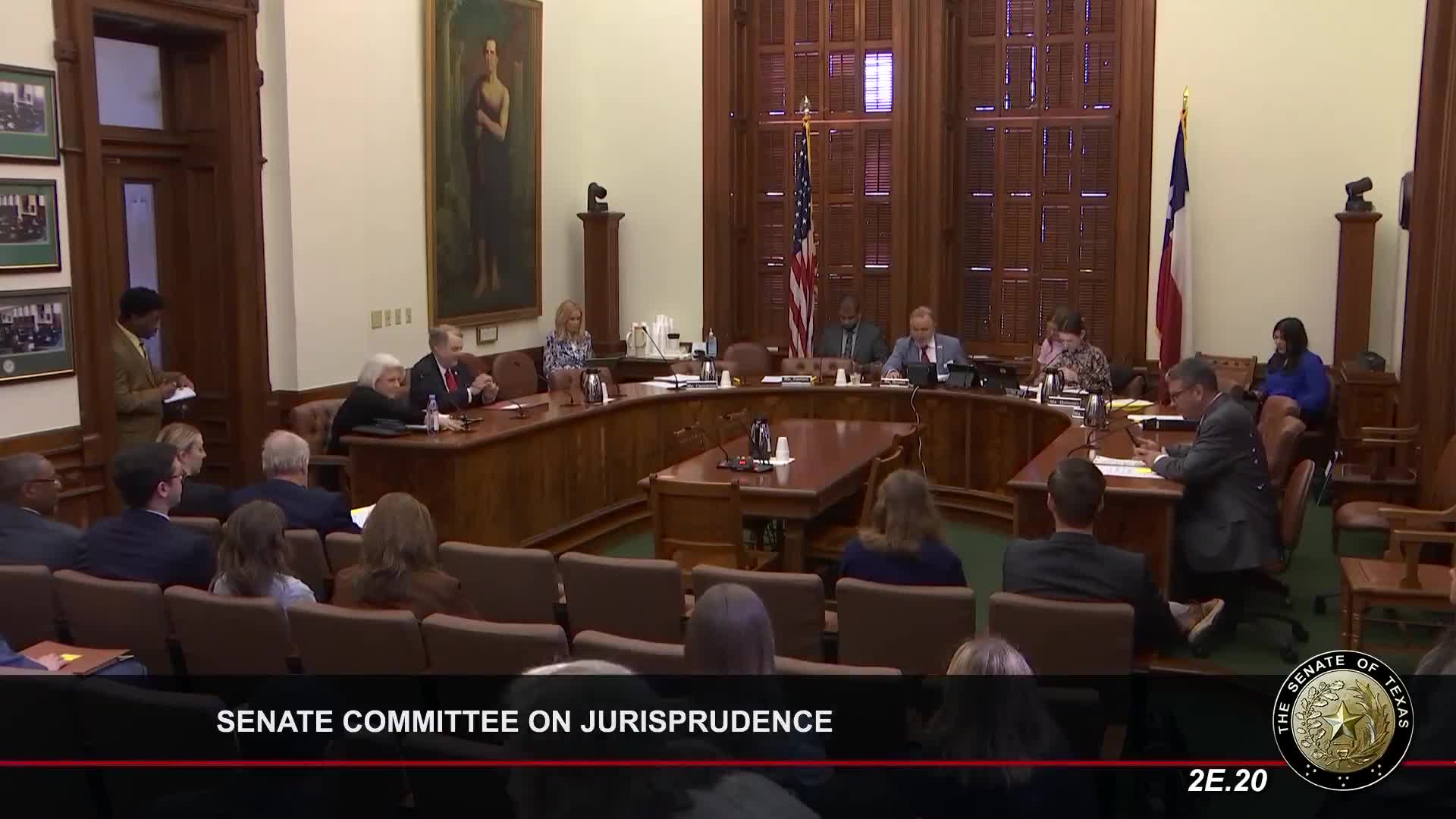
Senator Judith Zaffirini, dean of the Senate, laid out Senate Bill 1335 to the Committee on Jurisprudence and recognized the bill author to explain the measure.
Senator Judith Zaffirini, dean of the Senate, laid out Senate Bill 1335 to the Committee on Jurisprudence and recognized the bill uthor to explain the measure.
Meredith McIvor, an estate planning and probate attorney in Austin testifying for the Texas Real Estate and Probate Institute (TREP), said, "I'm testifying in support of Senate Bill 13 35. This bill clarifies a point of confusion in the Estates Code relating to the documentation granted by a court allowing personal representative to serve." She told the committee the bill removes an old reference to a "certificate of the clerk" from the Estates Code and expands the methods by which courts may notify personal representatives when removing them on the court's own motion from certified mail, return receipt requested, to a "qualified delivery method."
McIvor said the qualified delivery methods include "personal service, private delivery service, or certified mail," and added the substitute would also provide a mechanism to cancel letters testamentary or letters of administration when an estate is closed and, where bond was required, allow discharge of sureties on a personal representative's bond so that premiums are not charged after the appropriate time.
The bill sponsor and committee staff did not receive questions from committee members during the hearing. Public testimony included McIvor's remarks and closed without opposition. The committee left the bill pending.
Why it matters: The bill aims to update procedural language in the Estates Code and to reduce administrative costs and burdens on courts and estates by allowing more modern notice options and a process to formally end a personal representative's authority when an estate closes.
The committee record shows the discussion closed with the bill left pending for further action.