Get Full Government Meeting Transcripts, Videos, & Alerts Forever!
Get email alerts on the Health Insurance Prior Authorization topic
No spam. Unsubscribe anytime.
Senate committee advances Paxton bill to limit preauthorization for many common services
Summary
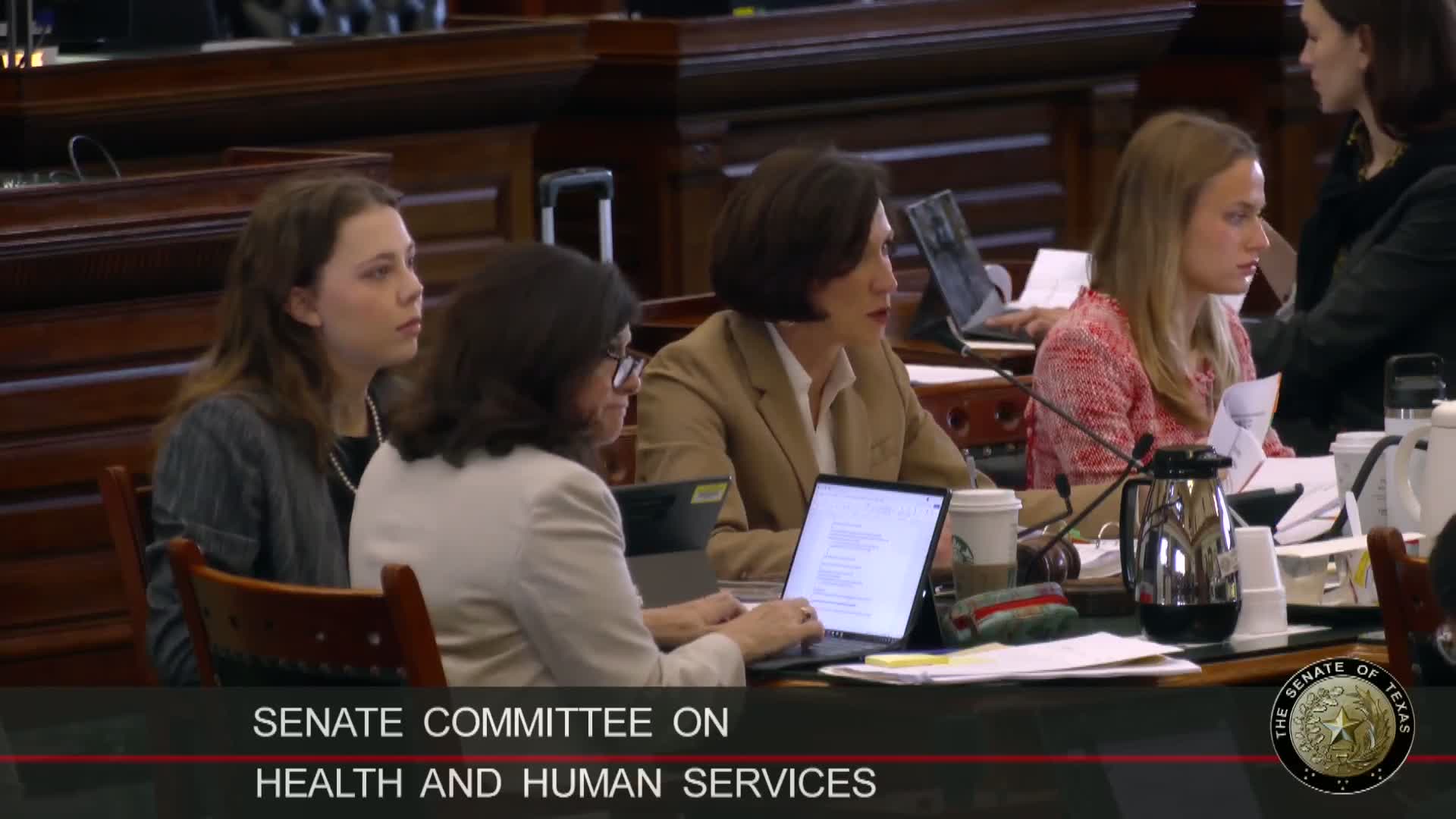
The Senate Committee on Health & Human Services heard testimony and adopted a committee substitute for SB 1380, a measure by Sen. Paige Paxton to exempt many commonly used services from insurance preauthorization. Supporters said the bill would reduce treatment delays; insurers warned of cost and fraud risks.
Sen. Paige Paxton, author of Senate Bill 13-80, told the Senate Committee on Health & Human Services that SB 13-80 would remove preauthorization requirements for a list of commonly used services to reduce delays in care and administrative burdens on physicians and patients.
"The denials and delays associated with unnecessary delays in preauthorization pose significant risk to patients' health, safety, and well-being," Paxton said as she laid out the committee substitute. The substitute, she said, corrects a minor drafting error.
The bill’s exemptions cover a broad set of services Paxton read into the record including emergency care, certain urgent and primary care services, outpatient mental-health and substance-use disorder treatment (excluding prescription drugs and intravenous infusions), chemotherapy provided according to national guidelines, care recommended by the U.S. Preventive Services Task Force with an A or B rating, pediatric hospice services and treatment for newborns experiencing withdrawal.
Zeke Silva, an interventional radiologist and chair of the Texas Medical Association’s Council on Legislation, testified in support on behalf of the TMA. Citing national surveys he said, "When physicians are reporting to us nationally that this is their number 1 issue in delivering the best care possible, it needs to be addressed." Silva argued preauthorization should have no role in common clinical circumstances where treatment pathways are well established.
Insurer witnesses cautioned against broad exemptions. Blake Hudson of the Texas Association of Health Plans and Jamie Dudensingh, CEO of the Texas Association of Health Plans, testified in opposition or neutral, saying prior authorization guards against unnecessary care and helps control prescription and specialty-drug costs. Dudensingh said some categories are already rarely subject to preauthorization and said payers need the ability to apply utilization checks for safety and cost control.
Senators questioned the breadth of the list. Senator Sparks told Paxton, "It's almost everything, isn't it?" Paxton and Silva responded that the list was intentionally focused on common, evidence-based services where clinical pathways are established.
On the committee floor, Senator Hancock moved adoption of the committee substitute. "Hearing none, the motion is adopted," the chair said, and the committee adopted the substitute. The committee closed public testimony and left the bill pending for further consideration.
Supporters say the substitute aims to reduce delays that can cause harm, citing surveys from the American Medical Association and physician reports of adverse events tied to preauthorization delays. Insurers and some committee members urged caution, urging safeguards such as gold-carding and targeted exceptions (for new or experimental therapies) to balance access and cost containment.
The committee did not take a roll-call roll on the substantive policy questions during the hearing and left SB 13-80 pending.