Get Full Government Meeting Transcripts, Videos, & Alerts Forever!
Get email alerts on the Electoral Vote Allocation topic
No spam. Unsubscribe anytime.
Nebraska debate over returning to winner‑take‑all electoral votes ends with failed cloture; no final vote
Summary
After four hours of floor debate on LB3 — a proposal to end Nebraska’s district‑based allocation of presidential electors and move to a statewide winner‑take‑all system — a motion to invoke cloture failed 31–18, leaving the measure without a final decision and prompting continued discussion about a possible ballot or constitutional route.
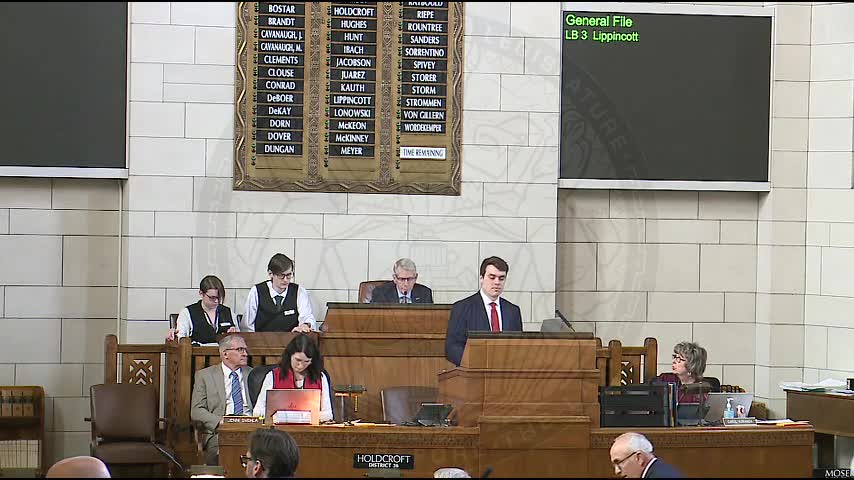
Senators on the Nebraska Legislature spent more than four hours Monday debating Legislative Bill 3, which would repeal Nebraska’s district‑based allocation of presidential electors and return the state to a statewide winner‑take‑all method. A motion by sponsor Senator Lippincott to invoke cloture and end debate failed on a roll call, 31–18, and the body took no final vote on the bill.
The bill would change how Nebraska’s five electoral votes are awarded in presidential elections. "The United States Electoral College plays a crucial role in ensuring that every citizen's vote is equal in the election of the president of The United States," Senator Lippincott said in his opening remarks, arguing Nebraska should "return to [a] winner take all system" to align with 48 other states. He called the district plan "a miserable experiment" and said the switch would restore national consistency.
Opponents said the current system gives smaller populations and distinct regions a voice. "Retaining the current policy serves our beloved Nebraska," Senator Conrad said during floor debate, warning that a statewide rule would dilute minority representation in Omaha and other population centers. Senator Hunt called LB3 a move to "change the rules of the entire game" after losing outcomes in a single district and argued the district method increases voter engagement and local representation.
Law and policy arguments recurred throughout debate. Supporters emphasized national consistency, concerns about out‑of‑state political spending, and worries about gerrymandering if electoral votes were tied to congressional districts. Opponents cited legal history and precedent invoked in committee hearings, demographic and turnout data, and economic effects tied to candidate visits and campaign spending in Nebraska’s congressional districts.
The debate included numerical examples offered on the floor. Senators cited that Nebraska has five electoral votes and that in the 2024 contest "in District 2, 341,690 votes were cast," with the secretary of state’s figures read on the floor showing District 2 roughly 52% for Vice President Harris and 47% for former President Trump. Supporters of the district approach said the split allocation gave local voters a stake and helped boost turnout in contested areas; supporters of winner‑take‑all countered that the statewide margin often outweighs isolated district differences.
Procedurally, Senator Lippincott moved to invoke cloture under the chamber rules. The roll call on the cloture motion produced 31 votes in favor and 18 opposed; the motion failed and no final passage vote on LB3 occurred during the session. Following the failed cloture motion, senators discussed alternate paths for the measure, including referral to a constitutional amendment or placing the question before voters; Senator Dorn noted a companion constitutional amendment (LR 24 CA) exists and remains an option.
What happened on other items: floor briefings and committee reports were taken up during the session, and senators also used their time to announce non‑related executive branch items, including a Department of Health and Human Services announcement that the first infant had been safely surrendered under Nebraska’s expanded safe‑haven law and the department’s hiring of a state epidemiologist. Those items were informational and not part of the LB3 action.
With cloture defeated, LB3 remains on the legislative docket without a final outcome. Some senators said they will pursue alternate routes — including a possible ballot question or a constitutional amendment — while others said they expected the floor record to stand as the public account of each senator’s position.
Votes at a glance: Motion to invoke cloture on LB3 (moved by Senator Lippincott) — yes: 31; no: 18. Result: motion failed; no final vote on LB3 was taken during this session.