Get Full Government Meeting Transcripts, Videos, & Alerts Forever!
Get email alerts on the Developmental Disabilities Funding topic
No spam. Unsubscribe anytime.
Caregivers tell Arizona House DDD funding "runs out in just 22 days," urge clean supplemental
Summary
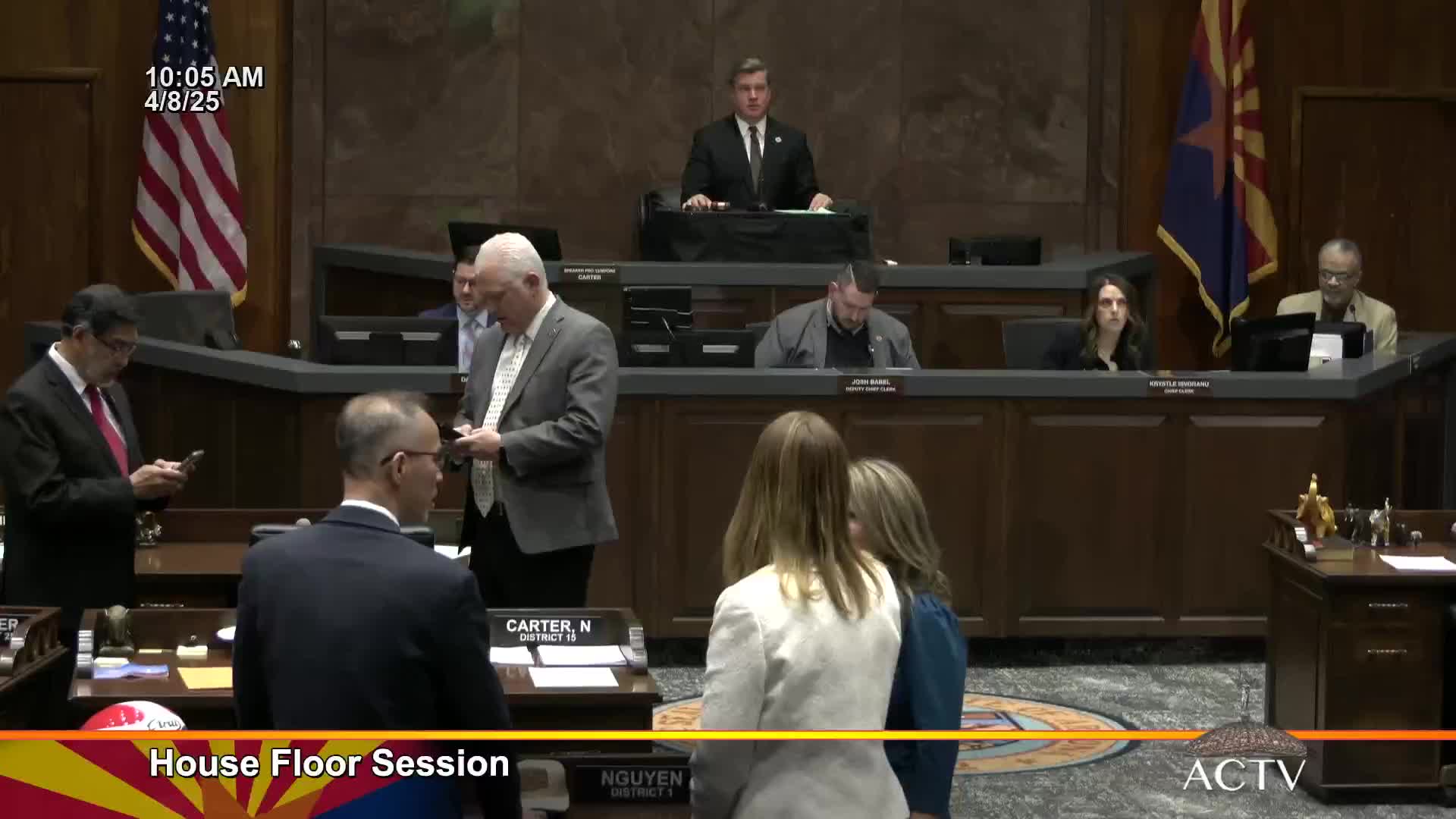
Caregivers and a lawmaker told the Arizona House of Representatives on April 7 that funding for services administered through the Division of Developmental Disabilities (DDD) "runs out in just 22 days," and urged passage of a clean supplemental funding bill.
Caregivers and a lawmaker told the Arizona House of Representatives on April 7 that funding for services administered through the Division of Developmental Disabilities (DDD) "runs out in just 22 days," and urged passage of a clean supplemental funding bill.
Representative Garcia introduced Rachel Lack, whose 13-year-old son, Henry, she said was diagnosed with profound level 3 nonverbal autism and receives habilitation, speech, occupational and feeding therapy through DDD. Speaking during a point of personal privilege, Representative Garcia said Henry communicates using a device provided through DDD and that families face difficulty finding therapists because "many aren't accepting new clients due to the uncertainty surrounding DDD funding." Representative Garcia said, "Please fund a clean DD funding bill now. Families like Rachel and Henry's are counting on it."
Caregiver Reagan Larson, introduced later in the gallery remarks, described her two autistic children and said progress in therapies "is in jeopardy." Larson told the chamber, "DDD runs out in just 22 days," and warned that without a clean supplemental appropriation, families could lose access to critical services. The remarks emphasized loss of rehabilitation hours and disruptions to ongoing therapies that caregivers said have helped children learn skills such as feeding and using augmentative communication devices.
Those appeals were made during the opening "points of personal privilege" portion of the session, an element of the House's routine for introducing guests. The Speaker pro tem interrupted to remind members that points of personal privilege at the start of the day are limited to introducing guests and that references to active legislation are not permitted in that procedural window. No formal legislative action or vote on DDD funding occurred during the April 7 session.
The comments reflect caregiver concern about continuity of services delivered through DDD and, in some cases, the Arizona Long-Term Care System (ALTCS). Speakers said provider availability has tightened because some therapists are not accepting new clients while the funding question remains unresolved. Representatives and guests did not specify the legislative vehicle number or the exact budgetary mechanism that would restore the funding during the remarks.
The House recorded attendance at 46 present, 10 absent and 4 excused at the start of the day. The chamber adjourned and is scheduled to reconvene at 10 a.m. Wednesday, April 9; no vote on DDD funding was recorded on April 7.